REVIEW · BARCELONA
Walking Tour Gothic Quarter and Ramblas+Boat Trip
Book on GetYourGuide →Operated by Barcelona Holiday · Bookable on GetYourGuide
Barcelona’s Gothic Quarter has layers.
This combo tour strings them together in a smart route, then caps it with sea views from a port boat. You start in the center with a guide (they’ll be holding a red umbrella), then move block by block through medieval streets, major squares, and famous Rambla landmarks.
I especially like two things: the small group size (up to 6) keeps the pace relaxed and the explanations clear, and the walking-to-water sequence gives you a fast, well-rounded read on the city. One potential drawback: it’s all outdoors, and you won’t go inside the cathedral, palaces, or monuments.
In This Review
- Key Takeaways Before You Go
- Getting Oriented Fast in the Gothic Quarter
- Plaza Nova to the Cathedral: Roman Roots and Neo-Gothic Face Value
- Plaza del Rei and Plaza Sant Jaume: Where Power Played Out
- Calle del Bisbe, Plaza Sant Felip Neri, and the Old Jewish Quarter
- Plaza del Pi to Las Ramblas: From Quiet Corners to the Big Stage
- Spotting Gaudí on the Move: Palau Güell Before the Sea
- One Hour on the Port: Relaxed Views From Las Golondrinas
- Who This Tour Suits Best (and Who It Might Not)
- Practical Tips That Make the Day Easier
- Should You Book This Gothic Quarter and Ramblas + Boat Combo?
- FAQ
- Where does the tour start?
- What’s the total duration?
- Is the boat cruise included, and how long is it?
- How big is the group?
- Does the tour enter buildings or monuments?
- What language is the guide?
- What should I bring?
- What if the weather affects the boat?
- How much does it cost and is cancellation allowed?
Key Takeaways Before You Go
- Max 6 people means you can actually hear the guide and ask quick questions.
- Roman, Gothic, medieval, and Gaudí show up in one continuous route without feeling rushed.
- Las Ramblas landmarks like Boqueria Market and Liceu Opera Palace give you instant orientation.
- Palau Güell is spotted as a first Gaudí stop before you head to the sea.
- 1-hour public port cruise delivers skyline views from a different angle than the streets.
- Bad weather can shift the boat, so plan for a flexible ride by the water.
Getting Oriented Fast in the Gothic Quarter
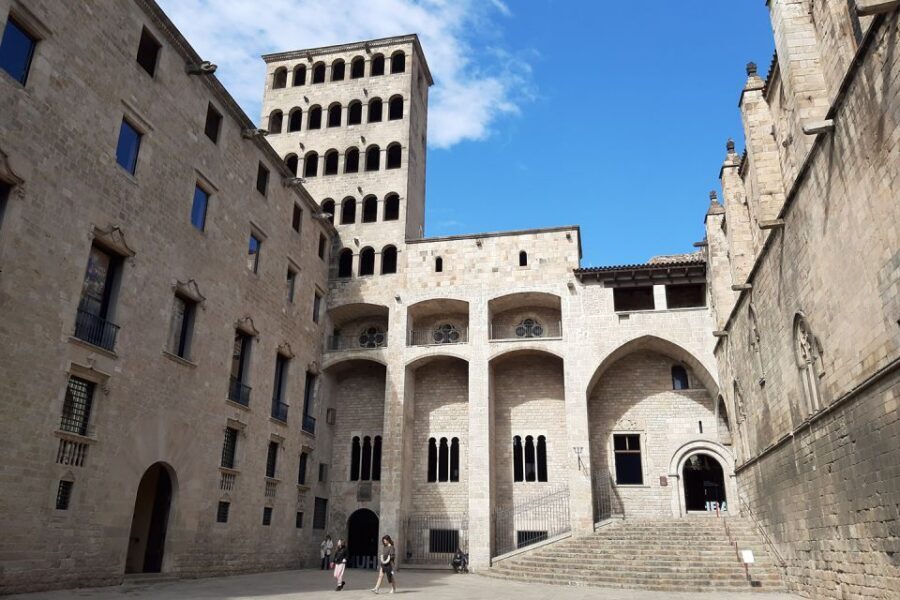
If Barcelona feels like a maze on your first day, this is the sort of tour that helps you get your bearings fast. You’re not just wandering. You’re walking a planned path through the old city core, with a local guide connecting what you see to what it meant when the city was growing and changing.
The tour starts at Plaça de Carles Pi i Sunyer, 17, and your guide will be easy to spot with that red umbrella. From there, you head into the Gothic Neighbourhood, where narrow streets and stone facades do most of the talking. The best part is that you’re not stuck trying to interpret everything solo. The guide’s explanations keep you from turning every corner into guesswork.
A practical note: you’ll be on your feet for about 3.5 hours, with the first part focused on walking history and the second part focused on the harbor and the views. Come with comfortable shoes, and don’t expect this to be a sit-down museum visit. It’s street-level Barcelona.
Value check: for $63 per person, you’re paying for (1) a live English guide, (2) a public boat ticket, and (3) the time-saving benefit of having someone map the city’s important highlights for you. If you’re trying to hit a lot in one go—without spending your day researching and re-routing—that price starts to look reasonable.
You can also read our reviews of more walking tours in Barcelona



Plaza Nova to the Cathedral: Roman Roots and Neo-Gothic Face Value
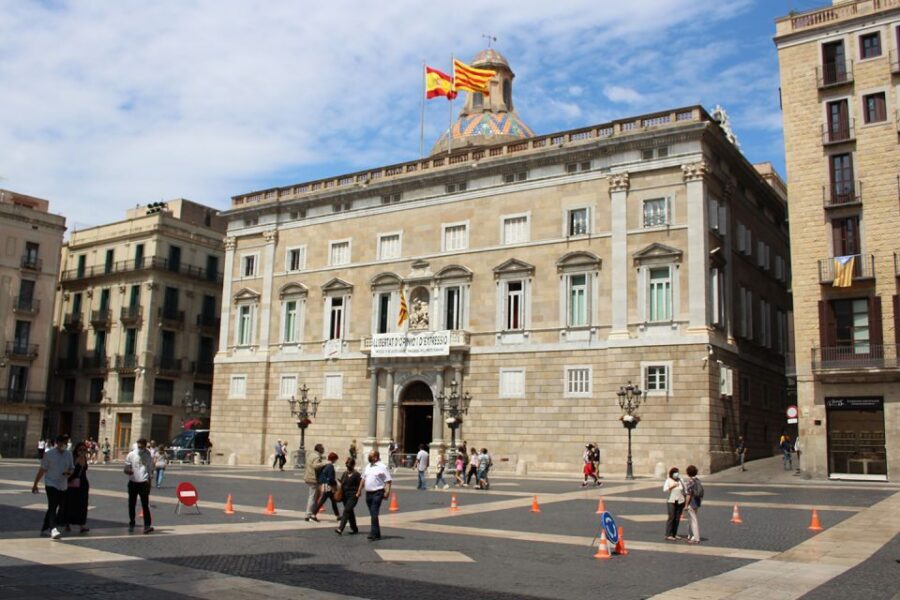
The first major stop is Plaza Nova, where you’ll see ruins of the Roman Wall and a city gate from that period. This is a great opening because it tells you the city didn’t just “become” medieval. It evolved. You’re looking at layers, not a single style snapshot.
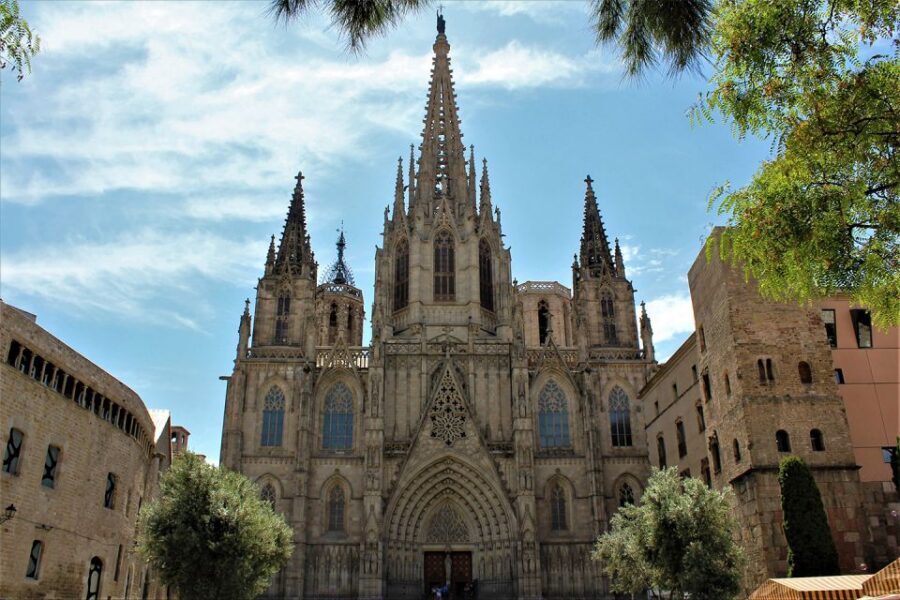
Next comes the Cathedral of Barcelona and its striking Neo-Gothic façade. Even if you don’t go inside (this tour stays outdoors), the exterior works well for orientation. The cathedral dominates your field of view and helps you understand why people have gathered here for centuries. It’s also a visual “anchor” point—you can keep finding the same skyline shapes as you continue.
One thing I like about this pacing: it avoids the common problem of starting with the most famous square and then spending the whole walk feeling lost. By starting with Roman remains and then moving to a major Gothic landmark, the tour gives you a timeline you can actually feel under your feet.
Possible drawback to note: because you don’t enter buildings or monuments, your experience leans more on seeing and understanding rather than touring interiors. If you’re the type who wants indoor details and guided access to interiors, you might want a separate ticketed cathedral interior tour later.
Plaza del Rei and Plaza Sant Jaume: Where Power Played Out
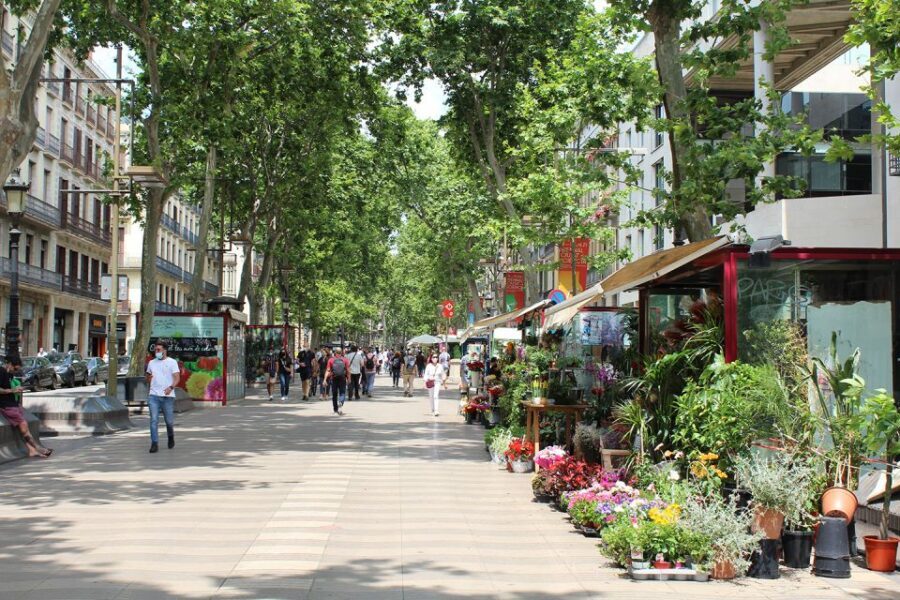
Then you move into the heart of the old city’s political and ceremonial spaces.
You visit Plaza del Rei, bordered by palace buildings, and you’ll get a sense of medieval Barcelona’s political and economic life. The square is picturesque, sure, but what matters most is the way it frames the power story of the city. It’s the kind of place where the buildings aren’t just pretty; they explain why this neighborhood mattered.
After that, you reach Plaza Sant Jaume, the political center since the earliest days of the city’s history. Here you’ll see the Town Council and the Palacio de la Generalitat (Regional Government Palace). This stop is especially useful if you want to understand why Barcelona’s identity is tied to its institutions. You’re not only looking at old stone—you’re seeing how civic life took shape.
If you like your city history in clear, human terms, these squares do the job. You can stand still for a minute, look around, and the guide’s framing helps your brain connect the architecture to the era.
Calle del Bisbe, Plaza Sant Felip Neri, and the Old Jewish Quarter
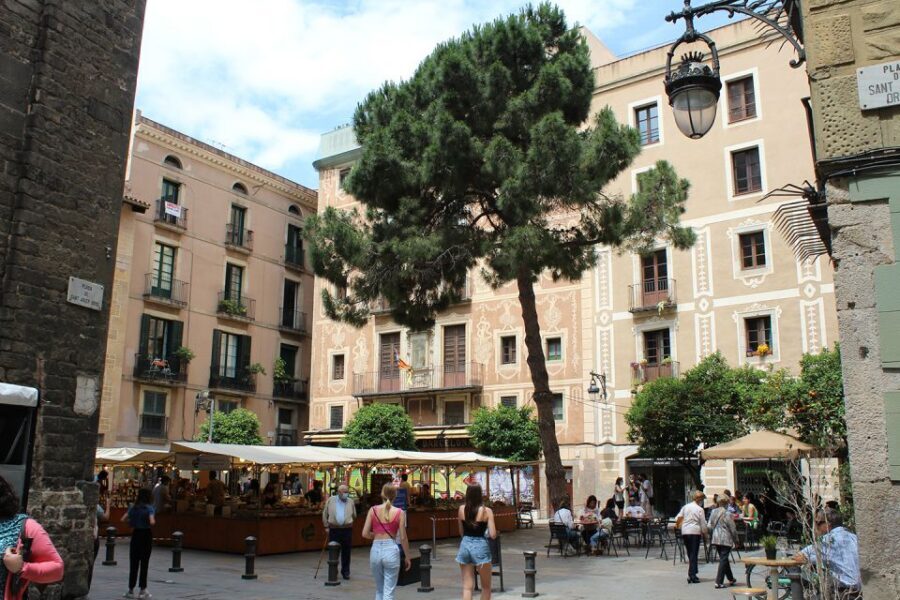
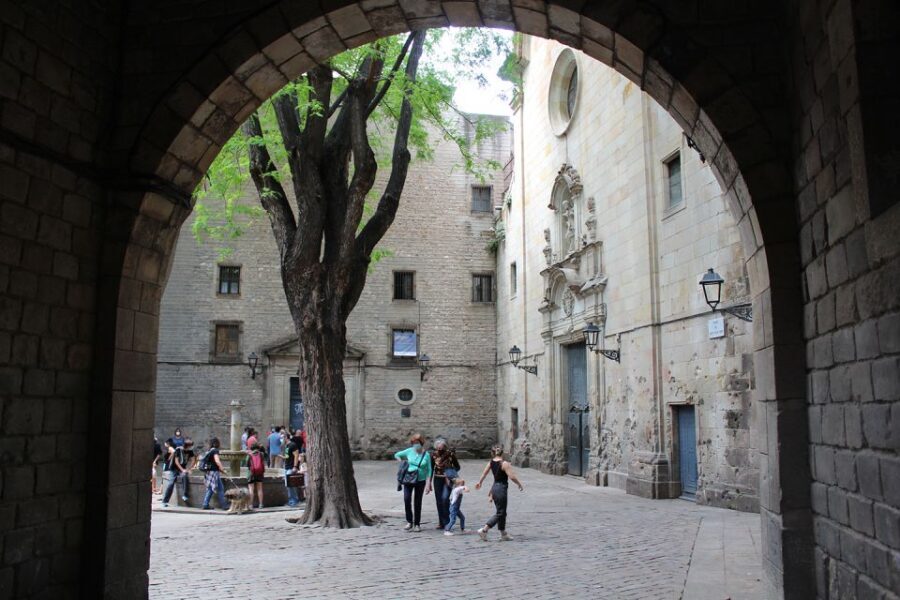
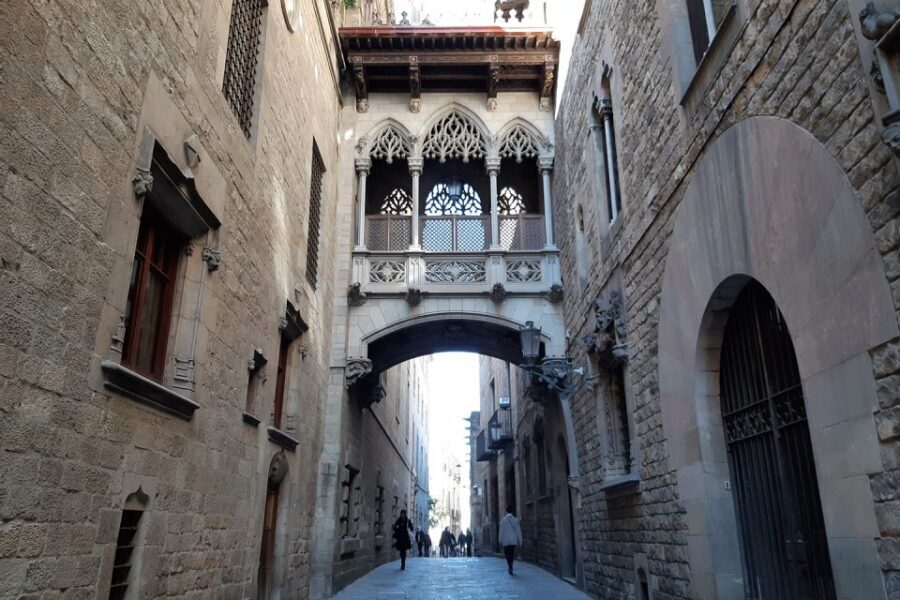
From the power centers, the route turns toward charm and character. You’ll walk via the Calle del Bisbe, and arrive at Plaza de Sant Felip Neri, one of the city’s most charming medieval spots. This is where the streets get narrower, the atmosphere feels more intimate, and it’s easier to imagine everyday life in earlier centuries.
After that, the tour enters the old Jewish Neighbourhood. This part works well because it shifts you from official civic space to community streets. You’ll learn about the area’s interesting history as you stroll through the narrow lanes.
This is also a good reality check for expectations. Much of the Gothic Quarter experience is about street geometry—how turns funnel you forward, how small plazas open up briefly, and how stone buildings shape the feel of the walking route. The guide helps you notice what you might otherwise walk past.
Plaza del Pi to Las Ramblas: From Quiet Corners to the Big Stage
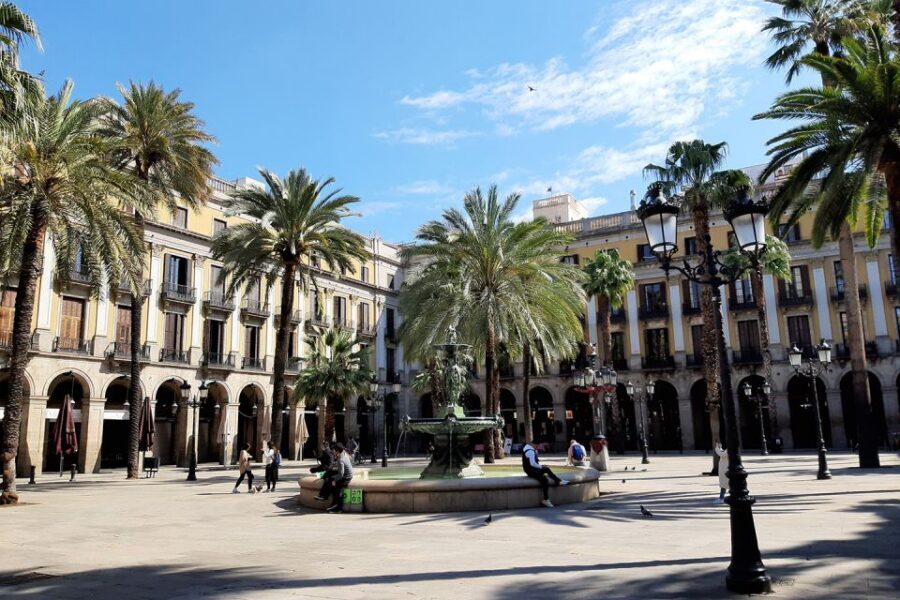
At the end of the Gothic Quarter section, the route finishes at Plaza del Pi, overlooked by its Gothic Church. It’s a fitting handoff point. After the slower pace of medieval lanes, you step toward one of Barcelona’s most recognizable streets: Las Ramblas.
Then the tour becomes more “city wide.” You stroll along Las Ramblas for about 30 minutes, stopping at emblematic points such as Boqueria Market, Liceo Opera Palace, and La Plaza Reial. Even if Las Ramblas isn’t your idea of a quiet walk, these stops give you instant landmarks that help you navigate on your own after the tour ends.
Here’s what I think is the practical payoff: once you’ve seen these key Rambla markers with context, you can stop guessing when you’re nearby. You’ll know where you are, what you’re passing, and what each major building is connected to.
One note: Las Ramblas can feel crowded compared to the Gothic streets. The tour’s short Rambla segment (not a long slog) keeps it fun and prevents it from turning into a moving bottleneck.
You can also read our reviews of more boat tours in Barcelona




Spotting Gaudí on the Move: Palau Güell Before the Sea
Before you reach the water, the tour makes a smart move by guiding you to an early Gaudí highlight: the Güell Palace (Palau Güell), a UNESCO-declared World Heritage site. You don’t need a full architectural lecture here. You just need the correct first sighting and enough context to recognize why Gaudí’s style is a break from what came before.
This matters because Barcelona can look like it has three different cities stacked on top of each other—medieval, civic-modern, and then Gaudí’s world. Seeing Palau Güell in the flow of your day helps you connect those layers rather than treating them like separate attractions you’ll remember only as checklist items.
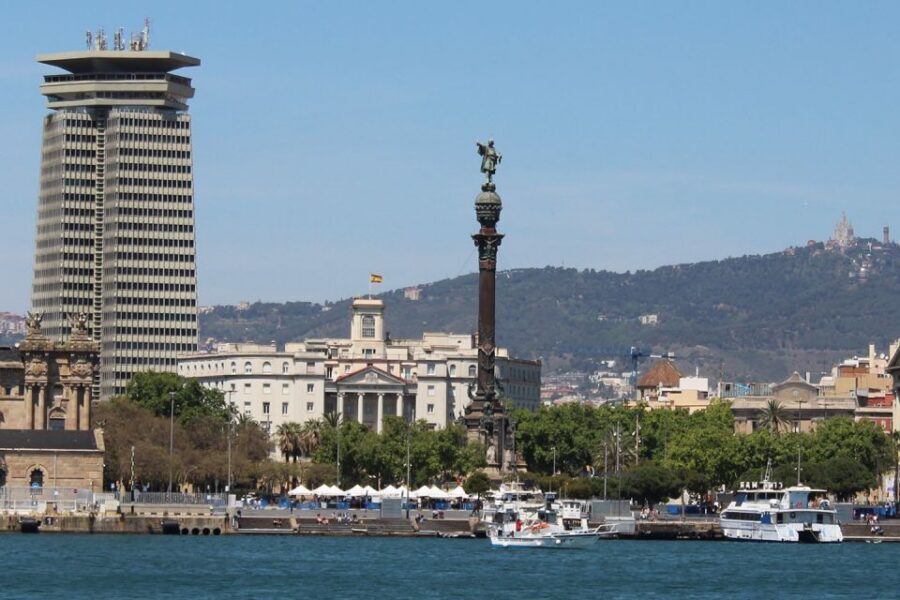
As you continue, you’ll reach the monument to Christopher Columbus, one of the city’s icons and a natural “last street” stop before you shift from sidewalks to water.
One Hour on the Port: Relaxed Views From Las Golondrinas
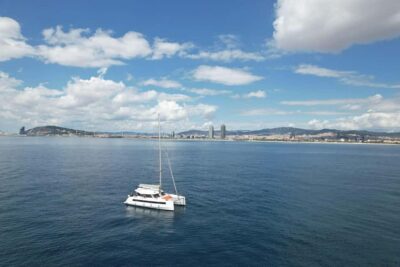
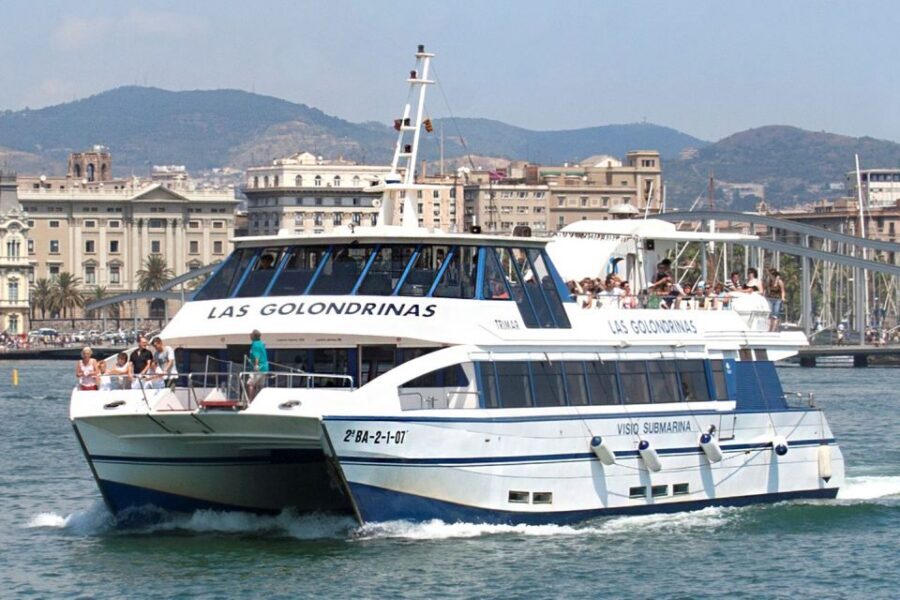
Now comes the part that makes this tour feel like more than a city walk: a boat cruise of about 1 hour along the port and Barcelona’s maritime façades. The boat is public and shared, so this isn’t a private yacht moment—but it’s exactly why it works. You get a big-city skyline view without paying for a luxury charter.
The ride is described as relaxing, and that matches what you’ll feel when you’re finally away from street noise and looking at Barcelona from a distance. You’ll see the city’s waterfront environment in a way you can’t get from street level, and the skyline hits differently when you’re moving with it.
Weather can affect the boat service, so if conditions are rough, you might see changes. The tour notes that the boat service may be modified for bad weather reasons. That’s not a dealbreaker; it’s just Barcelona staying honest about the sea.
Where the cruise ends matters too: the tour concludes at Las Golondrinas / Port de Barcelona. After that, you can easily keep exploring nearby areas on your own—using the views from the water as your mental map.
Who This Tour Suits Best (and Who It Might Not)
This is a great match for you if you want a guided, efficient way to understand central Barcelona without a strict museum routine. I’d especially recommend it if you like the idea of a history-driven walk plus a one-hour view payoff from the harbor.
You’ll also like it if:
- you prefer small-group attention rather than crowds
- you want a tour that covers both Gothic Quarter highlights and Rambla landmarks
- you’re curious about Barcelona’s evolution from Roman walls to medieval squares to Gaudí
- you enjoy skyline views enough that walking alone won’t satisfy you
It might be less ideal if you’re hoping for indoor access. Since the tour is completely outdoors and doesn’t enter buildings or monuments, your experience is about exteriors, street context, and guided explanations rather than inside-the-attraction details.
Practical Tips That Make the Day Easier
A few things will help you enjoy it more:
- Wear comfortable shoes. The Gothic Quarter streets and the Rambla segment both benefit from solid footwear.
- Bring a layer. You’re on the street for a lot of the day, and conditions can change near the water.
- Expect a shared boat. The cruise is public, so it’s not silent and empty. Still, the views are the whole point.
- Keep your expectations realistic about interiors. You’ll see major sights from the outside, which is enough to understand them—but not enough if you’re seeking full access.
If you go in knowing it’s a guided overview with excellent highlights, you’ll leave with a stronger sense of Barcelona than if you just try to self-guide it.
Should You Book This Gothic Quarter and Ramblas + Boat Combo?
Yes, I think you should book it if you want the best kind of first-day Barcelona mix: guided medieval orientation plus a simple, scenic port cruise. The small group limit, the clear sequence from Roman remains to medieval squares to Las Ramblas, and the skyline payoff from the water make it a smart value at $63.
If you already know you want lots of indoor monument time, you may prefer other tours that include interior visits. But for an efficient, high-impact day that helps you understand Barcelona’s layout and story quickly, this one is a strong choice—especially if you like getting street-level context with a guide.
FAQ
Where does the tour start?
The tour starts at Plaça de Carles Pi i Sunyer, 17. Your guide will be holding a red umbrella.
What’s the total duration?
The experience lasts about 3.5 hours.
Is the boat cruise included, and how long is it?
Yes. The tour includes a boat ticket for a public boat, with an approximate duration of 1 hour.
How big is the group?
It’s a small group, with a maximum of 6 people.
Does the tour enter buildings or monuments?
No. The tour takes place completely outdoors, and you will not enter inside any buildings or monuments.
What language is the guide?
The live guide is English.
What should I bring?
Wear comfortable shoes, since you’ll be walking outdoors.
What if the weather affects the boat?
The tour notes that the boat service may be changed due to bad weather.
How much does it cost and is cancellation allowed?
The price is $63 per person. Free cancellation is available up to 24 hours in advance for a full refund.