REVIEW · BARCELONA
Walking Tour on Barcelona Old Town 3-Hour
Book on GetYourGuide →Operated by METRANSFERS · Bookable on GetYourGuide
Barcelona’s Old Town reads like a mystery novel.
I love the way this tour strings together La Rambla, the Gothic Quarter, and the Cathedral area so the streets feel meaningful, not random. Two things I particularly like: you get time to wander medieval lanes on foot, and you also get a real market moment at La Boqueria to buy Catalan favorites like sweets, jamon, olives, and more. One drawback to keep in mind: the guide experience can vary, and in a couple cases communication or explanation quality wasn’t as strong as you’d hope.
The tour moves at a comfortable walking pace, with a van transfer before and after so you spend your energy on the neighborhoods that matter. It’s private, so you’re not packed in with a huge crowd, but it’s still a walking tour—bring decent shoes and expect some tight turns and photo stops.
If you want a steady flow of stories at every stop, you’ll want to be a little proactive with questions. The best version of this tour feels like you’re being handed context for what you’re seeing, especially around St. Eulalia’s cathedral. The less-great version is more of a watch-where-you-walk sightseeing circuit.
In This Review
- Key things to know before you go
- What the 3.5 Hours Actually Covers in Barcelona Old Town
- From Hotel Pickup to La Rambla: The Walk That Sets the Mood
- La Boqueria Market Stop: Buying Catalan Flavors Without Overthinking It
- Gothic Quarter Streets and Photo Stops: Reading Medieval Barcelona on Foot
- Cathedral of St. Eulalia: The Story That Puts the Stones in Order
- Guide Quality and Communication: How to Get the Best Version of This Tour
- Price vs Value: Is $100 Worth It Here?
- Tips to Make This Tour Feel Worth It
- Who This Tour Suits Best
- Should You Book This Walking Tour of Barcelona’s Gothic Quarter?
- FAQ
- FAQ
- How long is the walking tour?
- Is hotel pickup and drop-off included?
- What part of Barcelona does the tour focus on?
- Does the tour include entrance fees for museums or the cathedral?
- What can I buy at La Boqueria?
- Is this tour private?
- What languages are available for the live guide?
- Where does the tour start?
- What time does the tour usually start?
- Is there free cancellation?
Key things to know before you go
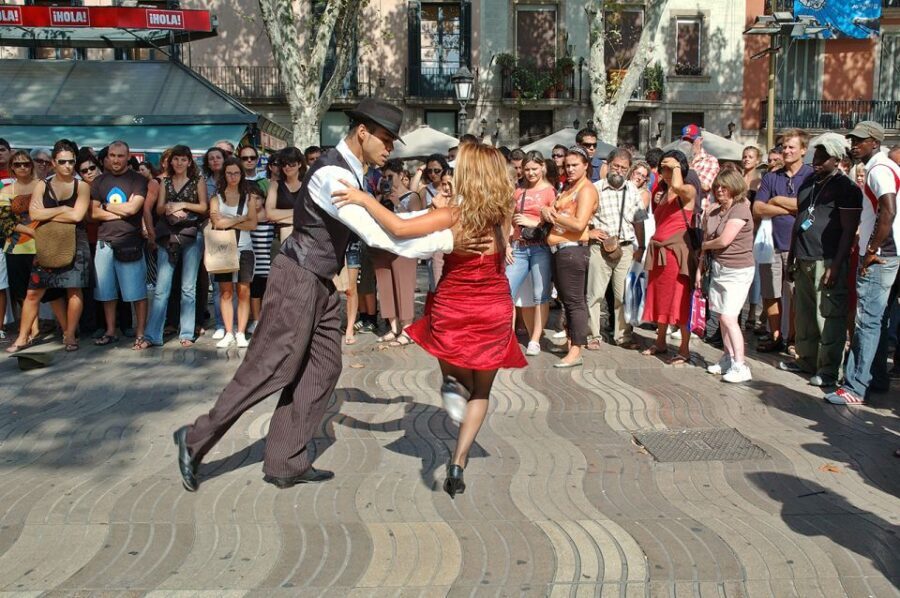
- Old streets with Roman roots: You’ll walk lanes tied to Roman-era Barcelona, then into the medieval Gothic Quarter.
- La Rambla as your “main street” reset: It’s an easy, high-energy introduction before the maze of smaller streets.
- La Boqueria is for buying, not just looking: You’re meant to shop for Catalan produce and typical foods.
- St. Eulalia story at the Cathedral area: The guide shares the 13-year-old martyr’s tragic background.
- Private group, but guide quality matters: Some guides focus more on naming sights than explaining them.
- Extra fees aren’t included: Museum and cathedral entrance costs aren’t covered.
What the 3.5 Hours Actually Covers in Barcelona Old Town
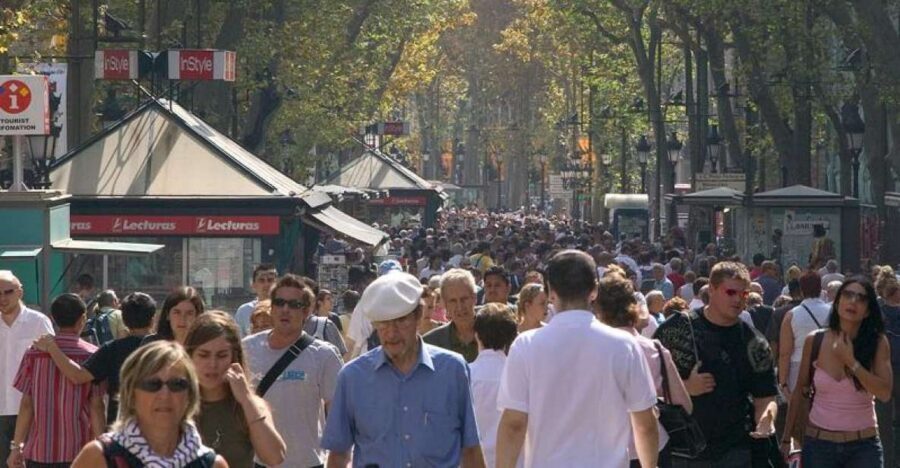
This is a short-but-full tour: about 3.5 hours total, with a 20-minute van ride to start and another 20-minute ride to wrap up. The walk itself focuses on the area around the Gothic Quarter and the Cathedral of St. Eulalia, with time on the route for a photo stop and some free roaming.
Think of it as two different kinds of Barcelona in one outing. First, you get the “big stage” moment on La Rambla and the market energy at La Boqueria. Then you trade that for narrow lanes, medieval-looking stonework, and the kind of streets where you slow down because you don’t want to lose your sense of direction.
If you’re short on time—first day in town, or you’re pairing this with other sights later—that trade-off is smart. You get a guided path through a concentrated zone without feeling like you’ve spent the whole day shuffling between distant landmarks.
You can also read our reviews of more walking tours in Barcelona



From Hotel Pickup to La Rambla: The Walk That Sets the Mood
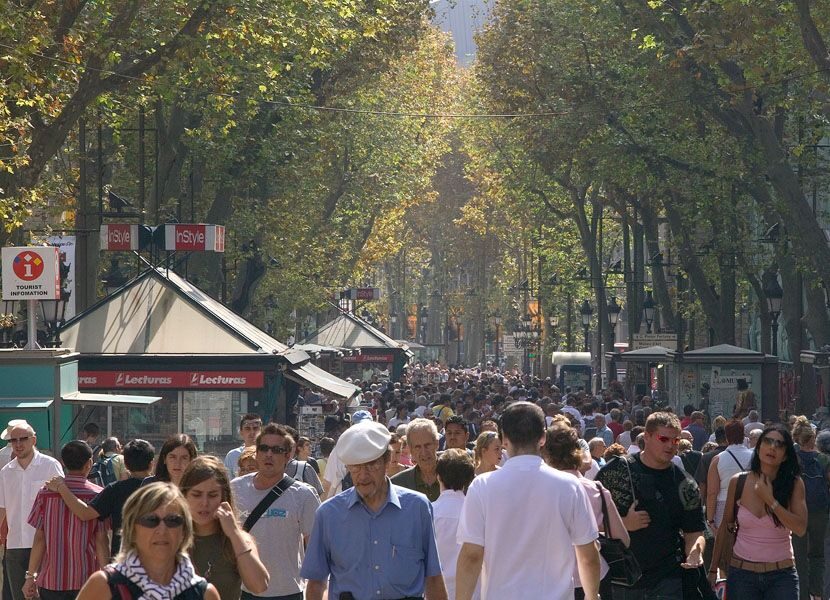
You start with hotel pickup somewhere in Barcelona, then ride by van for about 20 minutes. That transfer is useful. It helps you start your walk in the right zone instead of spending your morning figuring out routes.
Once you reach La Rambla, the tone changes fast. La Rambla is the city’s best-known promenade, so it’s where you see the classic Barcelona “front-of-house.” It also functions as a reset: people watch, street energy, and an easy place for your guide to frame what you’re about to experience in the older part of town.
From there, the tour blends into the flow toward La Boqueria. Even if you’re not the kind of person who loves shopping, this market stop is worth it because it gives you a tangible connection to Catalan food culture—something you can carry with you when you’re wandering the Gothic Quarter’s maze of streets later.
La Boqueria Market Stop: Buying Catalan Flavors Without Overthinking It
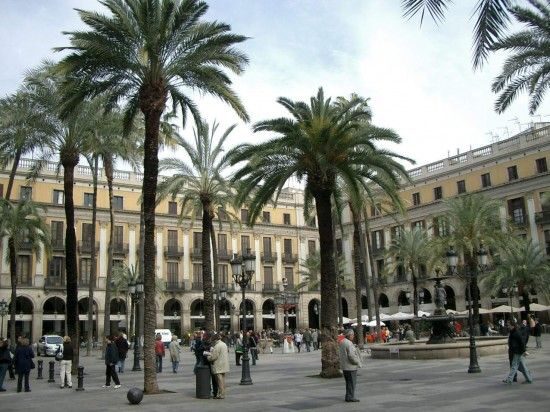
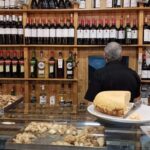
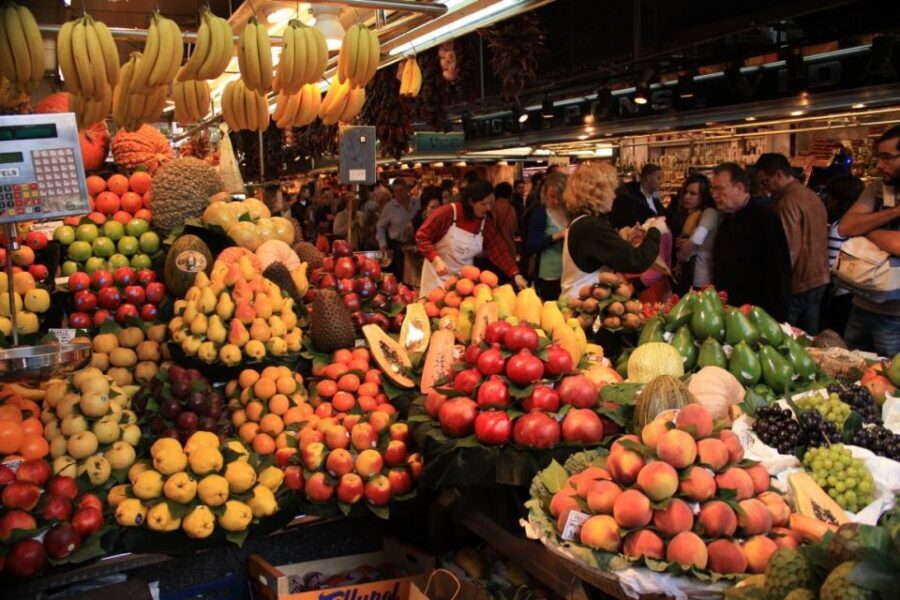
At La Boqueria, the goal is not just to look at stalls. You’ll walk among food sellers and be encouraged to purchase Catalan produce and typical Spanish foods. The tour specifically points you toward items like Catalan sweets, traditional jamon, olives, and other local staples.
Here’s how to make this stop work for you: decide what you want before you get overwhelmed by the choices. If you’re buying for later, sweets and small packaged items can be easiest. If you want a savory souvenir, jamon and olives are common picks—but plan how you’ll carry them, especially if you’re walking the rest of the tour.
A caution worth taking seriously: one guide experience included a situation where La Boqueria was closed on a Sunday, and the group wasn’t informed ahead of time. Markets can have day-to-day changes, so if your schedule lands on a Sunday, I’d check opening hours in advance. A market stop is half the payoff here, and you don’t want to discover the issue after you’ve already planned around it.
Also note what the tour does and doesn’t do. You’re not paying museum-style entrance fees for market access, but you should budget for what you actually want to buy. The tour price covers the guide and transportation, not your food purchases.
Gothic Quarter Streets and Photo Stops: Reading Medieval Barcelona on Foot
The heart of the tour is the Gothic Quarter—a maze of lanes where it’s easy to drift from “where am I?” into “wait, look at that doorway.” The tour format gives you guided movement plus some breathing room: you get time to walk, pause, and explore.
What I like most about this portion is the way it teaches your eyes to notice details without turning it into a homework assignment. Streets here can feel like a living museum, and you’ll be walking in an area connected to centuries of development, including routes tied back to Roman times.
The itinerary includes photo stops and scenic views along the way, which sounds simple but is actually practical. Those pauses help you regroup mentally and physically—useful when you’re on uneven pavement and navigating tight turns.
Shopping is also part of the vibe in this section. You may find small shops and food-related stops where your guide can point out what to look for. If you’re the kind of traveler who likes to bring something home that isn’t just postcards, this is where you’ll usually feel the most temptation.
One thing to keep in mind: based on guide feedback from past participants, some guides offer lots of context; others mainly name what you’re seeing. Either way, the streets themselves do a lot of the work. If you want more story, ask direct questions—How does this connect to St. Eulalia? Why this style? When was this area most important?
Cathedral of St. Eulalia: The Story That Puts the Stones in Order

Your walk heads toward the Cathedral of St. Eulalia, a building tied to the 13th century. The guide’s role gets especially important here because the tour includes a specific narrative: the tragic story of St. Eulalia, a 13-year-old who fought for her beliefs and was sentenced to death.
This is the point where the tour becomes more than pretty streets. When you hear the story, the cathedral stop stops feeling like a checklist item and starts feeling like a piece of the city’s identity. Even if you’re not a church-history buff, the emotional weight of the story tends to “click” with the setting.
Two practical notes:
- Cathedral entrance fees aren’t included. You may need to pay if you go inside or access areas that require tickets.
- If you’re hoping for a long time sitting in quiet or reading placards, this tour may not be that. It’s designed as a guided walking experience, not a slow museum visit.
In the best version of the tour, the guide uses St. Eulalia’s story to tie together earlier moments—the maze-like streets, the way Barcelona organizes sacred sites, and why this particular figure matters. In the weaker version, you might only get minimal commentary and less time to make sense of the surroundings. That’s why communication quality is something to watch for.
You can also read our reviews of more tours and experiences in Barcelona




Guide Quality and Communication: How to Get the Best Version of This Tour
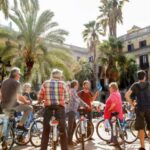
This tour depends heavily on your guide. The structure can be great—La Rambla, Boqueria, Gothic Quarter, and St. Eulalia is a solid route—but several people noted the difference between a guide who provides explanations and one who mostly points.
From past experiences, I’d flag three things to pay attention to before you judge the tour:
- Clarity of spoken English (or your requested language): If the guide has limited spoken fluency, the walk can feel like you’re moving from sight to sight without the thread tying it together.
- Explanation style: Some guides provide full stories; others may just name buildings or landmarks without much context unless you ask.
- Timing around market access: One situation included a day when La Boqueria was closed, and the group didn’t get a heads-up. That can turn a “food stop” into a quick pass-through.
So what can you do? Be a good customer. If you feel the tour is running low on storytelling, ask a direct question early: What should I notice here? Why does this matter to Barcelona? How does St. Eulalia fit into what we’re seeing?
A private tour is still only as good as the guide in practice. But when the guide is strong, this route is exactly the kind of walk that makes you feel like you understand what you’re seeing—even after you’ve stepped back onto the street on your own.
Price vs Value: Is $100 Worth It Here?
At $100 per person for about 3.5 hours, this tour isn’t cheap, but it can be good value if the guide gives you more than a route. You’re paying for three things:
- Time-saving logistics (hotel pickup and a guided route through a dense area).
- Context (stories, especially around the Gothic Quarter and St. Eulalia).
- A market stop with shopping guidance at La Boqueria.
If you skip the guide and explore on your own, you could save money, but you’d lose the narrative thread—especially for St. Eulalia—and you’d probably take longer to get oriented in the Gothic lanes.
Where value can break down is when the tour becomes more of a long walk with minimal explanation. In one case, a participant felt the tour was essentially an “aimless” walk and even noted the market was closed on the day they went. That’s the kind of scenario where paying premium prices stings.
My practical take: if you’re paying $100, you should expect a tour that actively helps you understand the area while you’re walking. If that’s your priority, this route makes sense. If you’d rather self-guide and you’re comfortable reading plaques or using a map, you might be happier with a DIY plan (and spending your money on food instead).
Tips to Make This Tour Feel Worth It
This is a walking tour in a tight medieval zone. You’ll enjoy it more if you plan for comfort:
- Wear comfortable, grippy shoes. Expect uneven pavement and lots of turns.
- Bring a small bag you trust for market buys. You’ll likely want to carry items as you walk.
- If you care about the St. Eulalia stop, consider having some interest in the story ahead of time so the guide’s explanation lands harder.
- If you’re going on a day when markets can have odd hours, especially Sundays, check La Boqueria opening times. One past experience included a closure surprise.
- Ask questions if the guide’s pace feels too quiet. A private group format makes it easier to steer the conversation.
Language tip: the tour lists live guides in English, Spanish, and Chinese, and it also indicates the tour is offered in English and Russian. If language matters a lot to you, choose your option carefully so you don’t end up straining to understand key details.
Who This Tour Suits Best
I’d recommend this tour if you fit one of these boxes:
- You want a guided path through the Gothic Quarter without spending hours planning.
- You like food stops that come with real purchasing opportunities, not just photo moments.
- You enjoy walking tours that connect a neighborhood’s physical look to a human story—here, St. Eulalia’s narrative.
You might want to skip it or adjust expectations if:
- You’re the type who needs heavy storytelling at every stop and tends to get frustrated by light commentary.
- You’re on a day when La Boqueria hours are uncertain for your schedule, and a missed market stop would ruin your day.
Should You Book This Walking Tour of Barcelona’s Gothic Quarter?
My bottom line: I’d book this if you want a tight, guided “greatest hits” loop of La Rambla + La Boqueria + Gothic Quarter + St. Eulalia and you value having a guide turn confusing streets into an understandable walk.
But I would book it with your eyes open. The route and concept are strong; the biggest risk is that guide communication or explanation depth can vary, and a market-hour mismatch can happen. If you’re sensitive to those things, check your timing and be ready to ask questions early.
If you nail the language fit and your guide is chatty, this tour can be one of those memorable Barcelona mornings where you walk out feeling like the stones have stories—and you also have some edible proof from the market.
FAQ
FAQ
How long is the walking tour?
The experience runs for about 3.5 hours total.
Is hotel pickup and drop-off included?
Yes. Hotel pickup and drop-off are included.
What part of Barcelona does the tour focus on?
It focuses on Barcelona’s Old Town, especially the Gothic Quarter around the Cathedral of St. Eulalia, with time on La Rambla and a stop at La Boqueria market.
Does the tour include entrance fees for museums or the cathedral?
No. Museum and cathedral entrance fees are not included.
What can I buy at La Boqueria?
You’ll have a chance to purchase typical Catalan produce and Spanish foods like Catalan sweets, jamon, olives, and more.
Is this tour private?
Yes. It’s a private group experience.
What languages are available for the live guide?
Live tour guide languages listed are English, Spanish, and Chinese. The activity is also offered in English and Russian.
Where does the tour start?
It starts with hotel pickup in Barcelona, with a van transfer of about 20 minutes before you begin the walking portion.
What time does the tour usually start?
Start time may vary by request, but the usual start time is between 10:00 and 11:00.
Is there free cancellation?
Yes. You can cancel up to 24 hours in advance for a full refund.