REVIEW · BARCELONA
Barcelona Hop on Top City Tour
Book on Viator →Operated by Barcelona City Tour · Bookable on Viator
Barcelona gets easier fast on rails.
This hop-on hop-off bus is a practical way to see the key sights at your own pace, with open-top views as you roll between neighborhoods. You can jump off, wander, and then climb back on when you’re ready—so your day doesn’t feel like a checklist. The route is built around big-ticket Barcelona moments, including Sagrada Família, Park Güell, Tibidabo, and Casa Batlló, with WiFi and guides included on board.
One caution: the experience depends on smooth logistics. Pick-up spots can be a little tricky to spot when you’re walking up, and at least a few people have reported longer waits between buses. So if you’re aiming for tight timed entries, I’d plan a little buffer.
In This Review
- Key things to know before you ride
- The vibe: why a hop-on bus fits Barcelona
- Price and value: is $270.02 a good deal?
- Getting started at Estació de Sants (9:30 am)
- Port Olímpic and Torre Agbar: the waterfront warm-up
- Sagrada Família and Sant Pau Dos de Maig: the Modernisme double feature
- Park Güell: viewpoints you can pace
- Tibidabo: the big-city view from higher ground
- Carrer de la Pedrera: Gaudí vibes without the rush
- Casa Batlló in L’Eixample: architecture close-up time
- On board: WiFi, guides, and the audio reality check
- How long this feels like: the 3-hour loop vs your personal pace
- Who should book this tour (and who should skip it)
- Should you book Barcelona Hop on Top City Tour?
- FAQ
- What time does the tour start?
- How long is the tour?
- What’s included in the ticket price?
- What isn’t included?
- Can I hop on and off and spend as long as I want?
- Is this tour refundable if I change my plans?
Key things to know before you ride
- Start at Estació de Sants (9:30 am) so you can get an early lay of the land.
- Gaudí highlights in one flow: Sagrada Família, Park Güell, Carrer de la Pedrera, and Casa Batlló.
- Open-air top deck views make the skyline and architecture look instantly better.
- WiFi on board plus guides help you stay oriented while you’re between stops.
- Flexible hop-on, hop-off pacing means you can linger or rush based on your day.
- Audio and wait times may vary—test the headset early and build in time.
The vibe: why a hop-on bus fits Barcelona
Barcelona rewards the people who slow down, not the ones who sprint. This tour works because it’s built for that style. You’re not stuck staying on the whole time. You can hop off for an hour—or ten minutes—then rejoin when you’re ready.
I also like how it hits multiple “you can’t miss this” areas in one morning-style circuit. It takes you from the transit-heavy start at Estació de Sants into waterfront scenes around Port Olímpic and Torre Agbar, then up toward the Gaudí cluster and viewpoints farther out. If you only have a short visit (or you’re coming in mid-day after a travel day), this kind of route can help you get your bearings fast without turning your day into navigation homework.
That said, the bus won’t replace timed entry tickets. This experience is about transportation and guided orientation—not guaranteed access inside every attraction. If you want interiors, exhibitions, or special experiences, you’ll want to plan those separately.
You can also read our reviews of more city tours in Barcelona


Price and value: is $270.02 a good deal?
At $270.02 per person, this isn’t the cheapest way to move around Barcelona. The value comes from what’s bundled: WiFi on board, all fees and taxes, and guides. If you’ll actually use the hop-off freedom to visit several stops, the price starts to make sense.
Here’s the fair way to think about it:
- If you hop off once or twice, you may feel like you could have spent less using public transit plus a couple of walking routes.
- If you hop off often—especially at the big architectural sights—then the bus becomes the “taxi plus orientation” tool that saves time and stress.
Because you’re paying for flexibility, your best strategy is simple: decide what matters most to you before you ride. Otherwise, the bus can turn into a slow loop where you’re not sure what to prioritize once you’re outside.
Getting started at Estació de Sants (9:30 am)
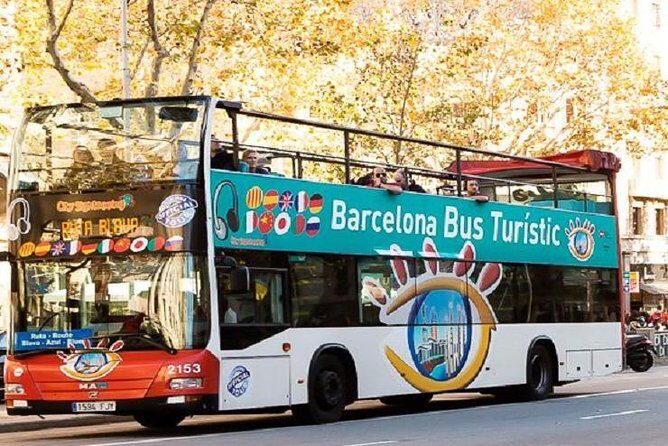
Starting at Estació de Sants at 9:30 am is a smart move. It’s a major transit hub, so it’s usually easier to reach than random hotel pick-ups. It also puts you in a good rhythm early: you can collect views and context while the city is still waking up.
One practical tip from the real world: when you’re walking to the pick-up point, don’t rely only on distant signage. People have found the street signs hard to read while approaching. Use your phone map, zoom in close, and confirm the exact stop area before you commit to a sidewalk. A small misread here can cost you time—and time is the one thing you can’t replace if you’re waiting for the next bus.
Port Olímpic and Torre Agbar: the waterfront warm-up
Your route takes you past Port Olímpic and Torre Agbar, giving you a sharp contrast right away. Port Olímpic is all about the sea-breeze feeling and the modern skyline energy. Torre Agbar adds a vertical landmark that’s easy to recognize from the bus as you move along.
Why this stop-in-the-loop matters: it gives you a visual reset. You’re not only thinking architecture—you’re seeing where the city meets the water and how Barcelona arranges modern space alongside older neighborhoods. Even if you don’t hop off here, the bus window time can still feel useful, because it helps you understand the city’s layout.
If you do hop off, keep expectations realistic. This area is more about atmosphere and views than a single “must-see building” moment. Plan for a short wander and then get back on if your goal is to use the most time at the high-demand Gaudí sites.
Sagrada Família and Sant Pau Dos de Maig: the Modernisme double feature
The bus route includes Sagrada Família plus Sant Pau Dos de Maig. Together, they make a good one-two punch: one of the most famous basilicas in Europe, paired with another Modernisme draw that’s known for its design character.
What I like about seeing these from the bus first: it helps you “calibrate” your day. Sagrada Família is visually overwhelming in the best way, but it’s also easy to get disoriented once you’re nearby. A bus tour sets you up with orientation—what direction you’re approaching from, what streets you’ll likely need, and where the sightlines are.
A quick caution on approach: if you want to do anything beyond a quick exterior look—like buying tickets or doing a timed plan—don’t assume the bus will feel like a clock. The tour is built around flexibility, and some people have experienced uneven waiting times. If you’re doing anything time-sensitive, give yourself extra slack.

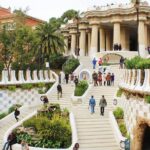



Park Güell: viewpoints you can pace
Next comes Park Güell. This is where Barcelona’s hilly, garden-meets-city personality really shows up. The key advantage of arriving by bus is simple: you get to choose how much effort you want to spend walking once you’re there.
What’s valuable about this stop, even if you’re not a “parks all day” person: the views. Park Güell isn’t just about one monument—it’s about perspective. You’ll likely find yourself stopping for photos from different angles, because Barcelona’s buildings stack in a way that looks good from multiple heights.
One practical note for planning: if you’re riding in hot months, you’ll want sun protection. Some visitors have specifically pointed out that summer heat makes it smarter to carry shade coverage and drink water.
Tibidabo: the big-city view from higher ground
Tibidabo is a different flavor of Barcelona—more “look down on the city” than “stand and stare at one facade.” It’s a good stop when you want a breather from the dense central sights and you’re curious how the city spreads out.
If you hop off here, I’d treat it as a viewpoint mission. Plan for a shorter window if you’re tired, and a longer one if you love panoramic scenes. The bus helps you get there without turning the day into a “how do we reach this hill?” puzzle.
Also, because the route includes other iconic Gaudí-area stops, Tibidabo is a great choice for the time when your feet start to complain. It can refresh your day with one of those “wow, that’s Barcelona” moments—then you’re ready to keep going.
Carrer de la Pedrera: Gaudí vibes without the rush
The bus route brings you to Carrer de la Pedrera. This is the area strongly tied to Casa Milà, and even when you’re just looking from the street, the forms and curves make a strong impression.
Why a hop-on stop helps here: it lets you pause and look around at street level, without feeling like you must cram everything in immediately. Barcelona’s architecture reads better when you’re allowed to step back and watch how the shapes work from different distances.
If you’re planning to go inside, the tour listing here doesn’t mention entry tickets. So assume you may need separate tickets if you want interior access. In that case, pick the timing carefully. You’ll get more enjoyment if you aren’t racing to re-board while you’re still deciding what to prioritize.
Casa Batlló in L’Eixample: architecture close-up time
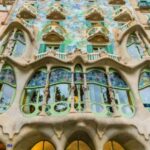
Your loop finishes strong at Casa Batlló on Pg. de Gràcia in L’Eixample. This is one of those spots where Barcelona’s personality becomes obvious fast: you’re walking among buildings that look like design statements, not just places.
I like that this stop gives you a “finale” setting. By the time you reach Casa Batlló, you’ve already seen how Gaudí changes the visual language across different neighborhoods. Now you can compare and spot patterns—without feeling like you’re only doing one building at a time.
For many people, the value of the bus is how it spaces these moments. Instead of cramming everything into a single neighborhood walk, you’re moving between areas so the city feels varied. That usually makes the architecture feel less like overload and more like a story you can follow.
On board: WiFi, guides, and the audio reality check
Included on this tour: WiFi on board, and guides. That’s a nice combo when you want to look things up while you’re moving, or just keep your map brain running smoothly.
But I’ll add a reality check that matters for expectations. Some people have reported issues with WiFi and with the onboard audio experience. If narration quality is important to you, do two things:
- Test your listening setup right away when you get on.
- Don’t rely on the bus audio as your only source for stop highlights. Treat it as a bonus, not the backbone of your plan.
Also, the open-air deck is part of the appeal. If it’s windy or sunny, plan accordingly—hat, sunglasses, and a layer for evenings all make the ride more pleasant.
How long this feels like: the 3-hour loop vs your personal pace
The tour is listed at about 3 hours. In practice, the real duration depends on how often you hop off and how long you stay. The strength of hop-on hop-off is that it adapts to your energy.
If you want to maximize value:
- Pick 3 big stops you care about most.
- Use the bus ride to rest your legs.
- Hop off early enough that you aren’t stressed about re-boarding.
If you want a more relaxed day:
- Do one major architecture stop plus one viewpoint.
- Leave the rest for a future visit or a second day.
This approach makes the price feel more justified. You’re using the flexibility you paid for.
Who should book this tour (and who should skip it)
This tour is a strong fit if you:
- Want architecture-heavy sightseeing without building a complicated transit plan.
- Like deciding your own schedule day-of.
- Enjoy an open-air bus experience for skyline and neighborhood passes.
I’d be more cautious if you:
- Need perfectly reliable timing for ticketed, timed-entry plans.
- Expect constant, rapid bus frequency with no waiting.
- Rely heavily on onboard tech working flawlessly (WiFi and audio have had mixed feedback).
If you fall into the cautious group, you can still consider it—but plan your day with buffer time and treat the bus as helpful transport rather than a strict appointment system.
Should you book Barcelona Hop on Top City Tour?
Book it if you want a low-stress way to hit the big names—Sagrada Família, Park Güell, Tibidabo, Gaudí-area streets, and Casa Batlló—while keeping control over how long you stay at each stop. The included guides, on-board WiFi, and the hop-off freedom are the parts that make it feel like more than just a ride.
Skip it or choose another option if you’re the type who hates uncertainty about wait times, or you’re counting on WiFi/audio to be perfect the whole day. With a $270.02 price tag, you want this to match your style of travel. If it does, it can be a very efficient way to make Barcelona feel connected instead of scattered.
FAQ
What time does the tour start?
The tour starts at 9:30 am, with the first stop at Estació de Sants (Sants Station).
How long is the tour?
The experience is listed at about 3 hours, though hop-on hop-off flexibility lets you spend more time depending on how long you stay at stops.
What’s included in the ticket price?
WiFi on board, all fees and taxes, and guides are included.
What isn’t included?
Breakfast isn’t included.
Can I hop on and off and spend as long as I want?
Yes. It’s designed for hop-on hop-off use, so you can get off at stops that interest you and spend as long as you like before returning to the bus.
Is this tour refundable if I change my plans?
No. The experience is non-refundable and cannot be changed once booked.