REVIEW · BARCELONA
Street Art, Sculptures & Crime Stories Walking Tour – Barcelona
Book on Viator →Bookable on Viator
This walk reads Barcelona like a crime novel. You follow a local guide through four neighborhoods where street art tells the story and small-group pacing keeps it personal, not chaotic. I love that the tour connects murals to real local context, not just pretty walls.
I also like the guide’s habit of pointing out details most people miss. In particular, the name that comes up again and again is Liliia (sometimes spelled Leila), praised for taking time and sharing smart recommendations for coffee and lunch after the walk.
One possible drawback: at about 2 hours 30 minutes, you cover a lot of ground. If you want an all-day, museum-style art binge, this is more about walking and spotting than hanging around one wall for an hour.
In This Review
- Quick hits before you go
- Price and value: is $108.37 worth a 2.5-hour walk?
- Where the tour starts and ends (and why that’s helpful)
- How the route works: four stops, one theme—art with consequences
- Stop 1: El Raval’s crime stories, political murals, and hidden details
- Stop 2: La Rambla and Joan Miró’s pavement mosaic
- Stop 3: Gothic Quarter’s Roman and Gothic backdrop with modern street art
- Stop 4: El Born / La Ribera—optical illusions, the staring building, and Santa Caterina
- The crime-story angle: how the past shows up in the street art
- The guide’s style: what you’ll likely get from Liliia (and why it matters)
- Getting the most from it: shoes, pace, and what to ask
- Who this tour fits best (and who might want something else)
- Should you book this Barcelona street art and crime stories walking tour?
Quick hits before you go
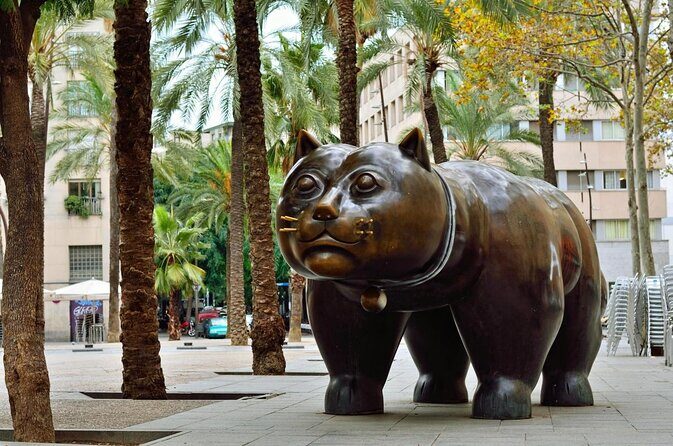
- El Raval sets the tone with political murals, mosaics, and a link to a historical killing
- La Rambla stops at a pavement mosaic by Joan Miró—famous, and easy to step over without noticing
- Gothic Quarter adds a Roman-and-Gothic backdrop with modern pieces, plus Picasso callouts
- El Born / La Ribera brings optical illusions, the staring building facade, and art around Santa Caterina Market
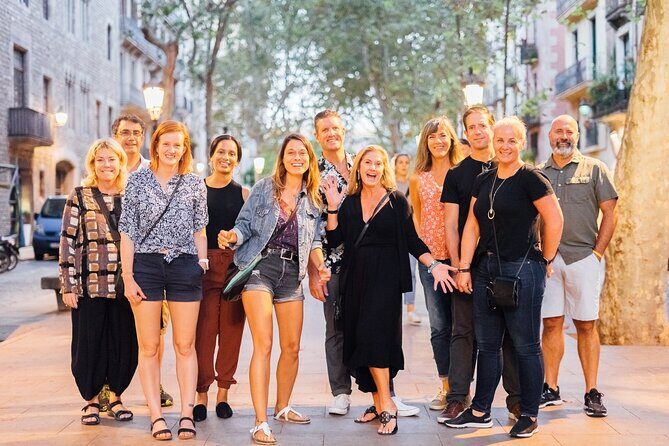
- Maximum group size is 15, so you get time for questions
- You get a list of recommendations after the tour, and the guide may steer you to good coffee and food
Price and value: is $108.37 worth a 2.5-hour walk?
At about $108.37 per person for roughly 2 hours 30 minutes, you’re paying for three things that matter in Barcelona: a focused route, a local guide, and included entry at certain stops.
Here’s the value math I’d use:
- You get a guided walk through four areas that people often visit randomly. The route is planned around street art themes and story context.
- Tickets are included at El Raval (listed as about 1 hour) and at the Gothic Quarter stop. La Rambla and El Born sections are listed as free for admission. So the price isn’t only paying for walking time.
- It’s a small group (max 15). That turns the tour from a loud pass-through into something more like a conversation with a person who knows what you’re looking at.
One more small but real perk: the tour offers recommendations after the walk, plus potential customization for your group. That can stretch your day further than you’d expect from a short tour.
You can also read our reviews of more walking tours in Barcelona



Where the tour starts and ends (and why that’s helpful)
You meet at Carrer Nou de la Rambla, 105, Ciutat Vella (08001) and finish at Carrer Antic de Sant Joan, 7, Ciutat Vella (08003), in the Born area near Ciutadella.
That end point is practical. Born is a good place to wander next, grab food, or continue exploring smaller streets. If your hotel is anywhere in Ciutat Vella, the finish also makes it easier to keep moving without crisscrossing the city.
How the route works: four stops, one theme—art with consequences
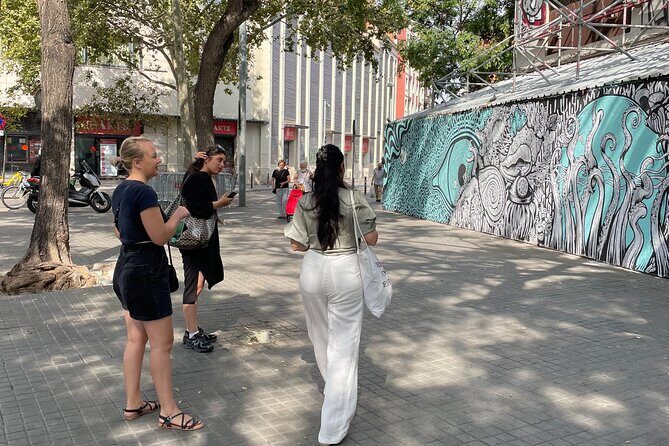
This tour is built like a guided storyline. It starts in El Raval, where street art is tied to social struggle and the neighborhood’s darker past. Then it moves toward more tourist-clued areas (La Rambla and the Gothic Quarter) where you’re shown how the city’s layers—old stone, modern ideas, and political messages—sit side by side. Finally, El Born closes with the flashy, optical, and photo-friendly side of contemporary street art.
The times are tight, but that’s the point. You cover key areas where Barcelona street art is most readable, instead of trying to find it on your own.
Stop 1: El Raval’s crime stories, political murals, and hidden details
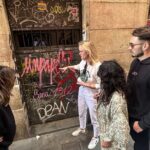
El Raval is described as Barcelona’s rebellious core, and the tour treats it like the first chapter for a reason. This is where you get the darker context: social and political street art, plus clues about the neighborhood’s shift from danger zone to a cultural hotspot.
What I’d watch for here:
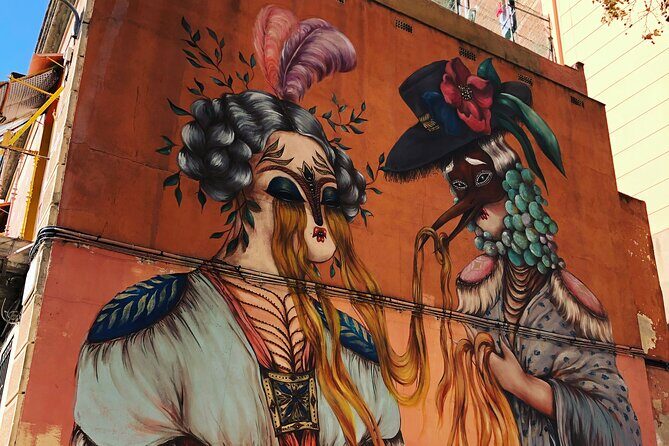
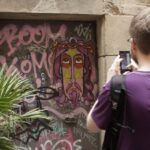
- Large-scale murals showing social struggles and local legends
- Small pieces tucked into alleys and doorways—easy to miss unless someone points them out
- A site tied to a dramatic historical killing that inspired neighborhood art
- Iconic mosaics linked to Raval’s rebellious spirit
- Extra details that explain why the same streets feel different now than they did before
Why this stop is valuable: street art works better when you understand what it’s responding to. In Raval, the tour aims to connect the art to pressure—economic, political, and personal. Even if you’re not a graffiti expert, you’ll usually leave this stop with a clearer sense of what the artists were reacting to.
The only “heads up” angle: this area can feel intense. Not because the tour is scary, but because the themes are. If you prefer light and cheerful sightseeing only, you may want to mentally pace yourself.
Stop 2: La Rambla and Joan Miró’s pavement mosaic
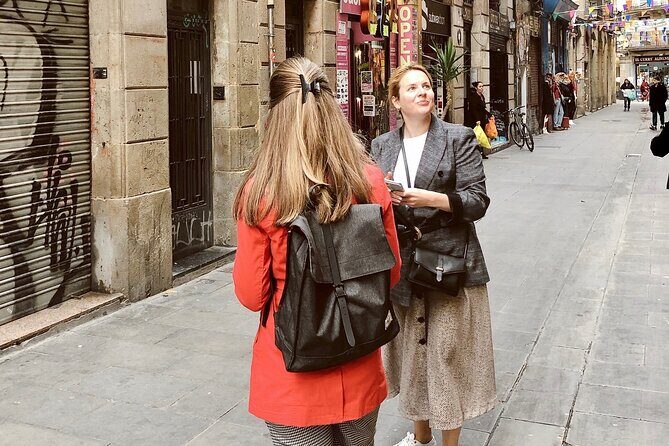
La Rambla is the most famous long boulevard in town. That’s exactly why this stop works: it puts street art where millions pass daily, often without noticing.
You’re guided to:
- Joan Miró’s mosaic artwork embedded in the pavement
- Contemporary local street art with a more philosophical tone, tackling identity, freedom, and city life
This part lasts about 20 minutes, so it’s not a long stop. But it’s a good palate cleanser after Raval. The messages are still ideas-heavy, just less tied to the grim “crime-story” mood and more to how people live and think in the city.
Practical tip: La Rambla is busy. Even though the tour is small-group, you’ll still deal with foot traffic. The guide’s job here is to keep you from wasting time looking in the wrong direction.
You can also read our reviews of more tours and experiences in Barcelona


Stop 3: Gothic Quarter’s Roman and Gothic backdrop with modern street art
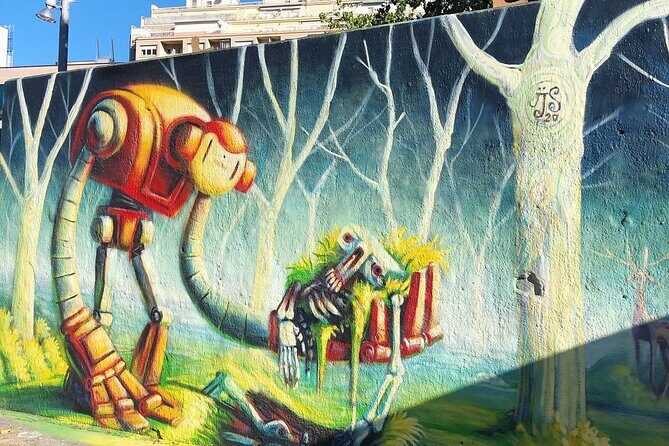
The Gothic Quarter is ancient Barcelona’s “old town” core, where medieval walls and older Roman elements make the streets feel like a time machine. This stop adds a twist: you don’t just look at old stones—you watch modern art interact with them.
You’ll focus on:
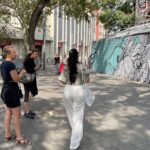
- Modern murals that blend with Gothic arches and Roman ruins
- Contemporary pieces hidden in ancient alleys and courtyards
- A nod to iconic artworks created by Picasso during his early Barcelona days
- Urban installations that reinterpret medieval legends
- The contrast between thousand-year-old stone and fresh spray paint
Why this stop matters: it answers a question you might have after seeing street art elsewhere—does it belong in a historic city? Here, the tour shows how the art doesn’t erase the past. It talks back to it.
There’s an admission ticket listed for this stop as included, so part of what you see is tied to sites and access, not only wall-hunting.
Stop 4: El Born / La Ribera—optical illusions, the staring building, and Santa Caterina
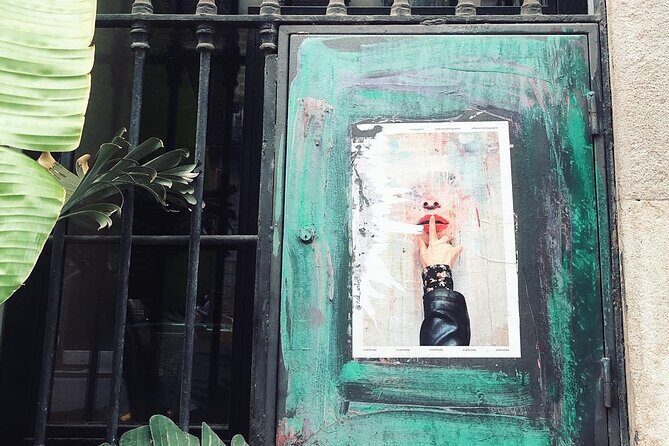
El Born is where contemporary street art becomes more playful and visually bold. The tour calls it a street art star area and connects it to darker legends—like how this neighborhood has a history that includes medieval executions, before it became a trendy creative zone.
You’ll spend about 40 minutes here, including:
- Optical illusion street art meant to trick the eye and bend reality
- The famous staring building facade, a modernist structure with details that feel like they’re watching you
- Vibrant murals around Santa Caterina Market
- The market’s wavy Gaudí-inspired roof, which gives you a clean landmark while you hunt for the art
Why El Born works as the finish: it’s a calmer landing. By now, you’ve got the context for why the art exists. Now you get to enjoy how it looks and how it plays with your attention.
Also, this is the stop where photos actually come easily, because the art is designed to grab you. Just remember: the point is still the stories and references. If you only snap images, you’ll miss the context that ties the neighborhood together.
The crime-story angle: how the past shows up in the street art
The title says crime stories, but the smarter way to see it is this: the tour uses specific historical moments and neighborhood experiences as a lens.
That means you’re not just hearing generic “urban legend” talk. You’re getting references to events tied to the area—especially in El Raval—where street art acts like both memory and warning label. It helps explain why some murals feel angry, urgent, or political, and why certain symbols keep showing up.
And when you move into more central areas like the Gothic Quarter, the tour keeps that thread alive by showing how modern artists respond to medieval legends and older city layers. So the “crime story” concept becomes a bigger idea: cities remember through art, even when the original events are long gone.
The guide’s style: what you’ll likely get from Liliia (and why it matters)
The strongest repeated praise centers on the guide’s personality and teaching method. Liliia comes up again and again as friendly, patient, and good at explaining both the art and the surrounding history.
Two practical benefits of that kind of guiding:
- You’ll ask better questions because the guide gives you prompts. Street art references can be easy to miss if you don’t know what to look for.
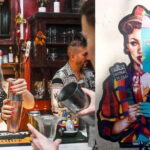
- You’ll get better food choices. The tour guidance isn’t only about murals. There are strong mentions of recommendations for coffee and lunch, which can save you time when you’re deciding where to stop next.
It’s also worth noting that the tour can be customized for your group. If your art tastes are heavier on graffiti, political murals, or more symbolic work, this is more likely to match your vibe than a fixed-script walk.
Getting the most from it: shoes, pace, and what to ask
Because the tour is walking-heavy (four neighborhood stops across about 2.5 hours), treat it like sightseeing with homework. You’ll move from wall to wall, and the guide will point out details you’d likely miss without help.
Here’s how to get the best payoff:
- Wear comfortable shoes. You’ll spend your time scanning pavement mosaics, doorways, courtyards, and wall edges.
- Ask about what connects one piece to another. The tour is built on that theme, so questions can make the whole route click faster.
- If you care about where to eat, ask during the tour. The guide has been praised for sending people to great coffee and lunch spots afterward.
And if you’re the type who likes street art but hates crowds, the small group size (max 15) is the key. You still walk through busy areas like La Rambla, but your experience won’t feel like you’re stuck behind a parade.
Who this tour fits best (and who might want something else)
You’ll likely love this if:
- You’re into street art beyond the surface look—especially political and story-driven work
- You like city history, but you want it told through art rather than museum walls
- You prefer a guided route that helps you find details you’d miss on your own
- You want a small group experience in central neighborhoods
You might want a different option if:
- You mostly want famous museum masterpieces, framed and ticketed end-to-end
- You dislike heavier themes tied to the neighborhood’s dark past (this tour includes those references)
Should you book this Barcelona street art and crime stories walking tour?
If you want a Barcelona day that feels smarter than just walking and snapping photos, I think this is a strong pick. The value is in the combination: a guided storyline, a route that touches multiple art “moods,” and included admission at key stops. Add the small group cap, and it becomes the kind of tour where questions actually get answered.
Book it if you enjoy street art with context and you want to end in Born with time to keep exploring. Skip it only if you want a slow, museum-like pace or you prefer light themes all the way through.