Barcelona’s hidden streets come with a local. You’ll move through El Born and on into the Gothic Quarter, with a guide at your side to explain what you’re seeing and answer questions as you go. It’s built for people who want more than postcard views.
I love the format: a private, question-friendly walk where you can steer the conversation. I also like that the route mixes medieval streets with standout landmarks, so you get both daily-life Barcelona and major sights in one smooth loop.
One thing to consider is the 2.5-hour walk. The medieval streets can feel a bit twisty, and the story doesn’t always follow a strict oldest-to-newest timeline, so you’ll want to ask for framing if that matters to you.
In This Review
- Key Highlights You’ll Feel on the Walk
- Why This Private “Hidden Streets” Tour Feels Different
- Meeting Point at Hotel Ohla Barcelona and the Walk Pace
- El Born for about 2 Hours: Medieval Streets You Can Actually Read
- Modernism Interlude: Palace of Catalan Music and Arco di Trionfo
- Picasso Museum Area Without the Museum Day
- Correus: The Major Post Office Stop That Makes Barcelona Feel Real
- Gothic Quarter Fundamentals: Plaça de Sant Just, Plaça de Sant Jaume, and Beyond
- Price and Value: What $101.53 Buys You Here
- Who Should Book This Tour (and Who Might Skip It)
- Should You Book This Hidden Streets Barcelona Tour?
- FAQ
- FAQ
- How long is the Explore Hidden Streets of Barcelona private tour?
- Is this tour private or shared with other people?
- Where does the tour start and where does it end?
- Is the tour offered in English?
- Are admission tickets included for the stops?
- Are service animals allowed?
- Do I get a mobile ticket and when will I receive confirmation?
- What is the cancellation policy?
Key Highlights You’ll Feel on the Walk
- Two hours in El Born for medieval streets, markets, and neighborhood meaning
- A mix of medieval + Modernism with quick, high-impact stops (including the Arco di Trionfo area)
- Market and landmark stops like Mercat del Born and the Correus post office building
- Picasso-area street wandering where you pass by the Picasso Museum area without making it a museum day
- Gothic Quarter “foundations talk” around Roman-era places like Plaça de Sant Just and Plaça de Sant Jaume
- Private-group pacing with an English-speaking guide focused on your questions
Why This Private “Hidden Streets” Tour Feels Different
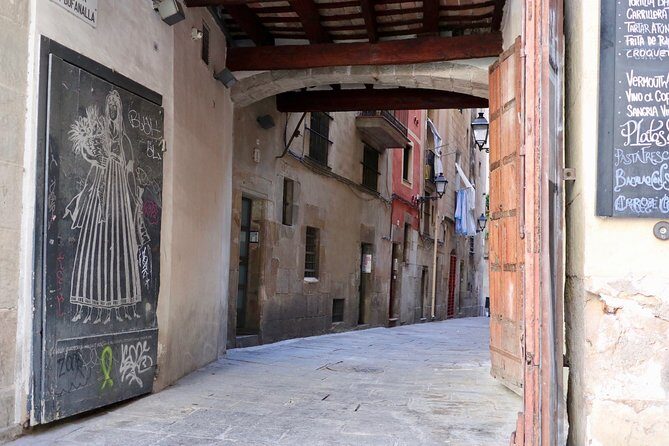
If you’ve ever wandered Barcelona feeling like you’re walking through a movie set, this tour changes the angle. The guide’s job is to connect the dots while you’re moving—between street shapes, landmark facades, and the neighborhood stories that don’t show up on most quick itineraries.
The best part is that it’s private. That means you can ask the messy questions you usually hold back—like what a place is actually called, why it mattered, and how locals think about it today. One of the guides involved in this experience is Christian, and another experienced guide named Michael is also mentioned as part of the team that runs these walks. Either way, the tone tends to be personal and conversational, not lecture-mode.
You also get a smart blend of time. You spend real time in El Born and a longer stretch in the Gothic Quarter, then you tap into Modernism and major buildings with shorter stops. It’s a “good backbone” route: enough structure to learn, but not so rigid that you miss the street-level feel.
You can also read our reviews of more private tours in Barcelona


Meeting Point at Hotel Ohla Barcelona and the Walk Pace
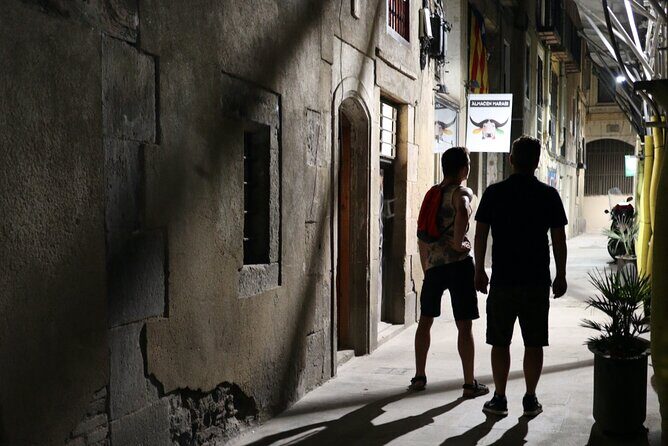
You start at Hotel Ohla Barcelona, on Via Laietana, 49 (in Ciutat Vella). It’s a convenient base near major transit lines, and it’s easy to find before you step into the narrower streets. The tour ends at Plaça de Sant Felip Neri, right in the heart of the Gothic Quarter—handy because it’s a natural jumping-off point for your next meal or wander.
Duration is about 2 hours 30 minutes, and the tour expects you to be comfortable walking for roughly that long. That’s not an easy-chair city stroll. You’ll be on foot for most of it, including medieval alleys where sidewalks can feel crowded or uneven.
My practical advice: wear shoes you can walk in for a full morning (or at least a solid afternoon). Bring water if you’re doing this in warm months. And if you prefer a slower pace, tell your guide early. Since it’s private, they can usually adjust the emphasis—more conversation at a square, a brief pause on a particularly tight street, that kind of thing.
El Born for about 2 Hours: Medieval Streets You Can Actually Read
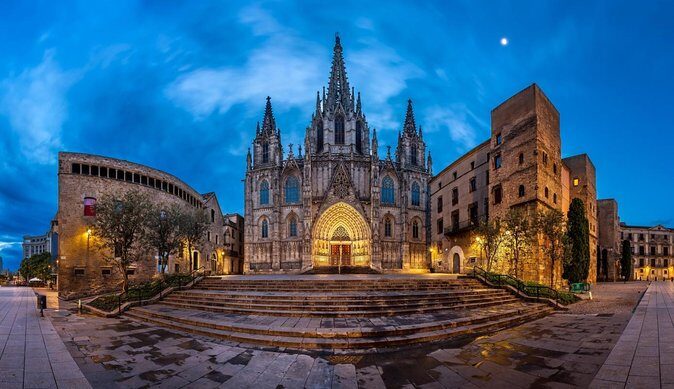
The tour’s core begins in El Born, where you’ll spend around 1 hour 40 minutes. This is where the street-level “why” matters most. El Born isn’t just a scenic district—it’s a medieval neighborhood where the layout and landmark choices explain how people lived and gathered long before today’s tourist crowds.
You’ll cover several “anchors” here:
- Mercat del Born (a major historic market stop)
- Passeig del Born, where your guide explains what El Born means
That last point matters more than it sounds. Street names in Barcelona often point to old functions—markets, crafts, areas of gathering. When your guide spells out the meaning, the neighborhood stops feeling random.
A key value of having a local guide is interpretation. Without guidance, it’s easy to treat Mercat del Born as just a pretty space. With a guide, you learn what to notice: the landmark importance, how the market connects to the neighborhood story, and why locals cared enough to build and maintain these places over time.
If you’re the type who likes to take photos, El Born is also where you’ll want to pause. But keep an eye on your walking time—this tour moves, and you’ll cover a lot of street.
Modernism Interlude: Palace of Catalan Music and Arco di Trionfo
After El Born, you hit a more “big architecture” section. The first major sightseeing stop is the Palace of Catalan Music, with about 15 minutes there. Admission for that stop is listed as not included, which is your clue that you’ll likely spend time on the exterior and surrounding area unless you bring your own entry option.
Next comes Arco di Trionfo, again about 15 minutes. The tour frames it as a Modernism highlight full of history and legends. Even with limited time, you can get a lot from a guide here, because architecture becomes clearer when someone points out what makes it different from older medieval forms.
Why this works: the tour isn’t only “old streets forever.” It gives you a contrast. You move from the medieval logic of El Born into a more modern-looking Barcelona identity, and the guide helps you connect those eras without making you feel lost.
Practical tip: if you really want to go inside the Palace of Catalan Music, plan around time and ticketing on your own. Since admission isn’t included, treat it as a possible add-on rather than a guaranteed walk-in moment.
Picasso Museum Area Without the Museum Day
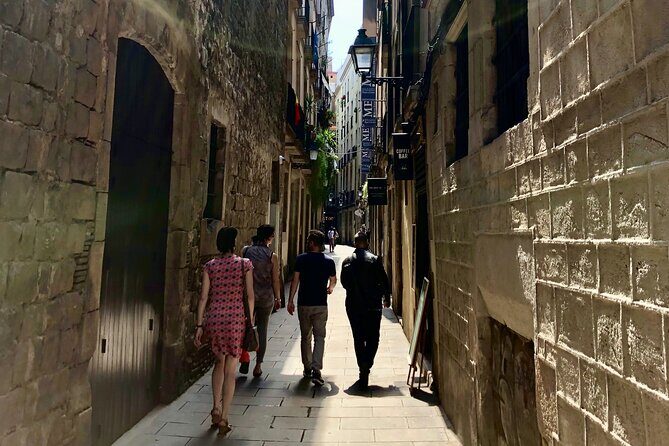
You’ll then walk through a maze of small streets where you pass by the Picasso Museum area (listed as Museu Picasso). This is not presented as a full museum visit with ticket time—it’s more about street navigation and context, with the Picasso connection as part of the neighborhood fabric.
This approach can be a win if you’re trying to keep the day moving and you prefer Barcelona “in motion.” Instead of committing to an indoor schedule, you get a guided route that helps you understand where the museum sits within the wider neighborhood story.
One practical upside: if you’re visiting Barcelona and you’re already planning a dedicated Picasso museum visit on another day, this stop gives you orientation. It’s a way to recognize the area later when you’re on your own.
If you’re a museum-only person, this might feel light. But for a walking tour, it’s a sensible trade: more street understanding, less queue time, and still a strong cultural reference point.




Correus: The Major Post Office Stop That Makes Barcelona Feel Real
Next up is Correus, described as Barcelona’s major post office, in a magnificent building you’ll come across during the walk. This is one of those stops that surprises people—in a good way.
Tour days often focus on palaces, churches, and the headline monuments. Correus shifts attention to an everyday institution. That’s when Barcelona starts to feel less like a checklist and more like a lived-in city. A guide’s value here is pointing out what makes the building stand out, and how a civic building fits into the street story you’ve been learning since El Born.
It’s also a nice pacing tool. You get a break from narrow-street navigation and transition into a broader “look at the city like it runs” moment. Then you’re ready for the Gothic Quarter, where Barcelona’s older foundations take over.
Gothic Quarter Fundamentals: Plaça de Sant Just, Plaça de Sant Jaume, and Beyond
The big time block lands in the Gothic Quarter (Barri Gòtic), with about 1 hour 20 minutes. This section is where the tour leans into origins. The tour describes it as the area where Barcelona was founded more than 2000 years ago—and the stops you make reinforce that message.
You’ll visit:
- Plaça de Sant Just (about 15 minutes), dating back to Roman times and full of stories
- Placa de Sant Jaume (about 10 minutes), the heart of Roman Barcelona and the reason Barcelona was founded there
- Plaça Sant Felip Neri (about 10 minutes), where the tour ends at a small square known for history and atmosphere
This is the heart of why a guide helps. Roman-era places can feel abstract when you’re just reading a sign. With a guide, those squares start to feel like nodes in a much older map—places where people gathered, moved, and built the city’s identity over time.
Balanced expectation note: one criticism of this style of route is that it can feel like a street loop rather than a straight lecture that moves strictly from oldest to newest. If that’s how you learn best, you can fix a lot of that by asking your guide to connect each stop back to the timeline you care about. In a private setting, that’s often an easy adjustment.
Price and Value: What $101.53 Buys You Here
At $101.53 per person, this is priced for a private, English-speaking guided walk. That’s not “cheap,” but it also isn’t trying to be an all-day museum marathon. You’re paying for three things:
1) Time with a local who answers questions
2) A route that hits major districts without turning into a chaotic self-guided scramble
3) A blend of medieval and landmark stops packed into about 2.5 hours
Where this price makes sense best is when you value interpretation—when you want someone to explain what you’re seeing instead of just pointing. The private format also makes it easier to customize on the spot, whether you want extra time at a square or you’d rather move quickly through less interesting streets.
If you’re the kind of traveler who doesn’t care about context and just wants photos, you can spend less on a group tour or on your own walking plan. But if you enjoy asking questions and want the city to make more sense, this is the kind of mid-priced experience that can pay off quickly.
Who Should Book This Tour (and Who Might Skip It)
Book it if you:
- Want a private walking experience in English
- Like learning through neighborhood storytelling, not just monument spotting
- Prefer a day that combines El Born and the Gothic Quarter without turning into a museum-heavy schedule
- Appreciate practical travel tips that a guide can share while walking
Consider skipping or switching to a different style if you:
- Need a lot of indoor time at paid attractions (this tour includes one major stop where admission is not included)
- Want a strict, chronological lecture approach
- Have low walking stamina, since you should be ready for about 2.5 hours of walking
If you decide to go, the small move that improves the whole experience is simple: show up with two or three questions. Ask what to look for, what to prioritize next, or what locals do in the neighborhoods you’re passing through.
Should You Book This Hidden Streets Barcelona Tour?
Yes, if your goal is to understand Barcelona at street level—especially in El Born and the Gothic Quarter—with a local guide who can respond in real time. It’s a strong choice when you want structure without feeling trapped, and when you’re happy to trade a bit of strict timeline order for better neighborhood interpretation.
No, if you want a museum-focused itinerary, a mostly-static sit-down tour, or a perfectly linear oldest-to-newest history lesson. For that style, you might prefer a different format.
FAQ
FAQ
How long is the Explore Hidden Streets of Barcelona private tour?
It lasts about 2 hours 30 minutes, and you should be comfortable walking for around 2.5 hours.
Is this tour private or shared with other people?
It’s private. Only your group participates.
Where does the tour start and where does it end?
You meet near Hotel Ohla Barcelona (Via Laietana, 49, Ciutat Vella) and the tour ends at Plaça de Sant Felip Neri in the Gothic Quarter.
Is the tour offered in English?
Yes. The tour is offered in English.
Are admission tickets included for the stops?
Most stops are listed with admission ticket free. The Palace of Catalan Music is listed as not included, so you should plan for that separately if you want to enter.
Are service animals allowed?
Yes, service animals are allowed.
Do I get a mobile ticket and when will I receive confirmation?
You receive a mobile ticket, and confirmation is received at the time of booking.
What is the cancellation policy?
Free cancellation is available up to 24 hours in advance for a full refund, based on local time.