Girona reads like a film set.
This 2-hour walking tour strings together major monuments and calmer medieval corners with a guide who adds story-time facts (including Game of Thrones filming spots). I especially love the small group size (up to 15 people) and I also love that the key sights have free admission tickets, so your money goes mostly to the guide. The one drawback: with only about 15–20 minutes per stop, the pace is brisk, so you won’t get hours to linger in each church or museum room.
You’ll start at Pg. José Canalejas, 8 in central Girona at 11:00 am, and the walk ends back at the same meeting point. It runs in English, uses a mobile ticket, and sticks close to the sights without feeling like a marathon.
Most people can handle the route, but bring comfortable shoes. Old Girona streets are the real deal—some are uneven—and you’ll want to move well when you’re hopping between Romanesque, Gothic, and medieval Jewish-quarter streets.
In This Review
- Key things to know before you walk
- A 2-hour route that keeps Girona logical
- Basílica de Sant Feliu: where Romanesque meets Gothic
- Banys Àrabs: stepping into a medieval bath circuit
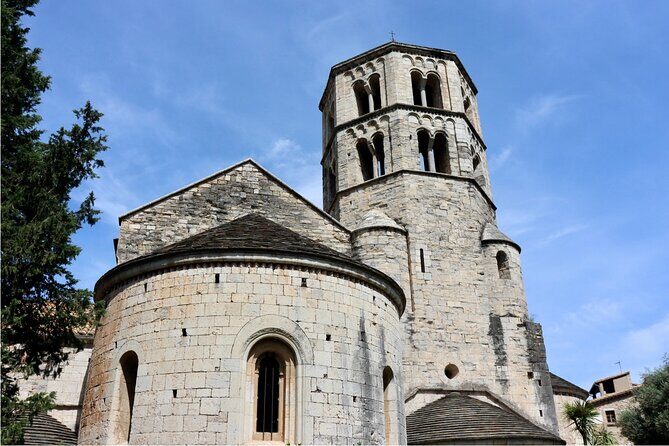
- Sant Pere de Galligants: a Benedictine abbey with real structure
- Girona Cathedral: the wide Gothic nave and the Tapestry of Creation
- The Call Jewish quarter: narrow streets and the Museum of Jewish History
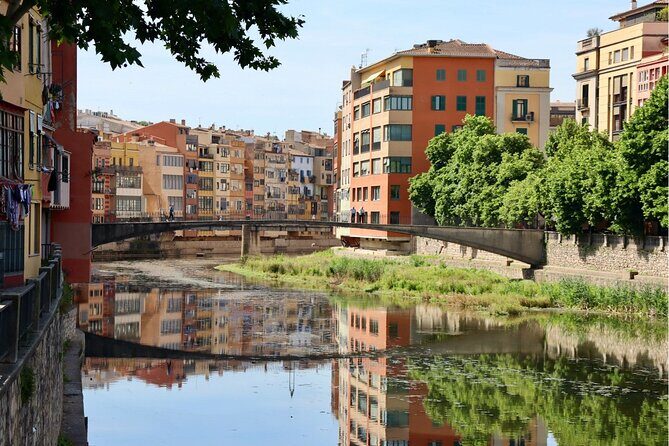
- Rambla de la Llibertat and the Pont de les Peixateries Velles
- Game of Thrones filming spots: what the photos add
- Price and value: does $67 make sense here?
- Pace, timing, and what to bring for an easy walk
- Should you book this Girona Walking Tour?
- FAQ
- How long is the Girona Walking Tour?
- What does the tour cost?
- What language is the tour offered in?
- Where is the meeting point, and when does it start?
- Is this a small group?
- Is admission required for the stops, and do I need to tip?
- What is the cancellation policy?
Key things to know before you walk
- A tight 2-hour overview that helps you understand Girona fast without feeling rushed off the city
- Free-entry stops at major highlights like Sant Feliu, the Banys Àrabs, Sant Pere de Galligants, and the Cathedral
- Game of Thrones filming spot storytelling with spot-by-spot photos and quick context as you walk
- Architecture you can actually see: Romanesque-to-Gothic contrasts in churches and abbey spaces
- Medieval daily life at the Banys Àrabs, where bathing rooms and the octagonal pool are the main event
- The Call (Jewish quarter) as a real street experience, not just a photo stop
A 2-hour route that keeps Girona logical
The best part of this tour format is that it teaches you how Girona hangs together. In about two hours, you cover religious Girona (basilica and cathedral), daily-life Girona (the medieval baths), and community Girona (the Call). Instead of seeing monuments like random pins on a map, you start connecting the dots.
Because the group is capped at 15 travelers, you’re more likely to hear your guide clearly and ask follow-up questions. And because many entrances are free, you’re not constantly looking at ticket lines or scrambling to decide what’s worth paying for.
The timing also tells you what to do next. When a stop is short, it’s not a “problem”—it’s a tasting portion. You’ll leave knowing what deserves a longer return visit.
You can also read our reviews of more walking tours in Girona

Basílica de Sant Feliu: where Romanesque meets Gothic
Sant Feliu is the kind of church stop that changes how you read the rest of the city. You’re looking at origins that trace back to the early Christian era, but the building you see blends Romanesque and Gothic design. That mix matters because Girona’s older layers aren’t separate—one style often explains the next.
You’ll also get pointed toward standout details, including the tomb of Saint Narcissus and medieval sculptures inside. Even if you’re not a “church person,” this is a strong stop because the guide helps you notice features you’d otherwise walk past.
Since the admission ticket is free and your time here is about 15 minutes, you’re not stuck. It’s enough time to understand the big architectural idea and locate a few specific highlights before the route moves on.
Possible consideration: if you’re hoping for a slow, contemplative hour in a single space, this won’t be that. The tour is built for movement and context, not long solo browsing.
Banys Àrabs: stepping into a medieval bath circuit
The Banys Àrabs (Arab Baths) is the stop that often makes people smile. It’s one of the best places in Girona to picture everyday life in a medieval city, because you’re not just looking at stone—you’re thinking about routines: heating rooms, cooling off, and how water shaped the day.
Inside, you’ll learn the layout includes spaces you might recognize from classical bathing traditions: frigidarium, tepidarium, and caldarium. The star highlight is the octagonal pool under the central dome, which you can use as your visual anchor as the guide explains how the rooms relate to one another.
This is also where the “influences” story becomes concrete. The baths are described as being inspired by Roman and Islamic bathhouse traditions, with architectural choices that reflect those ideas. You’ll finish the stop with a much clearer mental picture of what a bathhouse was meant to do beyond cleanliness.
Admission is free here too, and the stop runs about 15 minutes. That’s long enough to understand the key rooms, but short enough that you’re not exhausted by crowds and echoey interiors.
Sant Pere de Galligants: a Benedictine abbey with real structure
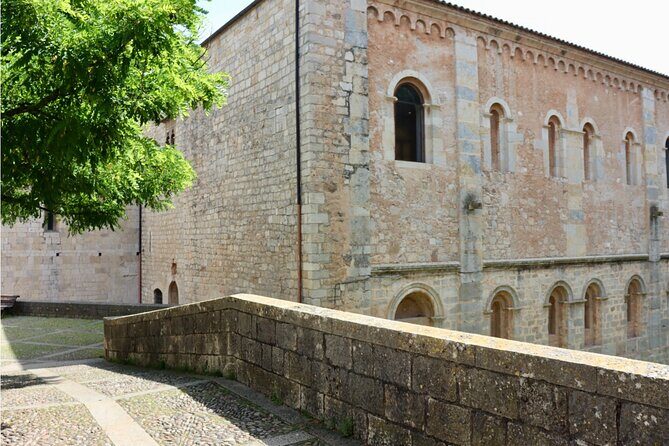
Sant Pere de Galligants offers you a different flavor of medieval Girona. This former Benedictine abbey dates to the 10th century, and the stop is centered on its Romanesque architecture and how that church space still organizes the site.
What makes this stop especially worthwhile is the way it connects architecture to artifacts. The area now houses the Archaeological Museum of Catalonia, meaning you’re not just seeing medieval forms—you’re also meeting objects from different periods. If you like museums that feel tied to place (not stuffed in a generic hall), this works.
You’ll also focus on visual standouts like the church bell tower and the cloister. Even in a short visit of about 15 minutes, these are the kinds of elements you can point out later because they’re so recognizable.
Admission ticket is free for this stop, so you don’t have to budget time for money decisions. You just show up, look closely, and let the guide explain what you’re seeing.
Girona Cathedral: the wide Gothic nave and the Tapestry of Creation
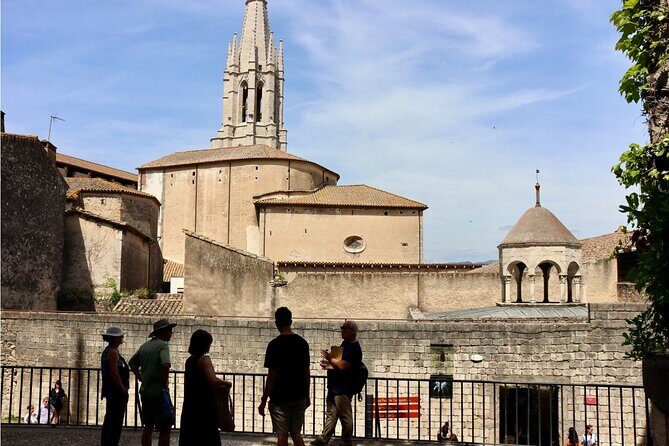
If you want one stop that explains why Girona gained attention over centuries, this is it. Girona Cathedral blends Romanesque, Gothic, and Baroque styles, so you experience layered building history instead of a single-style monument.
The big wow factor is the Gothic nave, described as one of the widest in the world. Standing inside (even briefly) gives you scale you can’t easily capture in photos. The guide’s job here is to help you understand why “wide” is not just a measurement—it changes how the space feels and how worship and movement worked.
You’ll also hear about the Tapestry of Creation, one of the cathedral’s key housed works, along with other religious artifacts. And because the cathedral sits elevated, you get the chance for expansive views of the city and surrounding area, which turns the stop from purely architectural into scenic.
Admission is listed as free, and your time here is about 15 minutes. That’s enough to identify the main stylistic shifts, understand the nave’s importance, and grab those viewpoint moments before moving on.
Possible consideration: cathedrals can be popular and echo a bit, which can make listening harder if the group is large (another reason max 15 matters). You’ll get the most if you face the guide and keep your attention tight during the explanation.




The Call Jewish quarter: narrow streets and the Museum of Jewish History
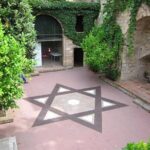
The Call is Girona at street level. This historic Jewish quarter dates back to the 12th century, and the character of the neighborhood comes from the layout—narrow, winding streets with medieval buildings that still feel human-scaled. It’s the kind of place where you slow down naturally, because the streets force you to.
During this part of the walk, you’ll get oriented to the area and learn how it connected to the community that once thrived there. The stop also points you to the Museum of Jewish History, so you don’t just see the quarter—you understand what there is to study if you want more.
Your time is about 20 minutes, which is a bit longer than the big monument stops. That extra time is useful because the Call needs walking pace. This isn’t a “stand and stare” place; it’s a “turn a corner and notice the street” place.
Admission here is listed as free as well. It’s a nice touch because it keeps the experience focused on interpretation rather than add-on costs.
Rambla de la Llibertat and the Pont de les Peixateries Velles
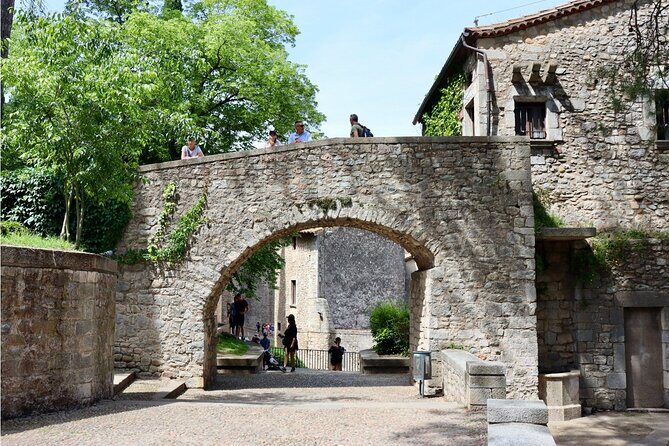
Next you shift from medieval religious and community spaces into a more everyday Girona promenade feel. Rambla de la Llibertat is a central historic street dating back to the 13th century, and it’s lined with shops and cafes. Arcades and storefront rhythm give you a different kind of “architecture to read,” one tied to commerce and daily meeting points.
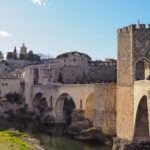
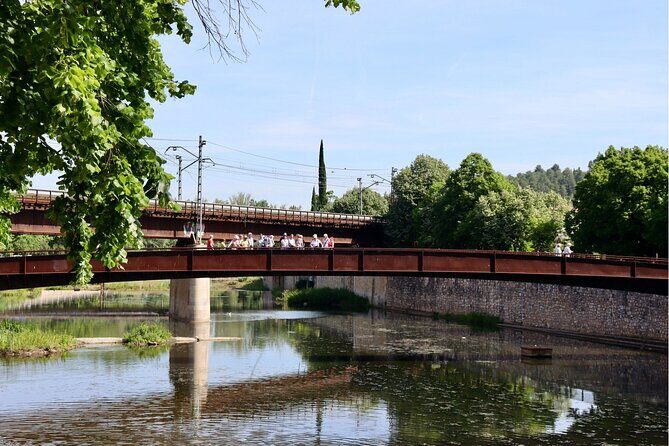
One detail you’ll hear early is the iconic iron bridge designed by Gustave Eiffel. Then, you’ll walk toward Eiffel Bridge (Pont de les Peixateries Velles), one of Girona’s most recognizable river-crossing visuals.
This is a good moment to let your brain rest. You’ve been in churches, cloisters, and interior rooms; now you’re outside, seeing how Girona connects neighborhoods and how people actually move through the city.
Your time here is about 20 minutes, and it’s also where the tour keeps things fun with a couple of extra surprises along the way. That matters because it prevents the walk from turning into only “big photo stops.”
Game of Thrones filming spots: what the photos add
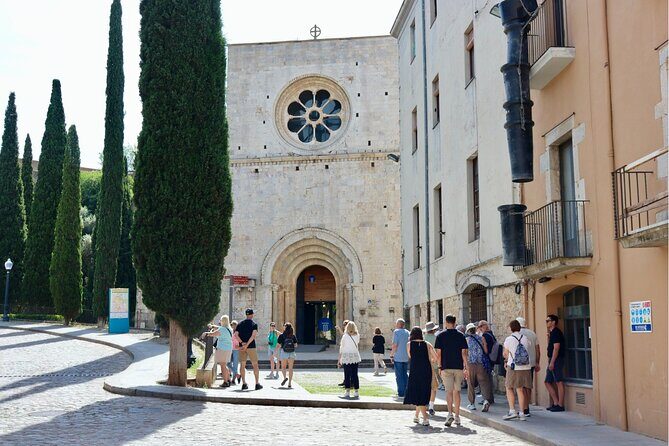
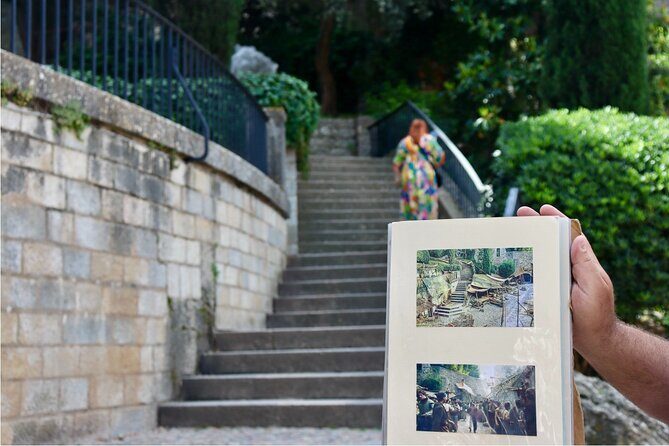
Here’s a strong reason this tour gets praised: the guide doesn’t treat Girona like a generic backdrop. Guides such as Christian use Game of Thrones references and photos at points along the walk to show you where filming scenes were set and how the show’s world maps onto real Girona streets.
This works even if you’re not a hardcore fan. The photos act like a focus tool. They help you notice angles, stone textures, and street geometry that you might otherwise miss during normal sightseeing. And because your guide ties it back to real places, it doesn’t feel like a gimmick.
The main thing to remember: this is still a Girona history and architecture walk first. The show references are the seasoning, not the meal.
Price and value: does $67 make sense here?
At $67 per person for about 2 hours, you’re paying for a professional guide and a curated route. The math gets better because the major sites on the walk are listed with free admission tickets, so you’re not stacking extra entry fees on top of the tour price.
Also, the group size matters for value. A maximum of 15 people is small enough that you’re not lost in a crowd. That makes the guide’s storytelling more useful, which is the main “product” you’re buying.
If you were to visit all these locations on your own, you’d still pay for your time and travel planning. This tour simplifies that. You get an efficient introduction to multiple sides of Girona—religious, cultural, and neighborhood life—without turning the day into a logistics puzzle.
Optional gratuities are noted, which is typical. You decide what feels fair based on how much the guide helped you see.
Pace, timing, and what to bring for an easy walk
This tour starts at 11:00 am and runs about 2 hours, ending back where you began. That makes it a smart add-on day plan if you’re staying in Girona longer than a night or two. It also fits well as an orientation walk: after this, you’ll know where you want to spend more time.
The route is described as near public transportation, which helps if you’re hopping between neighborhoods or arriving from day trips. Service animals are allowed, and most people can participate, but you should still expect a walking tour with uneven historic streets.
Pack like you’re doing a real city walk: comfortable shoes, water, and a phone camera. If you’re the type who likes detail, bring a willingness to pause for explanations—this experience rewards that.
Should you book this Girona Walking Tour?
I’d book it if you want a guided way to understand Girona quickly, especially if you like your sightseeing with specific storytelling. The combination of free-entry monument stops and a guide who uses Game of Thrones filming spot photos is a fun twist without losing the serious architecture and community context.
Skip it only if you hate a brisk pace or you prefer spending long unbroken time inside single sites. With roughly 15–20 minutes at most stops, you’ll get smart highlights, not slow museum-style wandering.
If you’re unsure, think of this as a high-quality “first look” at Girona. You’ll learn where to go back for deeper hours—and you’ll know what you’re looking at when you get there.
FAQ
How long is the Girona Walking Tour?
It lasts about 2 hours.
What does the tour cost?
The price is $67.00 per person.
What language is the tour offered in?
The tour is offered in English.
Where is the meeting point, and when does it start?
You meet at Pg. José Canalejas, 8, 17001 Girona, Spain, and the start time is 11:00 am. The tour ends back at the meeting point.
Is this a small group?
Yes. The tour has a maximum of 15 travelers.
Is admission required for the stops, and do I need to tip?
The listed sights have admission tickets listed as free, and gratuities are optional.
What is the cancellation policy?
You can cancel for a full refund if you cancel at least 24 hours before the experience’s start time, and free cancellation is available.