REVIEW · BARCELONA
Gothic Quarter Insights & Tapas Experience
Book on Viator →Operated by Icono Spain Tours · Bookable on Viator
If you like old streets with real layers, start here. This Gothic Quarter walk moves fast but not frantic, taking you from Roman Barcelona’s name down to medieval power centers. I like that you get hands-on context at each stop, plus a practical pintxo and drink to keep your energy up.
Two other things I really like: the route is focused on walkable highlights you can actually picture later, and the guide brings clear storytelling in multiple languages. One thing to consider is the pacing: it’s still a walking tour, so plan for a solid chunk of time on your feet and bring comfortable shoes.
In This Review
- Key highlights to look forward to
- Why this Gothic Quarter walk starts at 3:30 pm
- Plaça Nova to Cathedral square: Roman names and the Bishop Palace
- Casa de l’Ardiaca and Plaça del Rei: power, privacy, and views
- Sant Felip Neri and Plaça del Pi: tiny squares, old guilds
- Temple d’August inside MUHBA and the 2,000-year timeline
- Santa Maria del Mar and Carrer de Montcada: artisan Barcelona
- Pintxos, drinks, and guide energy: what you get for $54.06
- Should you book the Gothic Quarter Insights and Tapas walk?
- FAQ
- What languages are the guides?
- How long is the Gothic Quarter Insights and Tapas experience?
- What time does the tour start and where does it meet?
- Does the price include food and drink?
- Is hotel pickup included?
- Are the stops free to enter?
- What group size should I expect?
- Can I cancel and get a full refund?
- Is a mobile ticket used?
Key highlights to look forward to
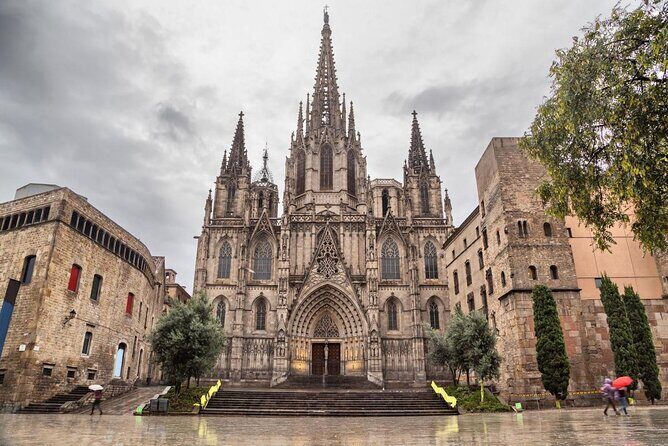
- Roman to medieval in one route: see how Barcino’s traces show up inside today’s Gothic Quarter
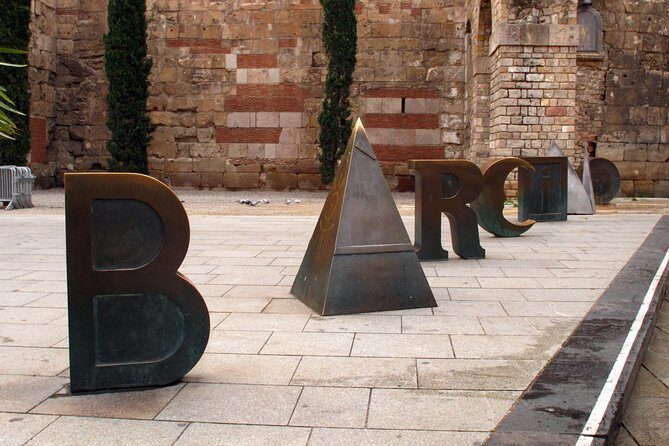
- Plaça Nova’s Barcino letters: giant Joan Brossa characters in bronze and aluminum
- MUHBA Temple d’August: four ancient columns surviving after more than 2,000 years
- Santa Maria del Mar: a neighborhood-built Catalan Gothic church
- Pintxos stop with a drink: included fuel at the end
- Small group size: up to 20 people, with a guide who keeps it moving
Why this Gothic Quarter walk starts at 3:30 pm
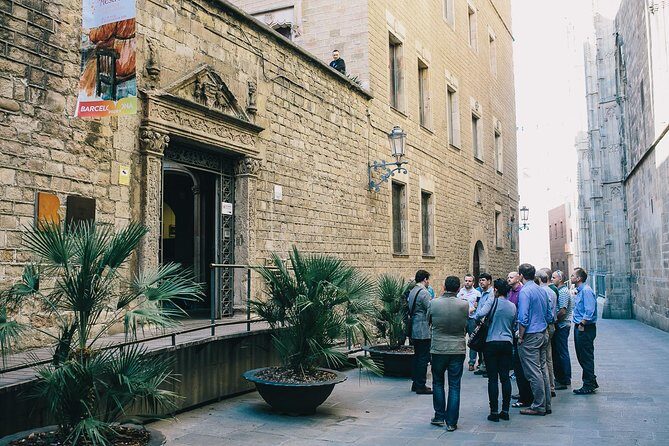
This tour is timed nicely for a late afternoon reset. Starting at 3:30 pm means you’re not fighting the busiest midday crush, and you’re more likely to enjoy calmer streets between major landmarks. You also end back at the meeting point, so you can roll right into dinner plans without scrambling across town.
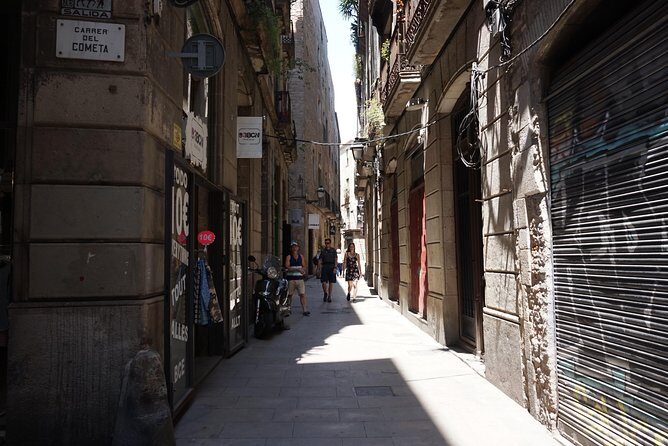
Another practical plus: the route concentrates on the Gothic Quarter’s “readable” highlights. You’re not stuck hopping far apart; you’re walking through a compact medieval maze where each turn has a payoff. I especially like that you get built-in context along the way, so you’re not just staring at stone and hoping it means something.
Finally, it’s a group experience, with room for conversation. With a maximum of 20 travelers, it’s small enough to hear the guide, but large enough that it feels social. That matters if this is your first time in Barcelona or your first afternoon in the city.
You can also read our reviews of more tours and experiences in Barcelona.
Plaça Nova to Cathedral square: Roman names and the Bishop Palace
The walk kicks off at Plaça Nova, a square where modern art and ancient origins meet in a fun way. Right by the old Roman-wall area, you’ll spot seven giant letters that spell Barcino, Barcelona’s early Roman name. The letters are part of artwork by Joan Brossa, including six made of bronze and one made of aluminum, bolted directly to the ground. It’s the kind of detail that makes photos better and makes the city’s origin story easier to remember later.
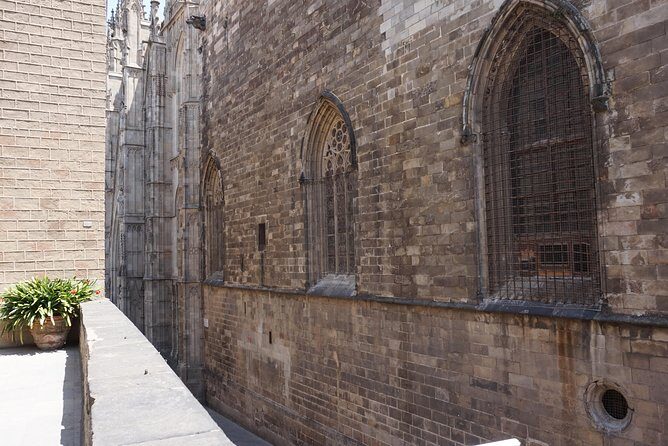
From there, you move toward the area linked with the Catedral de Barcelona—specifically, the former episcopal complex often described as the Palace of the Bishop. What makes this stop useful is the way it explains continuity: the building rises in a walled medieval city that used Roman structures and materials. Nearby, you’ll also see the New Square created in 1355 after water was channeled from Collserola, with buildings demolished to clear the view toward the Roman-era Porta Praetoria, known here as the Portal del Bisbe. It’s a short stop, but the point lands: medieval Barcelona was built to work, defend, and control space.
A key consideration: this part of the route includes a lot of “look closely” moments. If you rush photos or skim the guide’s explanation, you’ll miss the connections between Roman infrastructure and medieval street planning.
Casa de l’Ardiaca and Plaça del Rei: power, privacy, and views
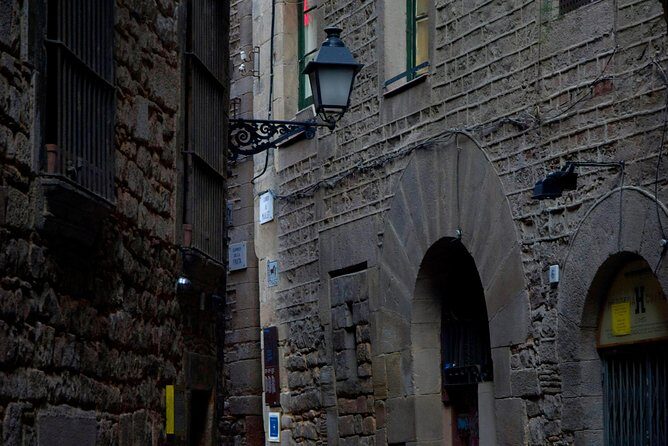
Next you’ll step into the Casa de l’Ardiaca, a 12th-century residence tied to the ecclesiastical hierarchy. The building has been reshaped over time, and that’s exactly what makes it interesting. You’ll hear how early 16th-century changes connected it with the dean’s residence, how the porticoed central courtyard was built, and how Renaissance-style decoration was added in a way that still plays with the flamboyant Gothic feel of the original.
Then comes a sharper emotional shift: you’ll move into spaces associated with public authority and royal life at Plaça del Rei. The Conjunt Monumental de la Plaça del Rei is the kind of medieval architectural ensemble that feels calm once you stand in the middle of it. Around you, the royal palace area (Palau Reial Major) and surrounding medieval buildings create a sense of enclosure, like the city’s power once lived right at street level.
Why this matters for you: these stops help you understand Gothic Barcelona as lived-in space, not museum stuff. You’re walking through how people structured daily life around religion, governance, and social rank.
Tip for enjoying it: pause before you start taking pictures. In these squares, the guide’s timing matters because it helps you notice height, alignment, and the way streets channel your view back to the stone.
Sant Felip Neri and Plaça del Pi: tiny squares, old guilds
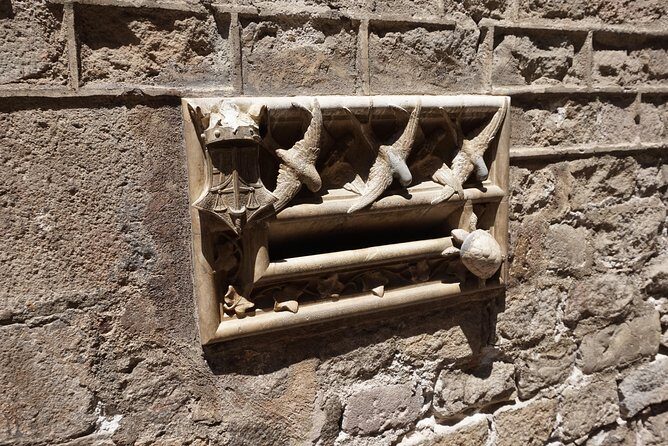
One of the best parts of this tour is that it doesn’t only worship big monuments. You also get the small, strange turns that make the Gothic Quarter feel like a puzzle.
At Placa Sant Felip Neri, the streets open into a tiny square with a fountain at the center. Above it sits the baroque church of Sant Felip Neri, creating a contrast between neighborhood-scale calm and later architectural style. The guide also points out that nearby buildings once housed guild trades, including shoemakers and coppersmiths, who moved from premises on Carrer de la Bòria and Carrer de la Corribia. Even in a brief stop, you’re learning how trades shaped where people lived and worked.
Then you’ll reach Placeta del Pi, anchored by a Gothic basilica and surrounded by two small squares. Here, the tour helps you connect architecture with art culture. The old cemeteries that once surrounded the 14th-century church are now small squares where painters and artisans set up work. It’s a practical reminder that this neighborhood has kept evolving while still using medieval forms as its skeleton.
Possible drawback to plan for: these are tight areas. If you’re traveling with a stroller or you’re sensitive to crowds, you’ll want to keep your group tight and move deliberately as you wait your turn to look and photograph.
Temple d’August inside MUHBA and the 2,000-year timeline
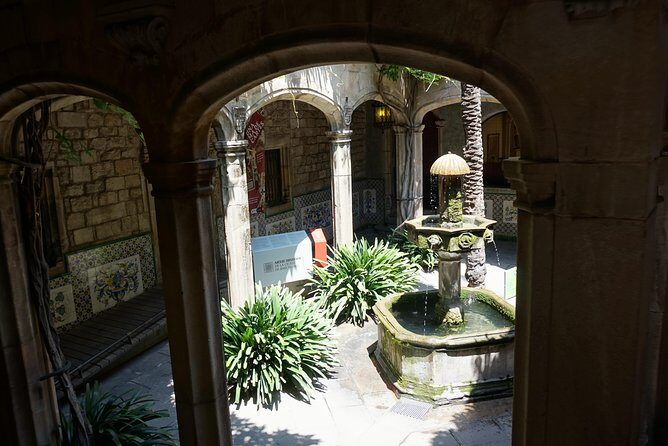
If you want a true “how is this still here” moment, aim your attention at the MUHBA Temple d’August stop. In a small medieval courtyard on Carrer Paradís, you’ll see four surviving columns from the Temple of Augustus. The guide frames it with scale: more than 2,000 years old, and still standing through centuries of Barcelona change.
This is the tour’s best reality check for the city’s long timeline. The Gothic Quarter can feel like one era at a time, but this stop forces you to see continuity. Roman Barcelona didn’t vanish; it got absorbed into the later city fabric.
What you’ll likely enjoy most: the guide’s ability to connect what you’re seeing—columns in a courtyard—to how that Roman site fit into the older urban layout. It makes the area feel less random when you keep walking afterward.
One practical tip: courtyard lighting can be uneven. If you care about photos, it helps to have your camera ready before you step into the open view, not after.




Santa Maria del Mar and Carrer de Montcada: artisan Barcelona
The tour culminates in the Old Town’s most “people-centered” Gothic spots.
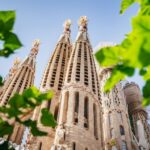
First is Basilica de Santa Maria del Mar. This church is often described as the real cathedral of the Old Town because it was founded and constructed in medieval times by neighborhood residents themselves. For me, that detail is key: it reframes the basilica as a community project rather than an imposed grand statement. It’s also considered a must-see for Catalan Gothic style.
Then you’ll walk along Carrer de Montcada, a street that’s famous for medieval civic architecture. The guide explains its timeline, starting with the Marcus chapel (Romanesque, 12th century) and running until Plaça del Born. The street used to be one continuous way until the 19th century, when it was divided by the opening of Carrer Princesa in 1853. The name also connects to the powerful Montcada family in Barcelona, said to have received land in the 12th century for support lent to King Ramon Berenguer IV during the conquest of Majorca.
If you want a souvenir you can actually use, this is the part that helps. After Carrer de Montcada, you’ll spot medieval logic in doorways, facades, and street rhythms. You’ll also have a clearer sense of where to stroll later on your own without getting lost in the fun way that turns into a long detour.
Pintxos, drinks, and guide energy: what you get for $54.06
The price—$54.06 per person—works because the tour builds in a real food break and a guided narrative, not just a checklist of buildings. You get one pintxo and one drink, plus a professional guide in English, Spanish, and French.
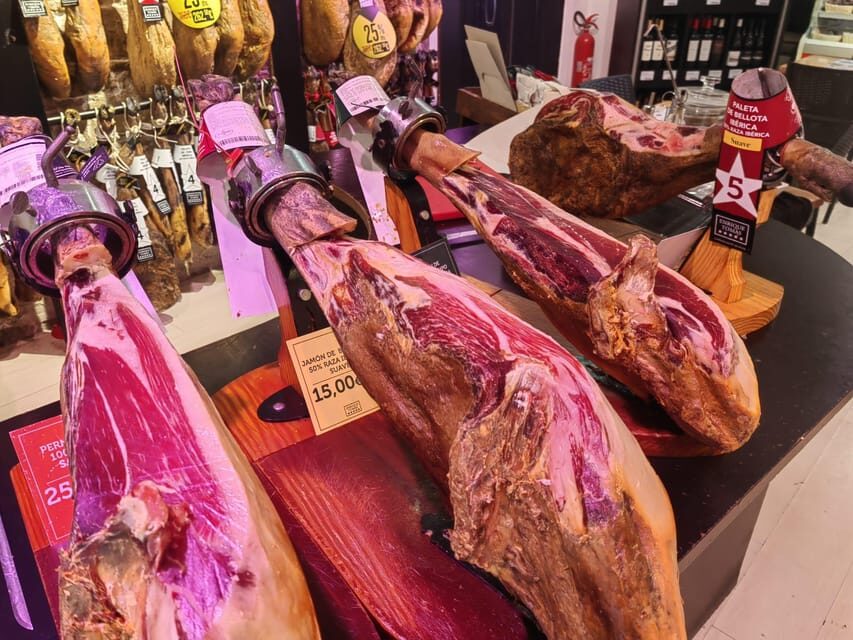
I like that the food is part of the timing, not tacked on after you’re already tired. A pintxo stop gives you a reset right when your feet and attention are both ready. Also, pintxos are a great introduction to Catalan casual eating: small, shareable, and easy to compare as you learn the difference between a snack and a full tapas meal.
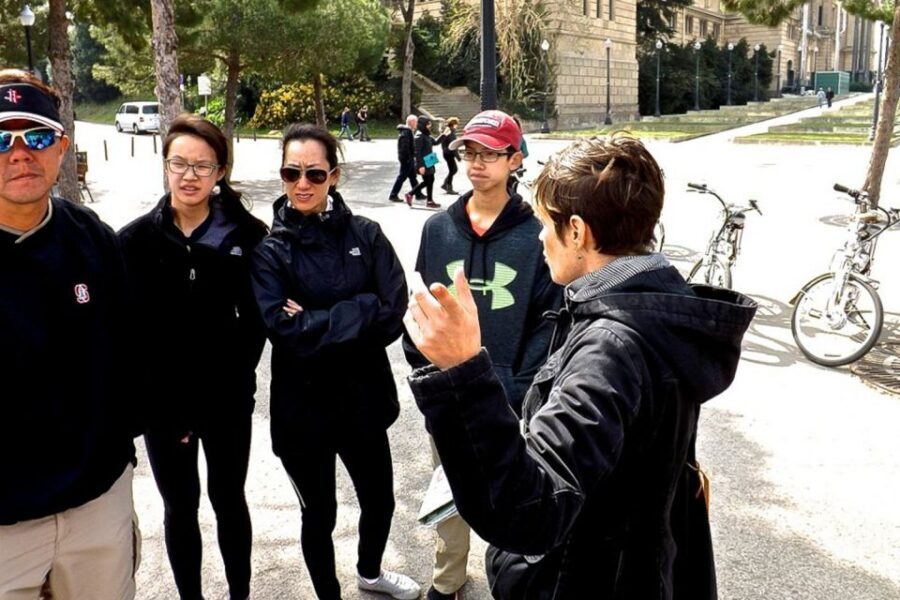
On the guide side, there’s a clear pattern in what people love: storytelling that makes the Gothic Quarter easier to picture, plus little practical explanations. Names that have shown up for this route include Ariana, Leah, Núria, and Maria, and the common thread is friendly energy and strong command of the details. One neat touch described by guests is how a guide can even help you choose something to bring home, like calling an olive oil shop to help with selection.
If you’re wondering whether this tour is worth it as a first or second afternoon activity, I’d say yes—especially if you’re staying in or near Ciutat Vella. You’ll leave with a mental map, not just photos.
Should you book the Gothic Quarter Insights and Tapas walk?
Book it if you want a guided way to understand Barcelona’s medieval layers without getting stuck in a long museum day. It’s a smart choice for history lovers, curious travelers who like architectural details, and anyone who wants a social group walk with included fuel.
Skip it (or think twice) if you’re hoping for lots of downtime or very light sightseeing. This is a walk with multiple stops, short visits, and frequent “look around” moments. Bring comfortable shoes, and plan to be actively engaged.
One last practical thought: the meeting point is Lamaro Hotel Barcelona (Av. de la Catedral, 7, Ciutat Vella, 08002 Barcelona), and the tour returns there at the end. If you like clear starts, that’s helpful. Also, the guide carries a distinctive red umbrella in some departures, which can make finding the group easier if the square feels crowded.
If you want an efficient, friendly way to get your bearings in the Gothic Quarter and finish with pintxos, this is a solid bet.
FAQ
What languages are the guides?
The tour is offered in English, and the guide may also speak Spanish and French.
How long is the Gothic Quarter Insights and Tapas experience?
It runs for about 2 hours 30 minutes.
What time does the tour start and where does it meet?
The tour starts at 3:30 pm at Lamaro Hotel Barcelona, Av. de la Catedral, 7, Ciutat Vella, 08002 Barcelona.
Does the price include food and drink?
Yes. You get one pintxo and one drink included, plus the professional guide.
Is hotel pickup included?
No. There is no hotel pickup or drop-off.
Are the stops free to enter?
The sites on the route are listed as having admission tickets free.
What group size should I expect?
This activity has a maximum of 20 travelers.
Can I cancel and get a full refund?
Yes, you can cancel for a full refund if you cancel at least 24 hours before the experience’s start time.
Is a mobile ticket used?
Yes. You receive a mobile ticket after booking. Service animals are allowed as well.