REVIEW · BARCELONA
History of Barcelona Private Family Tour
Book on Viator →Operated by Icono Spain Tours · Bookable on Viator
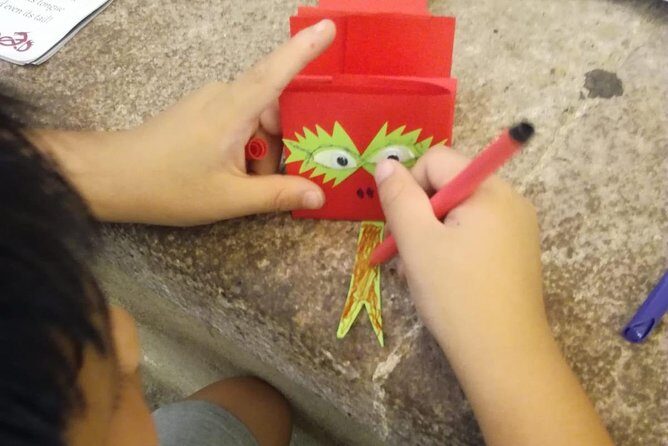
History can be fun for kids.
On this 3-hour private family tour in Barcelona’s Gothic Quarter, a dedicated family specialist and inventive educators bring the past to life with expressive storytelling and an interactive workbook for younger children. I like the pacing: it moves fast enough to keep attention, but slow enough to point out the little curiosities you’d miss on your own. You’ll also get smart time-savers with admission included at select stops, so the day feels efficient.
One possible drawback: the experience is weather-dependent, and it’s still an old-city route with plenty of on-your-feet moments. If your family wants to linger for long stretches at one spot, you may wish you had more time than the 3 hours.
In This Review
- Key takeaways before you go
- Why this 3-hour private family format feels right
- Plaça Nova: Roman Barcelona spelled out in giant letters
- Casa de l’Ardiaca: courtyards, Renaissance flourishes, and Romeo-and-Juliet vibes
- Barcelona Cathedral: cloister time plus the 13 white geese
- MUHBA Temple d’August: four surviving columns from over 2,000 years ago
- Plaça del Rei and Plaça Sant Jaume: medieval power and today’s civic life
- Plaza del Pi: cemeteries turned into tiny squares with artisan energy
- Carrer Petritxol: the chocolate street with a medieval origin story
- Casa Bruno Quadros: modernisme color on La Rambla
- Price and what makes it good value
- Logistics, timing, and how to prepare
- Who should book this tour, and who might not
- Should you book this private family history tour?
- FAQ
- How long is the private family tour?
- What does the tour cost?
- Is this a private tour or a shared group?
- Do kids get anything during the tour?
- Are any admissions included?
- Where does the tour start and end?
- What if the weather is bad?
Key takeaways before you go
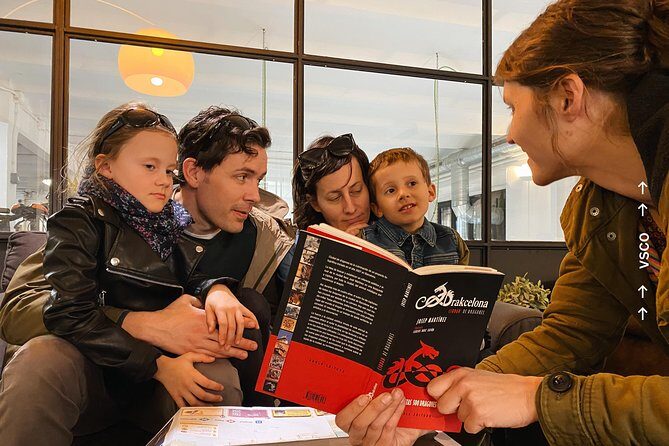
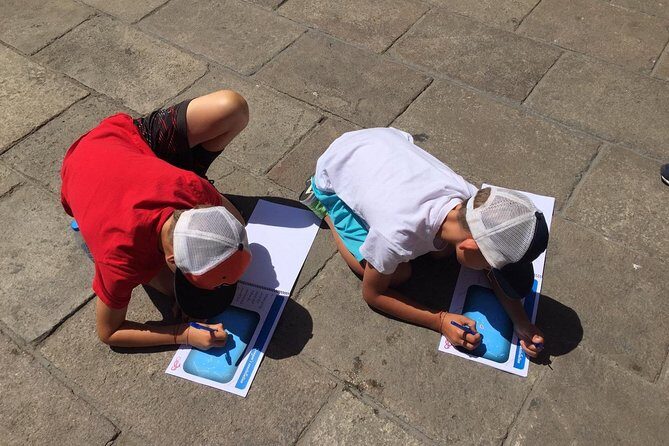
- Interactive workbook for kids: built to keep younger minds busy while adults get the story too.
- Patient, flexible guide energy: the tone stays calm and family-friendly even when kids have questions.
- Big “wow” stops in a tight loop: cathedral cloister, Roman-era columns, and medieval squares.
- Admission included at specific moments: fewer interruptions at the best indoor parts.
- Mobile ticket + private group: you’re not sharing the experience with strangers.
- Gothic Quarter details, not just big monuments: letters, courtyards, and street-level history.
Why this 3-hour private family format feels right
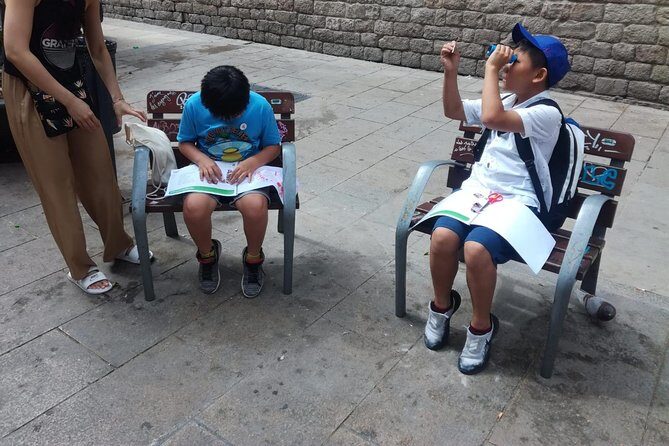
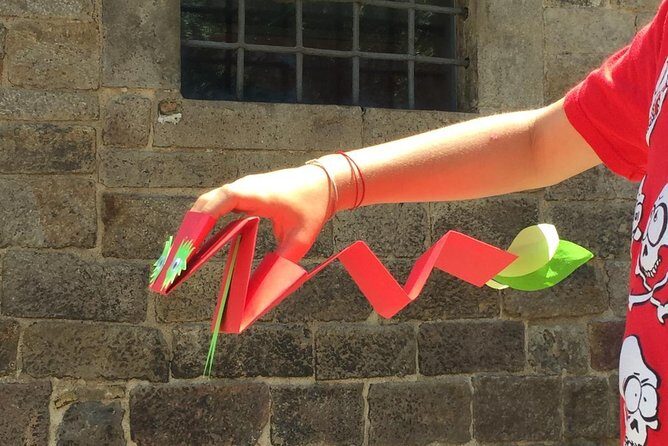
This tour is built around one simple idea: kids don’t need less history. They need history told in a way that actually connects. In practice, your guide mixes quirky facts with stories about kings, princesses, and dragons, then uses the streets themselves as props. Expect a lively, kid-attuned rhythm, with plenty of chances to ask questions as you move between landmarks.
The private setup matters. You can keep the group together at a pace that fits your family, and the guide can shift gears when attention drifts (or when a child spots something first). The “only your group” format also makes the whole thing feel less like a lecture and more like a shared walk with a friendly expert who knows how to translate big time periods into kid-friendly scenes.
What I like most is that the tour doesn’t just point at buildings from the outside. You spend meaningful time where the atmosphere changes—especially around the cathedral and the Roman-era columns tucked into a quieter courtyard.
You can also read our reviews of more private tours in Barcelona


Plaça Nova: Roman Barcelona spelled out in giant letters
You start in the Gothic Quarter area at Plaça Nova, right by the former Roman city wall. This is where Barcelona turns history into street-level play. Seven giant letters are bolted to the ground, spelling Barcino, the ancient name tied to the Roman colony Colonia Iulia Augusta Faventia Paterna Barcino.
Two details make this stop memorable. First, the scale is the hook: it’s hard for kids to ignore. Second, the letters connect modern art to ancient origins through Joan Brossa, a Barcelona-born creator known for visual poems. Six letters are made of bronze and one is aluminum, and that mix of materials turns the whole display into a mini science lesson too.
This is a great first stop because it gives your guide a quick starting point. You get context fast—where Barcelona began—and then the tour can spend the rest of the time building on that foundation.
Casa de l’Ardiaca: courtyards, Renaissance flourishes, and Romeo-and-Juliet vibes
Next comes Casa de l’Ardiaca, a building with a long timeline. It served as a residence for the ecclesiastical hierarchy starting in the 12th century, then went through major changes later. In the early 1500s, additions connected it to the dean’s residence, and a porticoed central courtyard became part of the layout.
Look for the blend of styles here. You’ll see Renaissance-style decorations that sit alongside a flamboyant Gothic base, which is part of what makes this part of Barcelona so satisfying for history lovers. One of the coolest practical moments is the staircase leading up to a terrace and balcony with a Romeo-and-Juliet feel—an image your guide can easily turn into a story for kids.
This stop works because it teaches a key idea: old buildings are rarely “frozen.” They’re edited over centuries, like a manuscript with new chapters added. For families, that’s a helpful way to understand why Gothic and Renaissance details can sit together in the same scene.
Barcelona Cathedral: cloister time plus the 13 white geese
Barcelona Cathedral is the big “inside” moment, and you’ll want the kids ready for it. This is a predominantly Gothic building shaped by multiple generations, so the story is not just architectural—it’s human. Your guide will explain how different eras left their marks, and that context makes the details easier to notice.
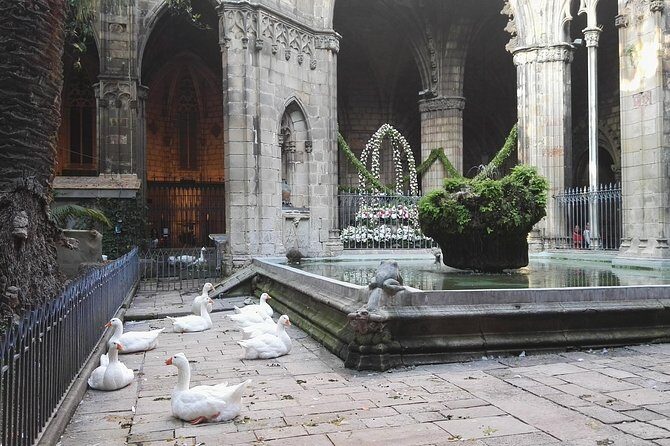
Then you go to the cloister, where the focus is fun as well as beautiful: 13 white geese. It’s the kind of detail that makes kids lean forward because it feels specific and a little silly—in the best way. The included time here also helps you avoid rushing, so you can take photos and let questions happen without feeling like the tour is constantly moving on.
Tip for families: if your kids are prone to getting restless indoors, this is still one of the better stops to choose. The cloister has enough open space and visual interest to keep attention from shrinking.
MUHBA Temple d’August: four surviving columns from over 2,000 years ago
After the cathedral, the route shifts into a quieter kind of wow at MUHBA Temple d’August. This is one of Barcelona’s best-kept secrets, tucked into a building on Carrer Paradís. Inside a small medieval courtyard, you can still see four columns from the Temple of Augustus.
The age here is the headline. These columns are more than 2,000 years old, and your guide will connect that Roman presence directly to the streets you’re walking on. For kids, this can be one of the most exciting transitions of the whole tour: you go from medieval Gothic scenes to something that predates many modern cities.
The practical upside is that the space encourages slowing down. Courtyards can make a group feel calmer, and for families that’s a relief during a 3-hour outing. You’ll leave with a strong sense of continuity—Barcelona as a layered city, not a single time period.
You can also read our reviews of more historical tours in Barcelona




Plaça del Rei and Plaça Sant Jaume: medieval power and today’s civic life
Two major medieval squares come next, and they’re both worth using as “story stages.”
At Plaça del Rei, you’re in the Conjunt Monumental de la Plaça del Rei, a Gothic ensemble tied to Barcelona’s medieval past. The royal palace—Palau Reial Major—and surrounding buildings enclose the square, creating a sense of calm and focus. This is the kind of place where your guide can talk about kings and courts without relying on a textbook. The architecture does part of the storytelling for you.
Then you move to Plaça de Sant Jaume, which has functioned as a political center for a very long time. Today it’s an open space in the middle of the Gothic Quarter, often described as a lung in the area. The key buildings here are the City Hall and the Palau de la Generalitat, so the “power theme” continues even though the institutions are modern.
For families, these squares help kids understand something important: history isn’t only about faraway battles. It also shapes daily governance, public space, and how a city organizes itself.
Plaza del Pi: cemeteries turned into tiny squares with artisan energy
Plaza del Pi is a visually charming break in the route. Here you get a Gothic basilica and two surrounding squares, which makes it feel like the neighborhood is opening out. The old cemeteries that surrounded the 14th-century church became small squares over time.
That time change is the educational payoff. Your guide can connect “what the space used to be” to “what it became,” which helps children stop thinking of history as a static museum label. If the timing is right, you might see painters and artisans working in the area, which gives the scene a lived-in feel instead of a purely historical one.
This stop is also helpful if your kids need a little decompression. It’s not only about monuments; it’s about how people use space.
Carrer Petritxol: the chocolate street with a medieval origin story
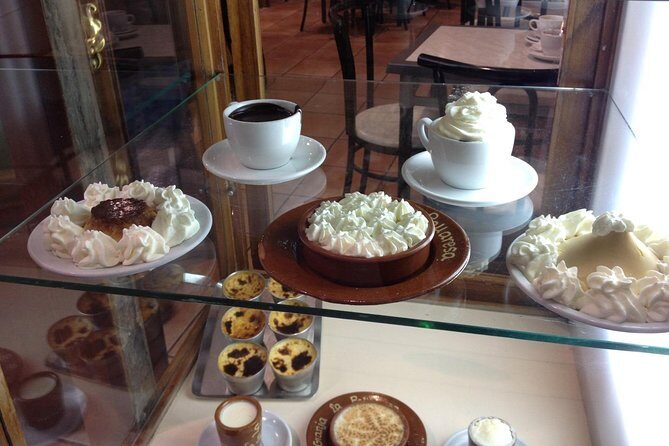
Then you hit Carrer Petritxol, and yes, it really is the chocolate street. Your guide explains why, and the story starts way back in the 1300s. The street is documented since 1340, and the name petrítxol comes from pedrítxol—stones that didn’t allow carriages to enter a certain area.
That detail is fun for kids because it turns urban planning into an origin myth. It also shows how daily life shaped streets: some areas were designed to keep traffic out, which changed how the street developed.
One more modern connection lands well with families: Carrer Petritxol was the first pedestrian street in Barcelona in 1959. So you get a bridge between medieval street function and modern walking culture. The included time here makes this stop one of the most “feel-like-a-story” parts of the tour, not just a quick photo pause.
Casa Bruno Quadros: modernisme color on La Rambla
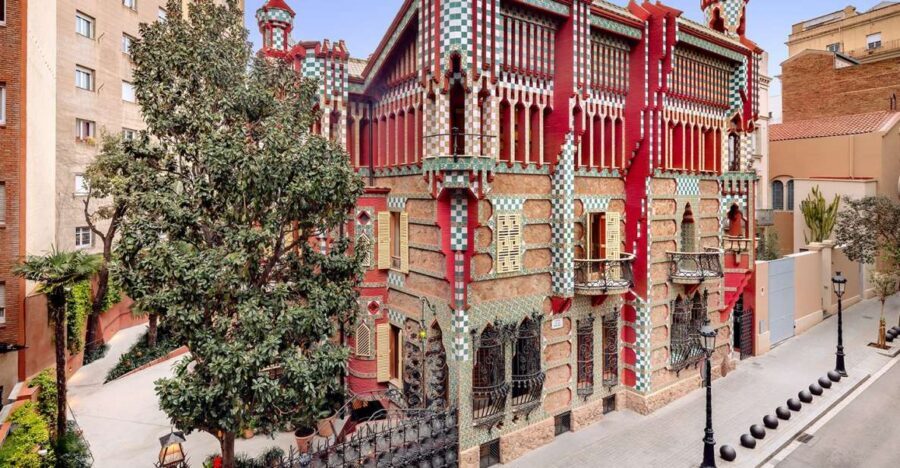
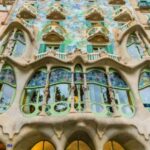
The last major stop is Casa Bruno Cuadros, just off La Rambla’s main flow. Even though La Rambla can feel like a giant stage, this building gives you something more specific to focus on. The facade is an allegory to Orientalism, and the structure relates to a practical past too: it used to be an umbrella shop.
The style is modernisme, with bold color and delicate decoration. For many families, this becomes a “look closely” moment. Kids often enjoy spotting patterns, and adults get a calmer, more artistic ending than a list of dates.
Because it’s a shorter stop, you can finish the tour with a sense of curiosity instead of exhaustion. It also helps you tie the Gothic Quarter story back into the broader Barcelona mix—Roman origins, medieval power, and later artistic expression all in one walk.
Price and what makes it good value
At $155.92 per person for an about 3-hour private experience, this isn’t the cheapest way to do Barcelona. The value comes from a few specific elements you actually use during the tour.
First, the tour includes an interactive workbook for younger children. That’s not a small add-on—it’s a built-in attention tool that makes the tour work for families, not just adults. Second, admission time is included at key moments such as the cathedral cloister and the chocolate-street stop, while other listed stops are free to visit.
Third, the guide approach is designed for families. The most praised part of the experience is how well the guide handles kids: patient, flexible, and able to turn history into something kids can picture. That matters because family tours fail when the guide treats children like small adults. Here, the whole format is set up to avoid that.
Booking wise, it’s commonly reserved about 15 days in advance on average, so if you’re traveling in peak season, plan ahead. You’ll also receive a confirmation at booking and use a mobile ticket, which keeps things simple on the day.
Logistics, timing, and how to prepare
Your tour starts and ends at the same meeting point: Plaça de Sant Agustí Vell, 16, in Ciutat Vella near Barcelona eBikes Tour. Being back at the starting point is practical if you’re heading to lunch afterward or catching public transit.
The group stays compact since it’s private for only your party, which helps when you’re traveling with kids. Still, you’ll spend time outdoors in the Gothic Quarter and then indoors at the cathedral. If your family has a stroller, expect some tight corners and steps depending on the exact route.
One more practical note: the experience requires good weather. If conditions are poor, you’ll be offered a different date or a full refund.
Who should book this tour, and who might not
This is a strong match for families who want history that feels alive. It’s also ideal when your kids are curious but can’t sit still for long stretches. The structure—with short stops, story-driven transitions, and kid-focused materials—supports that reality.
It may be less ideal if your family’s idea of fun is long museum time and slow wandering. You’re in a fast, guided loop, and it’s designed to cover highlights and teach story connections rather than linger for an extended deep study.
Also consider this if your group needs fully step-free routing. The tour is described as usable by most travelers, and service animals are allowed, but the Gothic Quarter streets can be uneven and old-world navigation is part of the deal.
Should you book this private family history tour?
If you want a family-friendly way to see Barcelona’s Gothic Quarter without turning it into a lecture, I’d book this. The best reason is simple: the guide approach is built for kids, with patient flexibility and storytelling that makes places memorable. Add in the interactive workbook and the smart included time at the cathedral, and the tour feels like money spent where it counts.
I’d think twice only if your family needs lots of downtime or you’re traveling with very small kids and can’t handle indoor/outdoor switching. Otherwise, this is one of the better ways to get your bearings fast in the old city while still keeping children engaged.
FAQ
How long is the private family tour?
It lasts about 3 hours.
What does the tour cost?
The price is $155.92 per person.
Is this a private tour or a shared group?
It’s private, meaning only your group participates.
Do kids get anything during the tour?
Yes. Younger members receive an interactive workbook designed by educational experts.
Are any admissions included?
Yes. Admission is included for the Barcelona Cathedral cloister and for Carrer Petritxol. Other listed stops have free admission.
Where does the tour start and end?
The tour starts at Barcelona eBikes Tour, Plaça de Sant Agustí Vell, 16, 08003 Barcelona, Spain, and it ends back at the meeting point.
What if the weather is bad?
The experience requires good weather. If it’s canceled due to poor weather, you’ll be offered a different date or a full refund.