REVIEW · BARCELONA
Self-Guided Audio Tour-The Surrealist Barcelona of Dalí and Gaudí
Book on Viator →Operated by SOUNDWALKRS · Bookable on Viator
Two geniuses, one walk that feels slightly unhinged.
This app-based audio route strings together Salvador Dalí and Antoni Gaudí across Barcelona, with narration that turns everyday streets into art history scenes. It’s built for a simple stroll: you press play, follow the maps and tips, and soak up the connections between surrealism and Catalan modernism.
I really like two things here: first, the offline chapters mean you can keep going without hunting for data. Second, the story structure makes landmarks feel linked, not random checkboxes. A good caution though: it’s self-guided, so if you expect a person to meet you or if you skip downloading ahead of time, the experience can go sideways.
In This Review
- Key highlights worth your attention
- Dalí and Gaudí in one soundtrack: what makes this concept work
- Price and value: why $10 can be a great deal (or not)
- Your route start at Sala Dalmau: how to get moving quickly
- Stop: Plaza de Catalunya and Dalí’s ominous flavor
- Palau Güell: Gaudí’s modernism and why it feels like a story finale
- Ateneu Barcelonès: culture and thought in everyday civic space
- The historic theatre and other landmark chapters: listen for the link, not the checklist
- Where Casa Batlló fits into the Gaudí thread
- English or Spanish narration: choose the voice you can follow fast
- Common snags to avoid with self-guided audio tours
- Who this tour suits best (and who should skip it)
- Should you book the Surrealist Barcelona of Dalí and Gaudí audio walk?
- FAQ
- FAQ
- How long is the Dalí and Gaudí audio tour?
- Is this tour self-guided or does it include a guide?
- Does it work offline?
- What does the $10 price include?
- Where do I start and end?
- What languages are available?
Key highlights worth your attention

- Offline audio so you can walk without worrying about your signal
- Dalí-meets-Gaudí narration that ties the city’s sights to their ideas
- A mapped walking route with tips to help you find the next stop
- English and Spanish narration, so you can choose the voice that fits
- Private-by-your-group experience (only your party participates)
- 39 minutes roughly, but your pace and photo stops can stretch it
Dalí and Gaudí in one soundtrack: what makes this concept work

Barcelona is a city that rewards walking. This tour leans into that by using an audio format: you don’t just see buildings, you hear the “why” behind them as you move from place to place. The pitch is simple but smart—listen through the lens of Dalí while also tracking Gaudí’s Catalan modernism influence.
What makes it interesting is the way the route frames art as something you can feel in the streets. Dalí’s world is full of symbols and omens, while Gaudí’s is full of form and architecture that looks like it’s alive. Put those ideas side by side and the city starts to act like a conversation, not a slideshow.
And because the narration is chapter-based, you get to control the rhythm. If a street feels noisy or you’re getting turned around, you can pause, regroup, and then continue when you’re ready. That flexibility matters in Barcelona, where block layouts can make you wander before you realize you’re off track.
You can also read our reviews of more guided tours in Barcelona



Price and value: why $10 can be a great deal (or not)
At $10 per person, this sits in the “small splurge, big payoff” category—especially if you’re doing other paid attractions. You’re not paying for entry tickets here, which keeps the price honest. The real value is the storytelling and the fact that it runs with offline use, so you aren’t stuck spending the day tethered to data.
Still, this one is only as good as your readiness. If you show up without downloading the audio, or you’re expecting a live guide, you may feel like you paid for a phone app and got… a phone app. One of the most common disappointments with self-guided tours is timing confusion: the route is designed for you to start at your convenience, not for a staff member to usher you around on a fixed schedule.
If you’re the type who likes to explore at your own pace, this can feel like good value. If you need hand-holding, you’ll likely want something guided instead.
Your route start at Sala Dalmau: how to get moving quickly

The starting point is Sala Dalmau – Galeria d’art, on Carrer del Consell de Cent, 349 in L’Eixample. When I’m using an audio tour in a dense city, I treat the first five minutes like a setup phase. Here’s the practical move: get your bearings before you press play, then begin when you’re standing where the route expects you.
One tip that saves time: open your map right away and confirm you’re on the right street. Even the best narration can’t help if you’re two blocks in the wrong direction. The tour is designed to be private to your group, so there’s no one else to follow and “catch up” with if you drift.
You’ll also want your phone charged. The app is offline-capable, but your battery still needs to last through a brisk walk and a few photo stops.
Stop: Plaza de Catalunya and Dalí’s ominous flavor

A central anchor of the experience is Plaza de Catalunya. The narration uses the city’s busy crossroads as a stage for symbolism—specifically, it touches on the omens of Dalí’s death while you’re in the thick of the action.
This is a good stop for two reasons. First, it sets the mood fast. You’re not starting with a building; you’re starting with an idea: how surrealist thinking treats signs, fate, and meaning. Second, it’s an easy place to navigate from. If you’re coming from transit or you’re recalibrating your day, this plaza is a natural “reset point.”
Potential drawback: because it’s a major hub, you may want to keep your volume loud enough to hear the narration over street noise. If you’re in the habit of listening softly, you might miss lines that explain the symbolism.
Palau Güell: Gaudí’s modernism and why it feels like a story finale

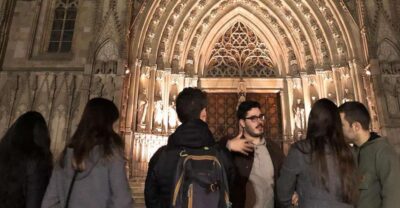
Palau Güell is one of the tour’s key locations, designed by Antoni Gaudí and framed within Catalan modernism. The narration points you to the building’s street presence and gives you context for why Gaudí’s work is more than decoration—it’s a way of thinking.
This is a strong place to slow down. The exterior and immediate surroundings can look straightforward until you start paying attention to form and structure. Audio helps here because it tells you what to look for without forcing you into a museum-style timeline.
Also, note that admission tickets are not included. That means you should plan on using the tour as an exterior-and-context experience unless you decide to add a monument visit on top. If you’re the type who wants to see inside, budget extra time (and money) for that. If you’re just after architecture as you walk, you can still get value without paying for entry.
The route is set up so the end point is also at Palau Güell (on Carrer Nou de la Rambla, 3-5). That gives the story a circular feeling: you start in Eixample, you move toward the old-city fabric, and then you finish where Gaudí’s presence is unmistakable.
You can also read our reviews of more tours and experiences in Barcelona





Ateneu Barcelonès: culture and thought in everyday civic space
Another major stop on the audio path is Ateneu Barcelonès, described as an important institute with more than 150 years of influence. The tour frames it as a center of culture and thought in Catalan society.
This is one of those locations that can feel like “just another building” if you pass quickly. Audio changes that by giving you the civic context. You’re hearing how Catalonia’s culture wasn’t only about art objects—it was also about institutions where ideas were discussed and shared.
A practical note: you may not want to treat this like a photo sprint. Give yourself a little time to stand in one place and listen, because the narration likely helps you connect the building’s role to the surrounding neighborhood character.
The historic theatre and other landmark chapters: listen for the link, not the checklist
The route also includes a stop at what’s described as the oldest and most prestigious theatre in Barcelona, plus several additional chapters tied to historical landmarks. The exact names aren’t provided in your tour data here, but the purpose is clear: keep walking through layers of Barcelona’s public life, then connect those places back to the Dalí and Gaudí themes.
Here’s how to make this part land. Don’t just look for a plaque and move on. Treat the narration as a cue. If the chapter is about a theatre, pay attention to why performance and spectacle matter to surrealist ideas—or why public institutions shaped modernism and cultural identity. Even if you only catch part of the message, it makes the architecture and streets feel more purposeful.
Timing varies at these chapters because you’ll likely pause for views, street angles, or to confirm you’re still on the right segment.
Where Casa Batlló fits into the Gaudí thread

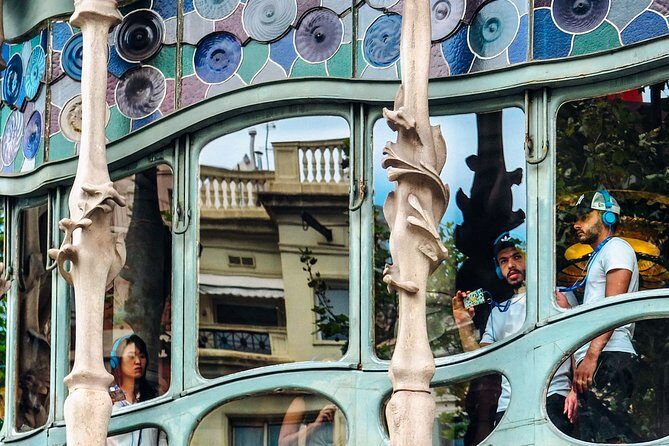
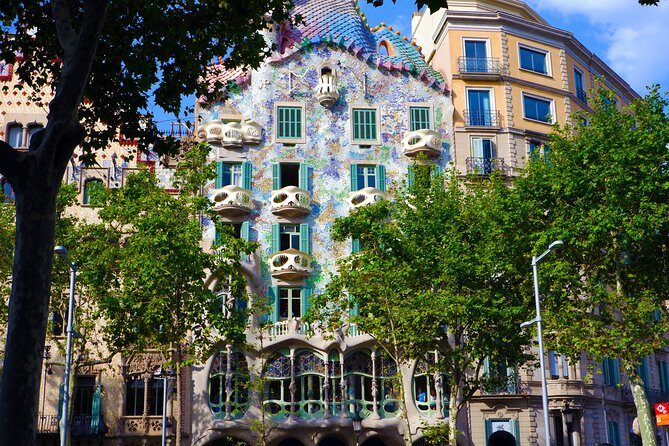
In the tour overview, Casa Batlló is called out as one of the important landmarks you’ll hear about. Even if you don’t step inside, that mention matters because it broadens the Gaudí arc beyond Palau Güell.
Think of it like this: Palau Güell is the anchor for Gaudí’s modernism in the tour, while Casa Batlló is the reminder that Gaudí’s language shows up in multiple forms across the city. When you hear it referenced, you get a cleaner mental map of how his work repeats certain ideas—shape, light, and organic-looking structure—rather than treating each building as an isolated “wow” moment.
If Casa Batlló is high on your list, you can decide on the spot whether it’s worth adding an entry ticket day/time around your audio walk.
English or Spanish narration: choose the voice you can follow fast
You’ll have English and Spanish narration available. That choice isn’t just about comfort—it’s about comprehension speed. When you’re walking, your attention is split between streets, corners, and the story in your headphones. If you choose a language you’re not fully fluent in, you may find yourself missing the small explanations that connect the landmarks to Dalí and Gaudí.
Practical move: pick the language you can understand instantly. Then keep your phone settings simple—no audio mixing apps, no mystery volume levels. The narration is the main product.
Common snags to avoid with self-guided audio tours
A few issues show up repeatedly with this kind of product, and they’re worth steering around:
- Self-guided means no waiting person: If you expect someone to show up at the start, you may end up standing around. The tour is private to your group, but it’s still designed for you to run it on your own.
- Downloading matters: One complaint involved not downloading and assuming it would work like a guided experience. Make sure the audio is ready before you head out.
- Pace expectations: The duration is listed as about 39 minutes. In real life, if you stop a lot for photos, take detours, or walk slower, it’ll stretch. Some people felt it only hit the target duration when moving very quickly, almost like a sprint. Plan for extra minutes if you want to linger.
If you want a low-stress day, treat it like a “guided-feeling walk,” not a strict stopwatch mission.
Who this tour suits best (and who should skip it)
I’d point you toward this experience if you:
- like art stories but don’t want a formal museum schedule
- enjoy walking and want offline audio support
- want a Dalí + Gaudí theme that connects multiple stops instead of one building
I’d steer you toward a different option if you:
- need a live guide to translate or answer questions on the spot
- dislike self-guided formats and would rather follow a person
- want monument entry included (this one explicitly doesn’t include admission tickets)
If you’re doing a first trip to Barcelona and want one easy “art brain” activity that doesn’t lock you into a booking window, this can be a nice anchor.
Should you book the Surrealist Barcelona of Dalí and Gaudí audio walk?
Yes, with a few conditions. If you download the audio ahead of time, show up ready to start on your own, and expect about 39 minutes of walking with narration (plus your own pace), this can be a smart $10 way to make Barcelona feel like a themed story.
If you want guaranteed fixed-time human guidance, or you plan to treat it like a last-minute activity without checking your phone, you may leave annoyed—because the tour is built around self-guidance, not staff coordination.
My call: book it if you like control, curiosity, and listening while you walk. Skip it if you’re the kind of person who needs a guide’s presence to feel oriented.
FAQ
FAQ
How long is the Dalí and Gaudí audio tour?
The tour duration is listed as approximately 39 minutes.
Is this tour self-guided or does it include a guide?
It’s an app-based self-guided experience with mobile tickets. The information provided does not include a guided escort.
Does it work offline?
Yes. It’s designed to be used offline, so you do not need an internet connection during the tour.
What does the $10 price include?
The price covers the audio tour chapters (with offline maps and tips). Admission tickets to monuments are not included.
Where do I start and end?
You start at Sala Dalmau – Galeria d’art (Carrer del Consell de Cent, 349, L’Eixample) and end at Palau Güell (Carrer Nou de la Rambla, 3-5, Ciutat Vella).
What languages are available?
Narration is available in English and Spanish.