REVIEW · BARCELONA
Shore Excursion: Barcelona City Tour Hop-On Hop-Off
Book on Viator →Operated by Julia Travel S.L · Bookable on Viator
This bus loop is your quick Barcelona compass. For a cruise day, it links two major routes with one ticket, so you can tailor your order instead of getting stuck in someone else’s plan. I like the sliding roof on the double-decker buses; it helps when rain shows up. The main caution: in crowded zones and busy stop areas, getting on fast (and finding the right stop) can feel chaotic.
You also get multilingual audio (English included) plus a built-in looping system for people who use headphones without wires. If you use it right, the included discount booklet and stop guide can cut down on what you pay for big-name sights and even everyday spots like shops and restaurants. Expect about 2 hours 20 minutes of driving time, but you’ll want extra time to hop off and actually look.
In This Review
- Key highlights to keep in mind
- Price and logistics: what you’re really paying for
- Getting from your cruise ship to the bus: plan for confusion
- East Route: the sea front, modern Barcelona, and Gaudí touchpoints
- Park Güell reality check (important)
- West Route: Montjuïc angles, Camp Nou, and the higher-ground views
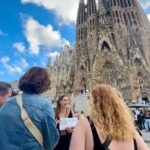
- A note on the Sagrada Família and seat comfort
- Onboard comfort: sliding roof, rain, and why it matters
- Audio guide system and onboard perks: headphones and Wi‑Fi
- Traffic, crowds, and how to time your hopping
- Stop-by-stop strategy: what to do at each area
- Discounts booklet: how to use it without overspending
- Who should book this hop-on hop-off bus?
- Should you book Barcelona City Tour Hop-On Hop-Off?
- FAQ
- How long is the Barcelona City Tour hop-on hop-off?
- Does one ticket work on both routes?
- Are the buses open-top?
- Is the audio guide available in English?
- Do I need printed tickets, or can I use a mobile ticket?
- Is there Wi‑Fi onboard?
- Where is Park Güell in relation to the bus stop?
- Can the route change during the day?
- When do buses stop operating?
- Is there a discount booklet included?
Key highlights to keep in mind
- Two interconnected routes on one ticket: East and West, with the flexibility to change your plan mid-day
- Sliding roof on the double-decker buses: more comfortable when weather turns
- Multilingual audio guide with an assistive looping system: headphone listening with priority seating
- A discount booklet and stops guide included: designed to help you spend smarter
- Lots of stops near major sights: from the Gothic Quarter area to Sagrada Família and Camp Nou
Price and logistics: what you’re really paying for
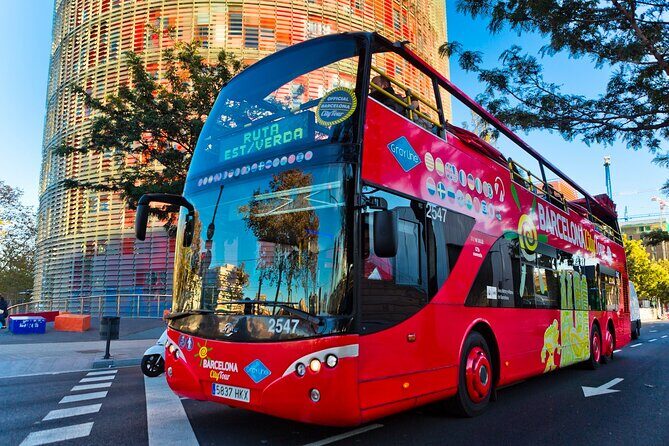
At about $39.65 per person for a roughly 2-hour 20-minute tour block, this is not about seeing Barcelona in one sprint. It’s about buying yourself options: you can ride once to get oriented, then hop off where it matches your interests.
That matters in Barcelona. The city is walkable, but distances add up fast on a cruise day. This bus tour gives you a moving overview across both sides of town—plus multiple stops where you can jump off without committing to a full-day walking route.
Two practical notes from real-world experience here:
- Your biggest time sink is traffic and crowding, not the driving itself.
- Stop-finding can be harder than it should be when you’re new to the city and the port area is busy—so give yourself buffer time.
You can also read our reviews of more city tours in Barcelona

Getting from your cruise ship to the bus: plan for confusion
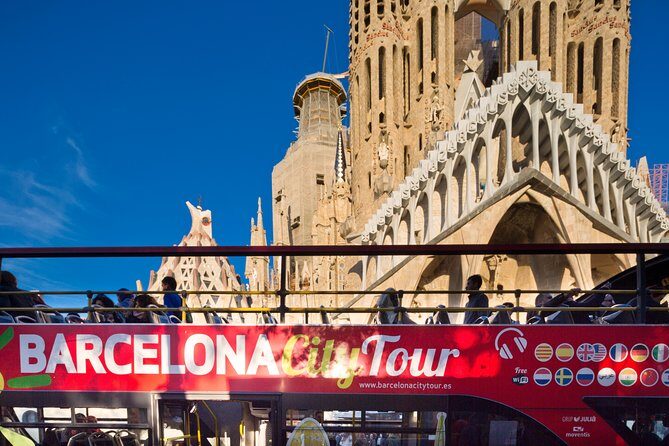
Barcelona cruise port logistics can make “easy” feel less easy. The meeting point can be a bit of a hike from the ship, and the port is the kind of place where everything looks close until you start walking and notice the lines and detours.
A few tips that help:
- Leave extra time to reach your bus stop before you’re in a rush. If buses are full, your “hop-on” freedom turns into a waiting game.
- Use clear visual cues when you arrive. One helpful pointer: look for tall red markers tied to the hop-on hop-off branding.
- Assume the schedule changes. The route and stop list can shift because of events, demonstrations, sport events, official acts, and public works.
If you’re the type who likes a tight itinerary, this can still work. You just need breathing room so you don’t feel like you’re running a race at 4 p.m.
East Route: the sea front, modern Barcelona, and Gaudí touchpoints
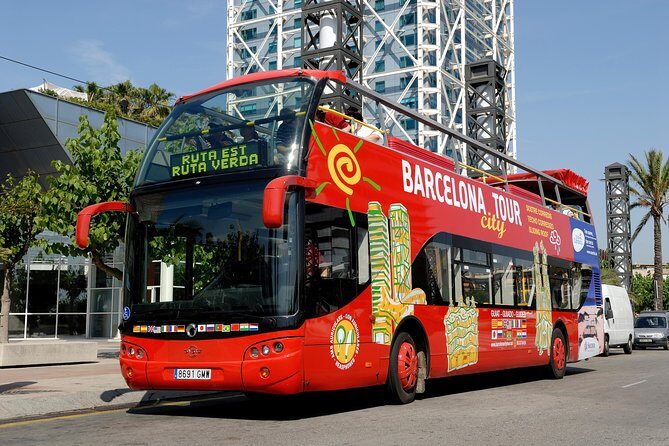
The East Route is a great “first pass” because it mixes waterfront views with core central neighborhoods and then heads toward the Gaudí highlights.
Here’s what the East Route is good for, in the order you’ll meet it:
- Pla de Palau: A starting point that helps you orient toward the old-and-new mix of the city.
- Barceloneta Beach: The classic sea stop. Even if you don’t go to the beach, it’s a quick way to feel the shoreline and coastal vibe.
- Port Olímpic: Boats, marina energy, and a nice transition away from the busiest beach strip.
- Platja Bogatell and Platja de la Nova Mar Bella: These are calmer stops that give you a sense of how Barcelona spreads out along the coast.
- Forum Sport and Glòries: More city and less postcard. Good if you like street-level Barcelona rather than just monuments.
- Recinte Modernista de Sant Pau: A standout stop for people who enjoy architecture and design details. It’s a “get off and slow down” kind of area.
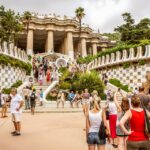
- Park Güell: Big-name Gaudí. This stop is convenient for bus access, but it’s also a place where you need to understand what you’re signing up for.
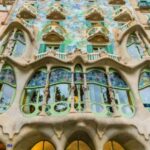
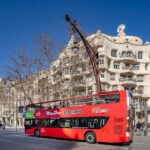
- La Pedrera – Casa Milà and Casa Batlló: Perfect for planning which Gaudí house you want to go inside. Even from the outside, they’re worth seeing.
- Barcelona City Tour (a central stop): Useful as a hub point to orient and plan hopping.
- Arc de Triomf and Ciutadella Park: A good finish for people who like an open green space and a grand urban entrance.
Park Güell reality check (important)
If your dream is to land right at the Park Güell entrance, adjust that expectation. Buses like this generally can’t drive up to the entrance area, so the bus stop is typically where you start walking—often uphill with stair steps involved. Build that into your day plan, especially if you’re traveling with kids, mobility needs, or you’re already tired from port walking.
West Route: Montjuïc angles, Camp Nou, and the higher-ground views
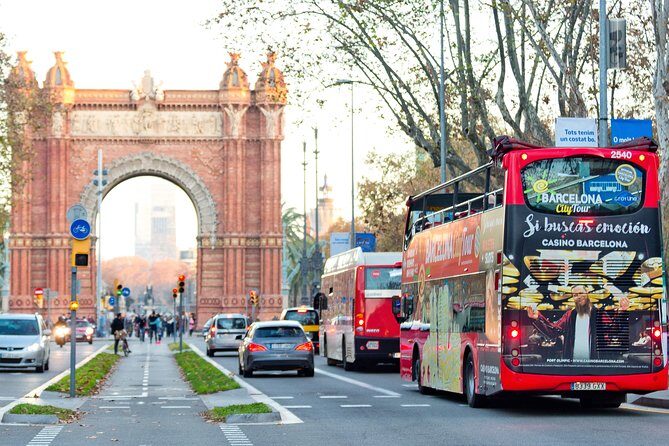
The West Route is built for the side of Barcelona that feels like it’s climbing—big viewpoints, big stadium energy, and museum-and-hill stops.
Key stops and what they mean for you:
- WTC Barcelona Parking: A practical city anchor point.
- Av. Miramar (two stops): This is a “view and vantage” area, especially when the route lines up with hill slopes.
- Olympic Ring: If the Olympics theme excites you, this is your chance to step into that landscape.
- Museu Nacional d’Art de Catalunya (MNAC): A major museum stop. Even if you don’t enter, it helps you understand why people aim for Montjuïc.
- Poble Espanyol and CaixaForum Barcelona: A pair of stops that mix architecture with culture. It’s a nice combo if you like places where the city has planned themed spaces.
- Plaça d’Espanya: A major intersection that works well for re-planning your next hop.
- Parking Estació de Sants: Helpful if you want to connect toward transport or just break up the day.
- Spotify Camp Nou: Football stop. Great if you want to orient around Camp Nou even without a stadium tour.
- Av. Diagonal (two stops): A stretch that feels like Barcelona’s wide boulevard side.
- Plaça de Francesc Macià: Note that this stop can be cancelled due to works, with an alternative location used instead.
- Then shared highlights appear again as the route loops: La Pedrera – Casa Milà, Sagrada Família, and more city return points like Port Olímpic and Pla de Palau.
You can also read our reviews of more tours and experiences in Barcelona


A note on the Sagrada Família and seat comfort
Sagrada Família is a high-demand stop. If you want the best sightlines from the upper deck, be ready for limited seating when you board there—especially on busy days.
Also, audio can vary by bus and timing. On some departures, you might hear more music and less narration than you expect, so don’t treat the audio as guaranteed at every single moment.
Onboard comfort: sliding roof, rain, and why it matters
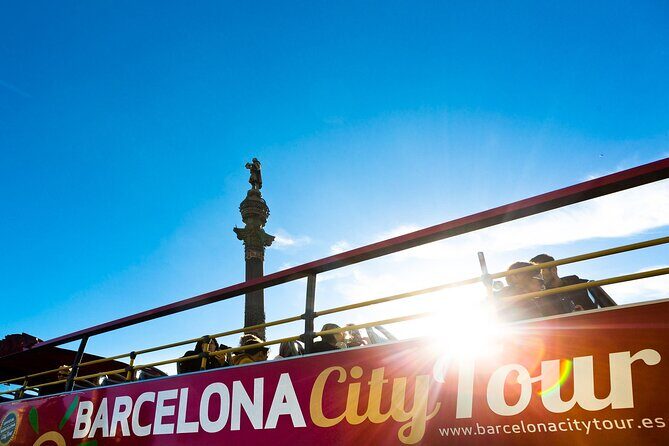
The tour uses air-conditioned double-decker open coaches with a unique sliding roof designed to help keep you dry if it rains. That’s a big deal here because Barcelona weather can turn fast, and open-top viewing is part of the fun.
But don’t assume you’ll be completely dry in a driving rainstorm. One concern that came up: water can still get in near windows/doors and make the stairs feel wet when the bus is moving and stopping.
What I’d do:
- If rain is in the forecast, bring a light rain layer and keep a small towel or tissue handy.
- Try to pick seats that reduce drafts if water is coming in.
And one more weather tip: dress wisely. It can be cooler up top, so what feels fine on the ground may feel chilly once you’re cruising.
Audio guide system and onboard perks: headphones and Wi‑Fi
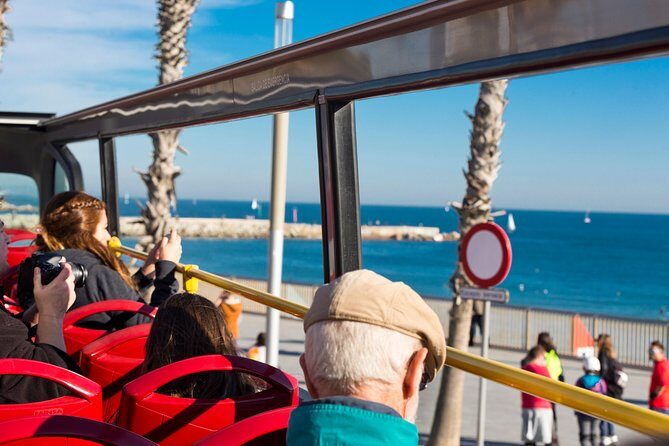
This tour is built around multilingual audio, with English available. If you don’t read fast or you’re traveling with someone who doesn’t, this is a big plus. You can sit back, listen, and get context while the bus does the heavy lifting.
Accessibility matters too. The audio system includes a looping setup for people who use headphones without wires, and priority seating is offered to those who need the system. Seats with the looping feature are signaled.
Two real-world points to know:
- Some passengers report trouble with the audio jacks (cracking sounds).
- On the positive side, there’s Wi‑Fi onboard, and it’s been described as useful for messaging and emailing while you ride.
Traffic, crowds, and how to time your hopping
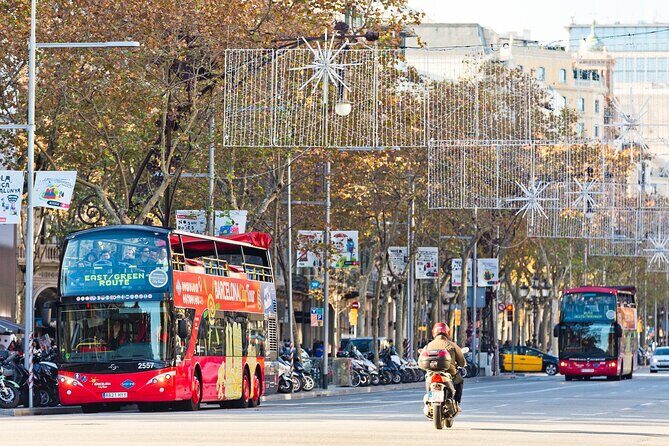
Barcelona traffic can turn a smooth hop-on hop-off day into a slow crawl. That’s not a deal-breaker—just don’t build a plan that assumes every stop will take exactly the time you hope.
Here’s how to keep it fun:
- Hop early at the stops you care about most. The longer you wait, the more likely buses are to run full.
- If you notice a chaotic boarding area, switch your plan. It’s better to walk a short distance or wait for the next bus than to lose an hour fighting for entry.
- At major demand points (like the World Trade Center area and high-interest stops), boarding can be harder.
Also, buses run on a daily schedule and may stop around 7:00 p.m. according to traveler experiences. So if you’re trying to time a last hop, don’t gamble—plan to be done earlier.
Stop-by-stop strategy: what to do at each area
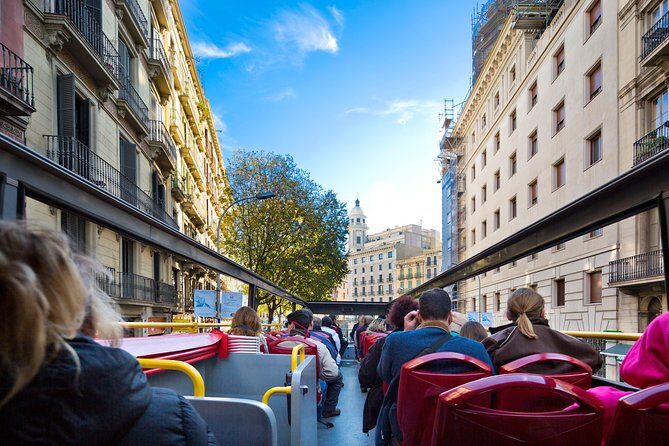
To make this tour pay off, treat it like a choose-your-own-adventure built from the stops below.
- Old city orientation (Pla de Palau, Arc de Triomf): Get off, look around, and decide what neighborhood vibe you want to return to on foot.
- Beach and marina feel (Barceloneta, Port Olímpic, Bogatell): Even a short stop helps you map where the water is in relation to the sights.
- Modern Barcelona (Glòries, Sant Pau area): Great for architecture lovers and for anyone who wants more than just Gaudí.
- Gaudí planning (Park Güell, La Pedrera, Casa Batlló, Sagrada Família): Use the bus to pick which building deserves your time inside. If you don’t plan ahead for entry, you can still enjoy the exterior and the surrounding area.
- Montjuïc and museums (Miramar, MNAC, Poble Espanyol, CaixaForum, Plaça d’Espanya): Ideal if you like views and culture in one sweep.
- Football orientation (Camp Nou): Fun even if you’re not doing a full match-day vibe. It helps you understand the map of where Barcelona’s sports heart beats.
Discounts booklet: how to use it without overspending
One of the best “value” features here is the included discount booklet for many major attractions, shops, and restaurants, along with a stop guide. That only saves money if you actually use it.
My advice:
- Before you board, think about your top 2 to 4 things you might spend money on.
- While riding, keep an eye out for stops that match those priorities.
- If a discount applies, it can be worth it. If it doesn’t, you haven’t lost anything—you still got your city overview.
Who should book this hop-on hop-off bus?
This tour fits you if:
- You want a quick orientation across Barcelona without locking into one set route.
- You’re doing a cruise day and need an easy way to reach multiple neighborhoods.
- You like flexibility: ride, hop off, return, and adjust as the day unfolds.
It may not be ideal if:
- Your schedule is extremely tight and you hate waiting.
- You need a fully guided walking experience from stop to stop.
- You’re planning to do the hill-and-stairs stops (like Park Güell area) without building walking time into your day.
Should you book Barcelona City Tour Hop-On Hop-Off?
I’d book it if you want the easiest way to see a lot of Barcelona in a limited amount of time and you’re comfortable making your own decisions from the bus stops you like best. The two routes on one ticket plus the sliding-roof buses make it a practical choice, especially early in your trip.
I’d reconsider if you know you’ll struggle with crowds, if rain is heavy and you’re set on staying fully dry, or if you’re hoping for a stop that drops you directly at Park Güell’s entrance. In those cases, you’ll likely spend more energy on logistics than on sightseeing.
FAQ
How long is the Barcelona City Tour hop-on hop-off?
The tour duration is listed at about 2 hours 20 minutes, but your total time will be longer if you hop off for sightseeing.
Does one ticket work on both routes?
Yes. Your ticket is valid on both the East Route and the West Route, so you can switch plans during the day.
Are the buses open-top?
They are double-decker open coaches, and they have a sliding roof designed to help keep you dry if it rains.
Is the audio guide available in English?
Yes. The tour offers English, and it also uses a multilingual audio guide system.
Do I need printed tickets, or can I use a mobile ticket?
You can use a mobile ticket.
Is there Wi‑Fi onboard?
Wi‑Fi onboard has been mentioned as working well for emailing and messaging while riding.
Where is Park Güell in relation to the bus stop?
The bus stop for Park Güell is not at the park entrance. You should expect walking uphill and stairs to reach the park.
Can the route change during the day?
Yes. The itinerary can change due to events such as demonstrations, sport events, cultural events, official acts, and public works. Some stops can also be cancelled with alternative locations used.
When do buses stop operating?
One experience shared that buses run until about 7:00 p.m., so plan your last hop earlier than you think you need.
Is there a discount booklet included?
Yes. A discount booklet and a stops guide are included for many attractions, shops, and restaurants.