Barcelona has a second heartbeat.
This guided walking tour is a simple way to understand Barcelona’s layers, from the Roman colony of Barcino to later turns in the Spanish Inquisition era and the Spanish Civil War. I love that you get 2,000 years of history told in a way that feels human, and I also love the on-foot pacing that lets you actually notice details in the streets instead of just passing by. One possible drawback: entry into cathedrals and basilicas isn’t included, so you’ll enjoy the exteriors and guide stories, not long interior stays.
The route through the Gothic Quarter also leans into the fun side of history: stories, legends, and those odd little cultural moments that make Barcelona feel like a living stage set. Guides like Jordan, Darren, Mariah, Petra, Lindsay, Sara, and others are repeatedly described as patient, funny, and clear in English, which matters a lot when you’re walking and learning at the same time. Keep in mind the walking is steady for two hours, so comfortable shoes really do earn their spot.
In This Review
- Key Highlights You’ll Feel Right Away
- Gothic Quarter on Foot: Why This 2-Hour Tour Works
- Finding Your Guide at Plaça Nova (Yellow Carpe Diem Sign Included)
- Roman Barcino to Els Quatre Gats: Getting Oriented Fast
- The Kiss of Freedom and Barcelona Cathedral: Symbols You’ll Want to See Twice
- La Casa de l’Ardiaca and Carrer del Bisbe: When Side Streets Become the Story
- Plaça de Sant Felip Neri: A Small Square With Big Personality
- MUHBA El Call and Plaça de Sant Jaume: Darker History in Plain Sight
- Plaça del Rei and Plaça de l’Àngel: Political Squares With a Story Arc
- Plaça de Santa Maria: The End Stop That Feels Like a Finish Line
- How Much Will You See, and How Hard Is the Walk?
- Who Should Book This Tour (and Who Might Skip It)
- Practical Photo and Question Tips to Get More From It
- Quick Value Check: Is $22 Worth It?
- Should You Book This 2-Hour Gothic Quarter Tour?
- FAQ
- How long is the Barcelona Guided Walking Tour of Top Sights and Hidden Gems?
- What does the tour cost?
- Is cathedral or basilica entry included?
- Where do I meet the guide?
- What language is the tour in?
- What should I bring?
- Is there a return trip to the meeting point?
- Are there different starting times?
- Is free cancellation available?
- Can I reserve and pay later?
Key Highlights You’ll Feel Right Away
- Barcino start point at Plaça Nova, with the large Barcino letters that set the Roman story in motion
- 12 guided stops in about two hours, including the cathedral and the big political squares
- Legend time, including a creepy story tied to the Pont del Bisbe skull (and the twist in what happens if you look)
- Culture stops like Els Quatre Gats, where Barcelona’s creative energy shows up in real place names
- Dark-history context that connects the Spanish Inquisition and the Spanish Civil War to what you see on the ground
Gothic Quarter on Foot: Why This 2-Hour Tour Works
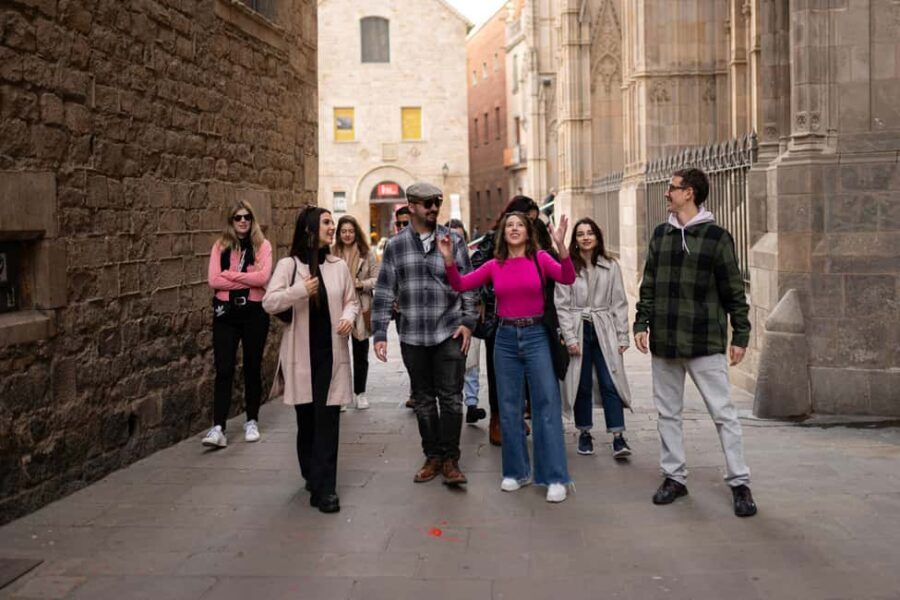
This isn’t one of those tours that dumps facts on you and rushes off. It’s built for the Gothic Quarter’s real strength: the way the streets, squares, and old buildings help you piece together time periods like a puzzle. You get the big timeline—Roman Barcino, the later “golden age” vibe, and the darker chapters—without needing to study maps or read a book first.
At just two hours, it’s also a smart tool for your trip planning. I like using a walking tour early (or at least soon after you arrive) because it gives you a mental layout. After that, when you wander on your own, your eyes start catching the same landmarks the guide pointed out—like squares that look similar until someone explains the difference.
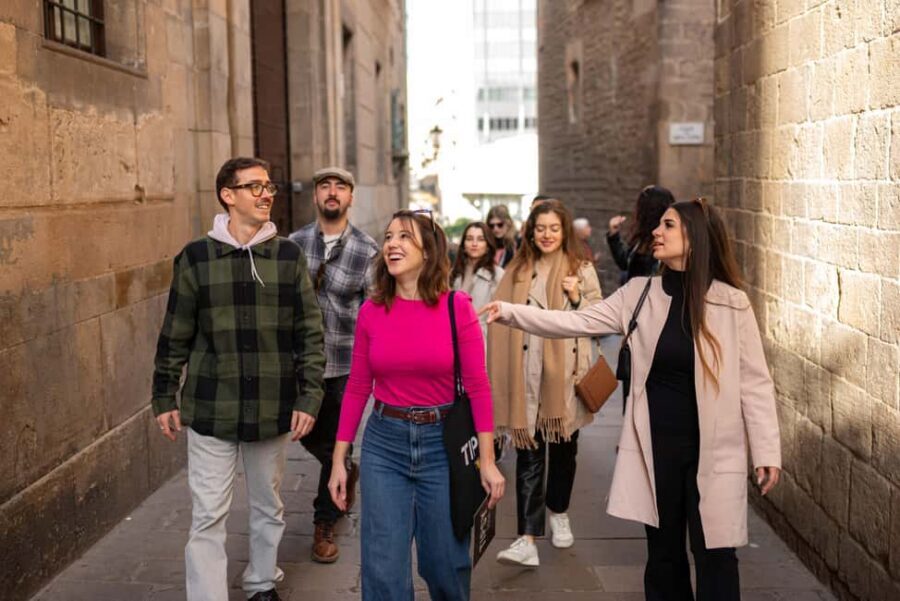
And the guide format seems designed for attention. Each stop is handled as a short guided moment (around 10 minutes), which keeps the tour from turning into a lecture. Multiple guides are described as keeping a group together well, answering questions, and staying patient—exactly what you want when you’re stopping in busy pedestrian areas.
You can also read our reviews of more walking tours in Barcelona



Finding Your Guide at Plaça Nova (Yellow Carpe Diem Sign Included)
Meeting is dead simple if you arrive a couple minutes early. You meet at Plaça Nova, 40, right in front of the prominent sculpture with the large letters Barcino. Your guide will be holding a yellow Carpe Diem Tours sign, so you shouldn’t have to play guess-the-group.
The tour ends back at the meeting point. That’s a small thing, but it reduces stress. You don’t have to “figure out the way back” after walking through tight medieval streets.
Roman Barcino to Els Quatre Gats: Getting Oriented Fast
You start at the Escultura Barcino area, essentially at the doorway of the Roman story. The big win here is that you’re not learning Roman history in theory—you’re learning it where the name Barcino is literally part of the streetscape. It helps your brain click from modern-day Barcelona to the earlier settlement that shaped the city’s structure.
From there, the tour moves into the Gothic Quarter rhythm with a stop at Els Quatre Gats. Even if you don’t know the venue beforehand, the name alone signals something important: Barcelona’s creative identity. The guide’s job is to connect that cultural thread to the older city fabric, so you start seeing the neighborhood as more than “old buildings.” It’s also where ideas and local character show up in real place names.
The Kiss of Freedom and Barcelona Cathedral: Symbols You’ll Want to See Twice
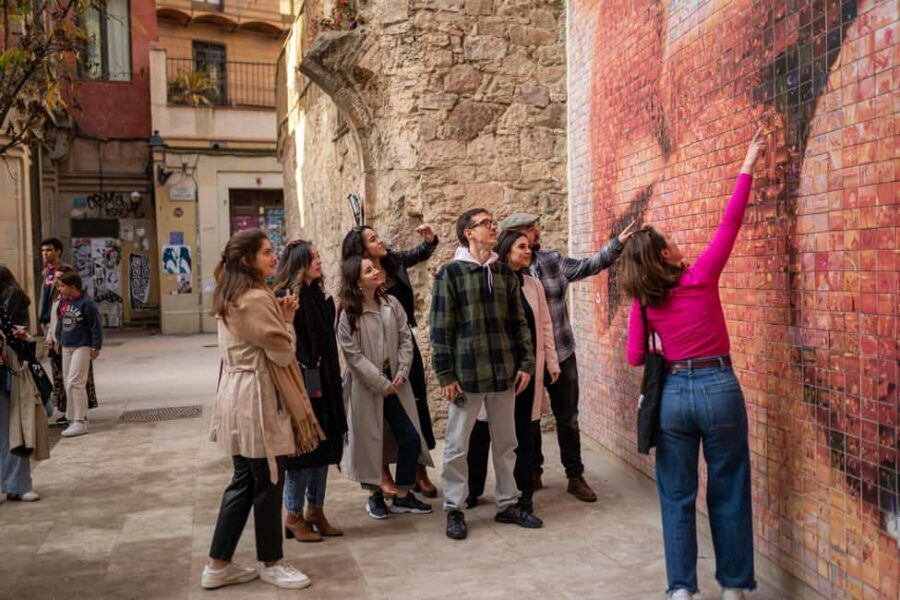
Next comes The Kiss of Freedom, another named landmark where the guide’s storytelling is the real product. I like stops like this because they teach you to look beyond architecture. When a place has a nickname or a story attached to it, you naturally start wondering what the story says about the people who lived there. That’s where Barcelona turns from postcard to personality.
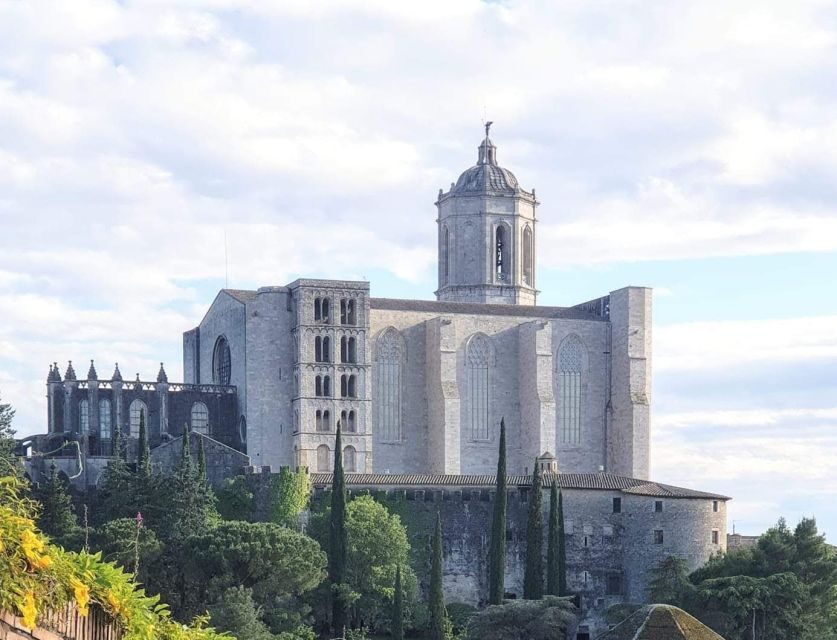
Then you hit the centerpiece: Barcelona Cathedral. The tour includes the guided look, but you should plan around one limitation: entry into cathedrals and basilicas is not included. So you’re there for the exterior and the interpretive story, not a long interior viewing.
That said, the cathedral stop still matters a lot. The Gothic Quarter’s scale can feel confusing if you’re walking without context. Having a guide anchor you at the cathedral gives the rest of the streets and squares a clearer map in your head.
La Casa de l’Ardiaca and Carrer del Bisbe: When Side Streets Become the Story

A short step-by-step change in scenery can make the tour feel different—and that’s exactly what you get when you head to La Casa de l’Ardiaca. This is the kind of stop where architecture becomes conversation. The guided portion helps you read the building’s personality rather than just clocking it as “another old structure.”
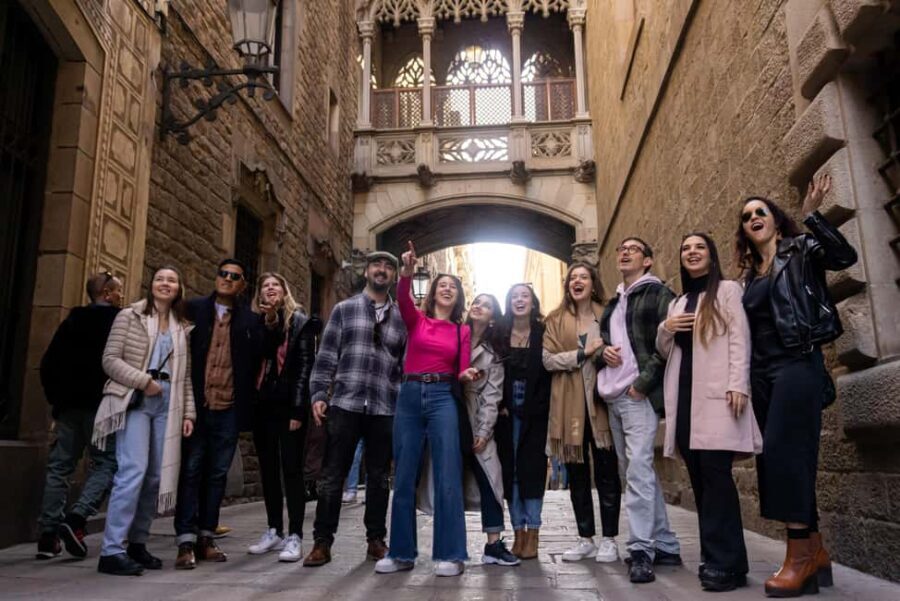
Then the route goes to Carrer del Bisbe. This street is one of those places where legends make sense because the city’s layout already feels medieval and a bit theatrical. Here’s where you’ll hear the legend tied to the Pont del Bisbe—specifically the story about a secret skull and the strange business of what happens if you look at it. I won’t spoil the punchline detail, but I will say this: it’s the kind of story that makes you remember the bridge later, even when you’re walking away.
You can also read our reviews of more guided tours in Barcelona




Plaça de Sant Felip Neri: A Small Square With Big Personality
Plaça de Sant Felip Neri is where I like the tour’s pace most. Squares can look similar from a distance, but a guide helps you notice the difference between “a pretty open space” and a place with layers. This stop fits the tour’s overall promise: history plus small, human-scale atmosphere.
It’s also a nice reset moment. You’ve been moving street to street, and then you get a bit of breathing room, with the guide explaining why this location matters in the city’s story.
MUHBA El Call and Plaça de Sant Jaume: Darker History in Plain Sight
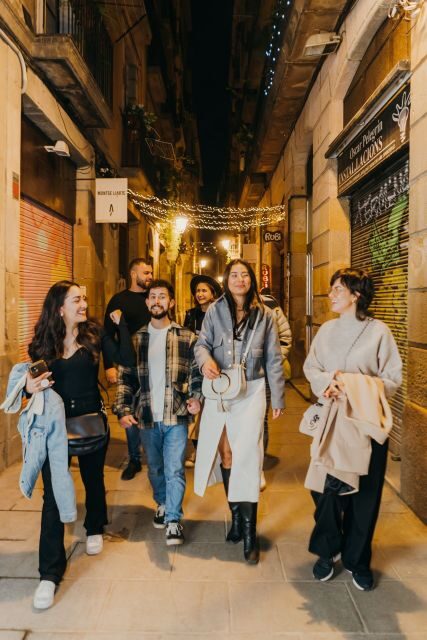
Next is MUHBA El Call, a stop that brings the neighborhood’s past into focus through the lens of the El Call area. This is where the tour’s history stops being abstract. You’ll learn how Barcelona’s older communities and their experiences shaped the city, and you’ll get a sense of how that history lingers in the street layout.
Right after that is Plaça de Sant Jaume, one of Barcelona’s power squares. The guide’s commentary helps connect the architectural and civic meaning of a place like this to Catalan identity and traditions. If you’re the type who likes understanding how politics and culture live in buildings, you’ll appreciate this shift.
Plaça del Rei and Plaça de l’Àngel: Political Squares With a Story Arc
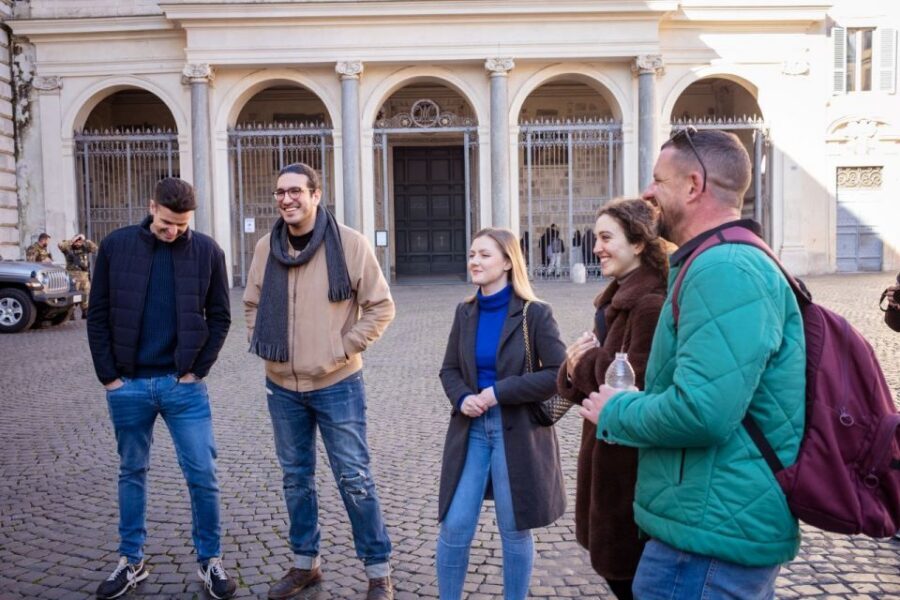
The tour continues to Plaça del Rei and then Plaça de l’Àngel. This is the section where the Gothic Quarter feels most like a story arc: older structures aren’t just “old,” they become chapters in a city that kept rewriting its rules.
During this part of the walk, you’ll also get context for Barcelona’s dark past, including the Spanish Inquisition and the influence of the Spanish Civil War. The value isn’t just the historical dates—it’s how the guide connects those events to what you see nearby, so you leave with context instead of disconnected trivia.
If you like hearing why a square feels the way it does—why it carries authority, tension, or pride—this is the part of the tour you’ll feel in your bones.
Plaça de Santa Maria: The End Stop That Feels Like a Finish Line
You wrap at Plaça de Santa Maria, 1. This end stop gives you a final anchoring point before returning to the start. I like endings like this because they give you a mental “last frame” you can compare against the earlier parts of the walk. You’ll know where you started and where the city’s main historical energy keeps pulling you.
And because the tour returns to the meeting point, you can immediately pivot to your own plans—coffee, a museum, or just wandering with better instincts.
How Much Will You See, and How Hard Is the Walk?
The tour runs about two hours, with guided moments at each stop. With roughly 10 minutes per guided segment, the overall structure is: walk a bit, learn a bit, stop for a quick story, then move again.
That pacing is one of the reasons it works for many people:
- You’re not stuck in one place long.
- The route stays interesting through variety: cathedral, cultural venue, squares, and side streets.
- You can ask questions along the way without derailing the tour.
Still, it’s a walking tour. If your legs need frequent breaks or you’re sensitive to uneven pavement, you’ll want to plan accordingly. Comfortable shoes are part of the deal here, not a suggestion.
Who Should Book This Tour (and Who Might Skip It)
This is a great fit for:
- First-time visitors who want a clear orientation in Barcelona’s oldest streets
- History fans who like context tied to real locations (Roman origins through later upheavals)
- Travelers who enjoy legends, anecdotes, and a bit of humor instead of only dates and dates
You might want to skip or pair it with something else if:
- You mainly care about going inside major churches and basilicas, since entry is not included
- You want a longer museum-style experience with lots of time indoors
In my view, this tour is best as a foundation stop. It gives you the “why” behind the “wow” you’ll see later on your own.
Practical Photo and Question Tips to Get More From It
Bring a camera, but also bring curiosity. This route rewards people who look up, not just forward. When the guide points out a detail, jot it mentally. Later, when you see that same motif again around another corner, the city starts to feel connected.
Also, don’t be shy about asking questions. Several guides in the feedback are described as answering questions and keeping things understandable, even for people who aren’t fluent in Spanish or Catalan. If you care about a theme—like the Gothic Quarter’s darker chapters or why certain squares matter—ask early so the guide can steer the story toward what you want.
Quick Value Check: Is $22 Worth It?
At $22 per person for a guided two-hour walk, the value comes from what you’re getting: a local guide, a structured route through major landmarks, and the context that makes Barcelona’s layers readable. You’re not paying for a pile of included entrances. Instead, you’re paying for time with a guide who can turn stone and street names into meaning.
If you plan to visit interiors later (cathedrals, basilicas), this tour still helps because it tells you where to go and why. And since you end where you started, it’s easy to continue your day without logistical headaches.
Should You Book This 2-Hour Gothic Quarter Tour?
Yes, if you want Barcelona to feel understandable quickly. This is a tight, well-paced walk that connects 2,000 years of history to the exact places you’ll see in the Gothic Quarter. The guide-led storytelling focus—plus the emphasis on humor, clarity, and answering questions—makes the tour feel like more than a checklist.
I’d especially recommend booking it early in your trip so you can use what you learn while you wander. If you’re the type who likes to be “in the know” while you travel, this tour gives you that advantage fast, without heavy planning.
FAQ
How long is the Barcelona Guided Walking Tour of Top Sights and Hidden Gems?
It lasts about 2 hours.
What does the tour cost?
It costs $22 per person.
Is cathedral or basilica entry included?
No. Entry into cathedrals and basilicas is not included.
Where do I meet the guide?
Meet at Plaça Nova, 40, in front of the Barcino sculpture with the large letters, where the guide is holding a yellow Carpe Diem Tours sign.
What language is the tour in?
The tour is offered in English.
What should I bring?
Bring comfortable shoes and wear comfortable clothes. A camera is also recommended.
Is there a return trip to the meeting point?
Yes. The tour ends back at the meeting point.
Are there different starting times?
The tour runs at different starting times. You’ll need to check availability to see which times are offered.
Is free cancellation available?
Yes, you can cancel up to 24 hours in advance for a full refund.
Can I reserve and pay later?
Yes. You can reserve now and pay later to keep your plans flexible.