REVIEW · BARCELONA
Barcelona Historical Walking Tour: Gothic Quarter and El Born
Book on Viator →Operated by Carpe Diem Tours · Bookable on Viator
This part of Barcelona feels like a living textbook.
You’ll walk the tight lanes of the Gothic Quarter and El Born with a guide who connects art, politics, and religion to real corners you can point at. It’s a smart way to get your bearings fast, with stories tied to names you’ll hear everywhere, like Picasso and Gaudí, and great pacing from guides such as Juan and David.
I especially like the short, easy rhythm: one stop about every 10 minutes, so you get variety without feeling stuck in one place. The group stays small (up to 20), which helps a guide keep the pace human and answer questions. One thing to consider: two of the big churches have admission not included (Catedral de Barcelona and Basilica de Santa Maria del Mar), so you may want a bit of extra cash and time buffers if you decide to go in.
In This Review
- What Makes This Walking Tour Worth Your Time
- Why the Gothic Quarter and El Born Work Best on Foot
- The Route: From Els 4 Gats to Santa Maria del Mar
- Stop 1: Els 4 Gats
- Stop 2: El Mon Neix En Cada Besada
- Stop 3: Catedral de Barcelona (Admission Not Included)
- Stop 4: Casa de l’Ardiaca
- Stop 5: Pont del Bisbe
- Stop 6: Placa Sant Felip Neri
- Stop 7: MUHBA – El Call (Jewish Quarter)
- Stop 8: Placa de Sant Jaume
- Stop 9: Placa Del Rei
- Stop 10: Plaça de l’Àngel
- Stop 11: Basilica de Santa Maria del Mar (Admission Not Included)
- Guides That Make Small Stones Feel Big
- Price and Value: What $30.25 Really Buys
- Timing, Weather, and How to Walk Smarter
- What to Do After the Tour
- Should You Book This Barcelona Gothic Quarter and El Born Walk?
- FAQ
- How long is the Barcelona Historical Walking Tour?
- How much does the tour cost?
- Where does the tour start and end?
- Is the tour offered in English?
- Is admission included for all stops?
- What’s the group size limit?
- Is the walking route suitable for most people?
- What should I do if I want to see the churches inside?
- When is the best time to take this tour?
- Can I get a full refund if I change my plans?
- How far in advance should I book?
What Makes This Walking Tour Worth Your Time
- Picasso and Gaudí meet medieval streets: the route ties art legends to the Old Town corners where creative people once gathered.
- You’ll see Roman and Gothic layers: the walk mixes Roman wall remains and Gothic landmarks without feeling like a museum circuit.
- Catalan identity shows up in unexpected places: a photomosaic and city squares connect local meaning to what you’re looking at.
- Good guide energy is part of the package: people rave about lively storytelling and clear explanations from guides like Thami, Jorge, and Lidia.
- A balanced intro to Gothic Quarter and El Born: you cover the must-sees plus quieter side streets you’d likely miss on your own.
Why the Gothic Quarter and El Born Work Best on Foot
Barcelona’s oldest streets don’t behave like a typical sightseeing grid. They twist, narrow, and suddenly open onto squares that look like they were waiting for you to turn the corner. A walking tour is the right format here because the best details sit at eye level: small bridges, street legends, and stonework you’d miss from a bus window.
What I like about this specific tour format is how it uses time. It’s about 2 hours, and each stop is brief enough to keep the day moving, but long enough for your guide to explain why a place matters. You’re not just collecting photos; you’re learning how Barcelona’s story got stacked in layers—Roman rule, medieval life, Jewish community traces, and later political trauma.
And because the tour is capped at 20 people, the experience stays personal. Reviews often highlight “just right” group size and on-time starts, which matters in Barcelona’s Old Town where every minute can change how crowded a street feels.
If you want a first-day plan that helps you stop getting turned around in Ciutat Vella, this is a strong choice.
You can also read our reviews of more tours and experiences in Barcelona.
The Route: From Els 4 Gats to Santa Maria del Mar
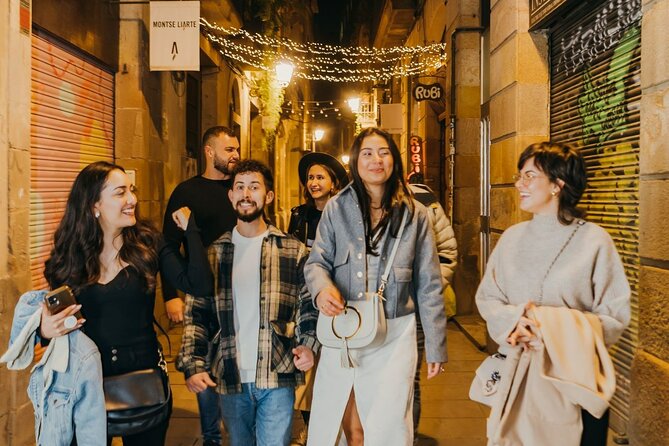
The tour starts in Plaça del Vuit de Març in Ciutat Vella and ends at Basilica de Santa Maria del Mar, near Plaça de Santa Maria, 1. That end point is useful. From there, it’s easy to keep exploring the seafaring side of the city or connect to other central areas without backtracking.
Here’s the walk, stop by stop, and what you should watch for.
Stop 1: Els 4 Gats
Your first stop is a famous historic café and restaurant. The idea here is brilliant: you start in a place connected to the artists and intellectuals who helped shape modern Barcelona’s creative identity. It’s also remembered for the Art Nouveau feel of the setting, which makes the link between old streets and later artistic life feel real.
What to pay attention to: the atmosphere and the design cues. Even from outside, you’ll understand why people wanted to gather here.
This stop is quick (about 10 minutes) and admission is free.
Stop 2: El Mon Neix En Cada Besada
This is one of those “only in this city” sights: a photomosaic installed in 2014 connected to a major Catalan historical moment tied to September 11, 1714 and what later became La Diada (Catalonia Day).
Why this stop matters: it shows how Barcelona uses art and public space to carry identity forward. You’re looking at a symbol tied to struggle and memory, not just a decorative wall.
Admission is free, and the visit is short.
Stop 3: Catedral de Barcelona (Admission Not Included)
Now you hit a big religious landmark in the heart of the Gothic Quarter. This Gothic-style cathedral honors Saint Eulalia, who is remembered in Barcelona for the story of her torture and death under Roman authority.
Practical note: because admission is not included, you’ll want to decide on the spot if going inside fits your time and budget. The church still works as a visual stop even if you don’t pay to enter, but you’ll miss out on interior details if you skip it.




Stop 4: Casa de l’Ardiaca
This stop is a favorite type of Old Town discovery: a building that feels like two eras stacked together. Casa de l’Ardiaca blends Gothic and Renaissance elements, and the big draw is that it contains Roman remnants—like a vertical face of the Roman wall and aqueduct-related structures.
Why it’s special: it’s not just about admiring architecture. It’s about seeing the city’s physical timeline—layers of stone showing what came before.
Admission here is free.
Stop 5: Pont del Bisbe
The Bishop’s Bridge is short, but it’s packed with story. It sits on Carrer de Bisbe, a street that served as a main thoroughfare during Roman-occupied Barcino. The bridge’s style is Neo-Gothic, and there’s also a superstitious legend attached to it.
This stop is a good example of what the guide format delivers: you’re not just looking at a bridge; you’re learning the meaning behind why people talk about it.
Admission is free.
Stop 6: Placa Sant Felip Neri
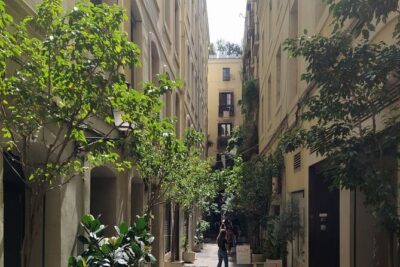
This square is tucked away and easy to overlook if you’re rushing. The twist is that it has a sombre connection to the Spanish Civil War. The place still bears visible scars from that era.
Why this works on a walking tour: it gives you a more honest version of the city. Barcelona isn’t only Gaudí postcards. It has hard chapters, and the city’s stone keeps some of them in view.
Admission is free.
Stop 7: MUHBA – El Call (Jewish Quarter)
Now you enter the part of Barcelona that feels both intimate and historically important: El Call, the Jewish quarter. You’ll see narrow medieval streets and traces tied to the synagogue area and related legends.
What I like here: the tour doesn’t treat this as a random photo stop. Your guide gives context so you understand the quarter as a living neighborhood structure rather than a label on a map.
This stop is free and about 10 minutes.
Stop 8: Placa de Sant Jaume
This is the civic center vibe. Placa de Sant Jaume is a hub of government activity, surrounded by historical buildings. It’s busy by nature, but on the tour it functions as a way to connect the Old Town’s physical space to how power and public life worked.
Admission is free.
Stop 9: Placa Del Rei
This square looks inviting, but it comes with a darker edge. It’s associated with the Royal Palace, and your guide will place it in the historical frame that makes the contrast make sense.
If you like your sightseeing with a side of consequences, this is a solid stop. Squares can look peaceful today because history moved on, but the stones remember who once ruled here.
Admission is free.
Stop 10: Plaça de l’Àngel
Formerly called Wheat Square, it was a key trading hub. The name “Angel’s Square” ties to a heavenly legend, and this is one of those stops where you’ll probably want to look around slowly after your guide finishes speaking.
Why it’s worth it: you’ll start noticing how many Barcelona place-names carry story, not just labels.
Admission is free.
Stop 11: Basilica de Santa Maria del Mar (Admission Not Included)
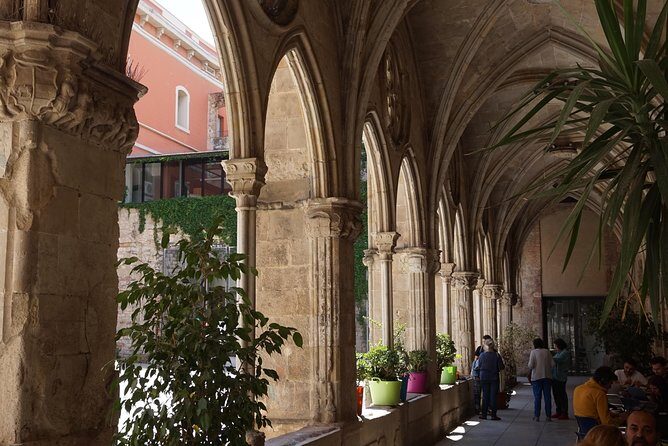
You finish at one of the most striking Catalan Gothic churches tied to Barcelona’s maritime life. Santa Maria del Mar is the perfect ending because it feels open and light compared to some of the tight street sections earlier.
Admission is not included, so decide if you want to go inside. Either way, it’s an atmospheric landing point for your walk.
The tour ends here at the basilica area.
Guides That Make Small Stones Feel Big
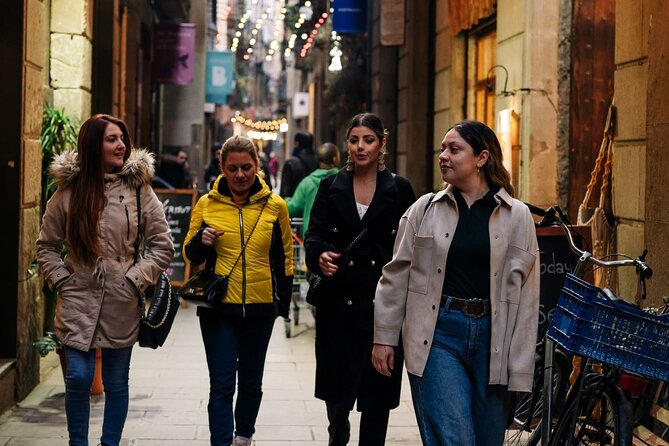
A walking tour lives or dies on the guide. This one gets consistently high marks for energy, clarity, and the ability to keep people engaged even when the streets get crowded or the weather turns.
From the guide names mentioned in feedback, you’ll see a pattern: people remember the storytelling. Juan stands out for connecting big names like Gaudí to the city’s story. David also gets credit for strong Gaudí-focused context. Thami, Jorge, and Lidia receive praise for balancing humor and serious context, which is hard to do in narrow streets where you can’t “escape” if attention drops.
There are also practical signs of good guiding. Reviews call out guides using an iPad to supplement the tour, answering questions well, and giving end-of-tour food or drink suggestions (text-message style). That kind of follow-through helps you turn a good morning walk into a better day.
One small caution: there’s a rare report of a quiet guide people couldn’t hear. That’s not the general pattern, but if you’re sensitive to audio, pick a spot where you’re facing the guide and not at the far edge of the group.
Price and Value: What $30.25 Really Buys
At $30.25 per person for about 2 hours, this tour is priced in the “let’s save time” category. You’re paying for a guide to compress a lot of context into a short route, plus the advantage of not having to figure out what to look for when the streets all start to blend together.
The value gets better because many stops are free to view:
- Els 4 Gats: admission free
- El Mon Neix En Cada Besada: free
- Casa de l’Ardiaca: free
- Pont del Bisbe: free
- Placa Sant Felip Neri: free
- MUHBA – El Call: free
- Placa de Sant Jaume: free
- Placa Del Rei: free
- Plaça de l’Àngel: free
The two major churches with admission not included are:
- Catedral de Barcelona
- Basilica de Santa Maria del Mar
So you can do the tour mainly on free stops if you prefer. If you want the full religious and interior experience, plan a little extra for tickets.
Also factor in the small-group cap (maximum 20). For places like the Gothic Quarter, that matters. Too many people and the streets can turn into a traffic jam. Here, the group size appears designed to keep movement smooth and questions possible.
If you’re trying to decide between doing this and spending the same time wandering, I’d choose the guided version on day one. It helps you understand the city faster, and then your self-guided strolls get better.
Timing, Weather, and How to Walk Smarter
The tour duration is short enough that you don’t need a full half-day block. It’s still a walking tour, though, so shoe choice matters.
A useful tip from experience: morning tends to be cooler and less busy in the Old Town. If you can schedule it early, you’ll usually enjoy the streets more and you’ll spend less time stuck behind crowds. That also makes it easier to take photos without constantly pausing.
Weather happens. There’s feedback about the guide keeping the tour going while dodging downpours. If rain is in the forecast, bring a compact umbrella or a light rain jacket. In these streets, getting wet isn’t just uncomfortable; it can slow the group if people start stopping for shelter.
Pace also matters. Reviews describe the walk as relaxed, not an exhausting sprint, with enough time to see details and snap pictures. That makes it suitable for most visitors, and the operator notes most travelers can participate.
What to Do After the Tour

Because you end near Santa Maria del Mar, you’re in a great position to extend your day:
- Keep exploring the seafaring neighborhoods near the end point
- Plan a lunch stop nearby so you’re not crossing the city during peak hours
- Use the context from the walk to spot symbols and names as you wander (you’ll start recognizing why certain squares feel important)
If you like to turn guided time into self-guided momentum, this tour helps. The stops are spaced so you can remember the route and retrace it later for photos or for a longer look at one building you want more time in.
Should You Book This Barcelona Gothic Quarter and El Born Walk?

Book it if:
- You want an efficient 2-hour intro to Gothic Quarter and El Born
- You like local stories tied to real places, especially art and Catalan identity
- You’d rather walk with a guide than guess what to look for in narrow medieval streets
- You’re traveling with kids or teens and want a route that keeps people engaged (guides are praised for handling families)
Consider skipping or choosing a different option if:
- You strongly prefer spending all your time outside and don’t want to think about church admissions (two key churches are marked not included)
- You dislike group pacing or you need a very quiet, silent experience (most guides do well, but one rare complaint focused on audibility)
Bottom line: if your priority is getting oriented fast and learning why the Old Town looks the way it does, this is a solid pick. The consistent star rating and the way people single out guides like Juan, David, Thami, Jorge, and Lidia point to a tour built around storytelling, not just checklists.
FAQ
How long is the Barcelona Historical Walking Tour?
It’s about 2 hours long.
How much does the tour cost?
The price is $30.25 per person.
Where does the tour start and end?
It starts at Plaça del Vuit de Març, Ciutat Vella, 08002 Barcelona, Spain, and ends at Basilica de Santa Maria del Mar, Plaça de Santa Maria, 1, Ciutat Vella, 08003 Barcelona, Spain.
Is the tour offered in English?
Yes, it’s offered in English.
Is admission included for all stops?
No. Admission isn’t included for Catedral de Barcelona and Basilica de Santa Maria del Mar. Other listed stops show admission as free.
What’s the group size limit?
The maximum group size is 20 travelers.
Is the walking route suitable for most people?
The tour notes that most travelers can participate, and reviews describe the walk as easy and doable for many visitors.
What should I do if I want to see the churches inside?
Because admission for Catedral de Barcelona and Santa Maria del Mar is not included, you’ll need to plan to buy those tickets separately if you want to go in.
When is the best time to take this tour?
Going in the morning is often cooler and less busy in the Old Town, based on tour feedback.
Can I get a full refund if I change my plans?
Yes. You can cancel up to 24 hours in advance for a full refund.
How far in advance should I book?
On average, this tour is booked 26 days in advance.