REVIEW · BARCELONA
Barcelona: Jewish Quarter 2-Hour Walking Tour
Book on GetYourGuide →Operated by BARCELONA DREAMING · Bookable on GetYourGuide
History hides in plain sight here. This Jewish Quarter walk makes the past physical, with stops at Sinagoga Mayor Barcelona and the medieval mikve, all led by a live English guide who turns confusing centuries into something you can picture in the narrow Gothic streets.
I particularly like how the tour is built for real sightlines and small-group attention, with guides such as Ella and Edu known for clear pacing and answering follow-up questions as you walk.
One thing to factor in: the tour price does not include the Synagogue Museum entrance fee, so you may pay a little extra on-site depending on what’s open and included that day.
In This Review
- Key highlights you’ll notice right away
- Starting where Barcelona’s main squares meet
- Sinagoga Mayor Barcelona: the oldest synagogue experience
- The medieval mikve: a small stop with big meaning
- Where four synagogues fit into the Gothic Quarter maze
- Ruins of the Old Synagogue tied to Shlomo Ben Adret
- The Mikve and the Roman walls area: seeing boundaries, not just buildings
- How guides like Ella, Edu, and Lilach shape the experience
- What the two-hour timeline feels like on your feet
- Price and value: is $76 worth it?
- Who should book this walking tour
- Quick reality check: what you might not get
- Should you book the Barcelona Jewish Quarter 2-hour walking tour?
- FAQ
- Where does the tour start?
- How long is the tour?
- What’s included in the price?
- Is it a small group?
- Do I need to speak Spanish or Hebrew?
- Is the tour wheelchair accessible?
- Is there free cancellation and flexible booking?
Key highlights you’ll notice right away
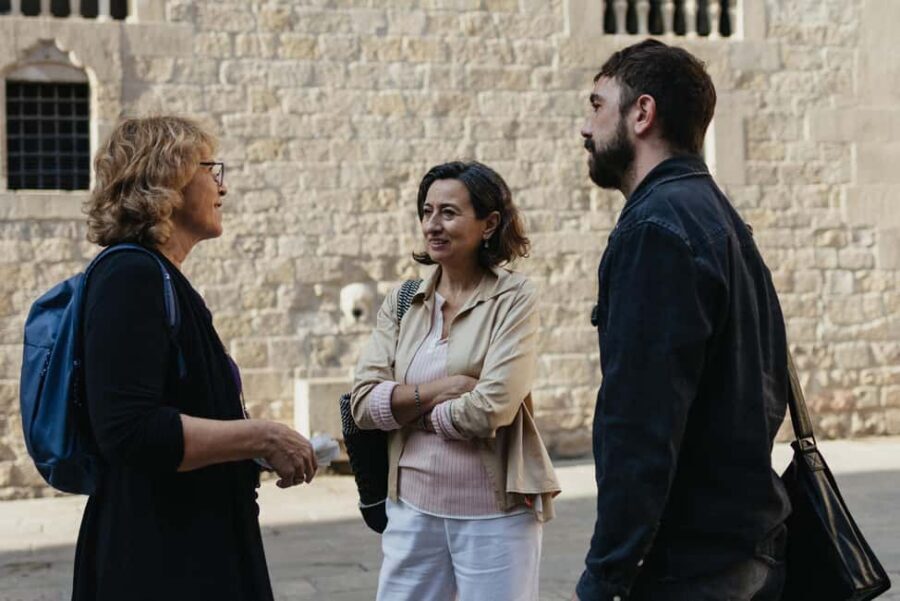
- Sinagoga Mayor Barcelona: often described as the oldest synagogue in Europe
- The medieval mikve: a standout piece of Jewish history you can actually see
- Four synagogue locations in the city center: you’ll connect names to street-level clues
- Ruins with context, including the Old Synagogue connected to Shlomo Ben Adret
- Medieval alleyway pacing: short route, but packed with meaning
- Small group (max 6): easier questions, less rushing
Starting where Barcelona’s main squares meet
Most first-time visits to the Gothic Quarter feel like a maze. This tour gives you a map in your head by starting at Plaça Sant Jaume, right by the Alcampo. From there, you’re set up for the best kind of walking tour: not hopping across the city, but learning how one compact area can hold centuries.
The route is designed to loop right back to the meeting point at the end. That matters because you won’t feel trapped when you want to grab lunch, detour to a nearby museum, or just keep roaming afterward without another transit headache. Also, because it’s wheelchair accessible, the walking is meant to be manageable for a range of visitors.
Even if you’ve been to Barcelona before, this is the spot where the city’s layers start to click. You’re close to major landmarks, but the tour steers you into the narrower streets where history doesn’t sit behind big signage.
You can also read our reviews of more walking tours in Barcelona



Sinagoga Mayor Barcelona: the oldest synagogue experience
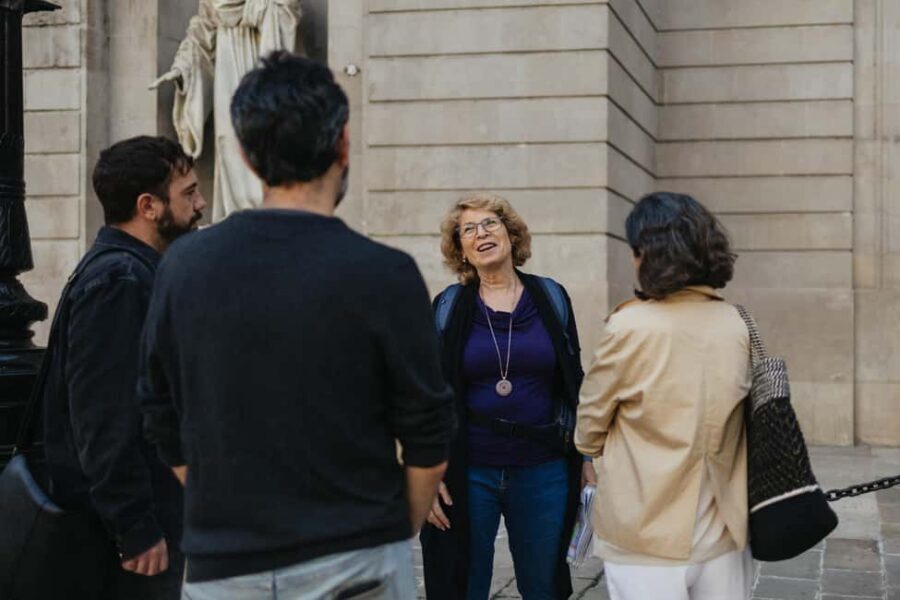
The tour’s anchor stop is Sinagoga Mayor Barcelona, highlighted as the oldest synagogue in Europe. This isn’t just a “pretty building” stop. It’s the reason the whole walk works.
Here’s why: when you see a place that’s tied to centuries of faith and community life, the rest of the story stops being abstract. The guide’s job is to connect that physical site to the community’s growth and the changes over time—so you leave with a clearer sense of what existed there, what disappeared, and what remains.
You’ll also get help reading the site without needing a history degree. The tour format includes a live English guide, and some guides (like Alan) are known for using maps, photos, and even mockups to make older structures understandable. That kind of visual support helps a lot when the remains you see can feel subtle at first glance.
Practical note: the Synagogue Museum entrance fee is not included, so if your visit includes museum access, it’s worth mentally budgeting for that extra ticket.
The medieval mikve: a small stop with big meaning
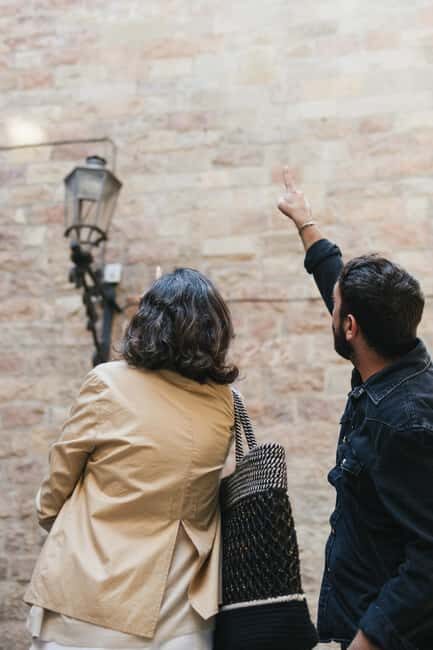
One of the tour’s standout claims is the site of the medieval mikve. This is the kind of detail that’s easy to miss on your own—yet it’s also exactly what makes the Jewish history of Barcelona feel real.
A mikve isn’t just a background concept. It’s part of daily spiritual life, and seeing one tied to medieval Barcelona helps you understand that the community wasn’t only about major events. It was about routines, practices, and community structure that repeated across generations.
What I like about this stop is how it changes your attention. Instead of only searching for “big monuments,” you start noticing the infrastructure of life—places built for specific meanings. On a walking tour, that shift is the difference between learning names and actually understanding the lived experience.
Where four synagogues fit into the Gothic Quarter maze
The tour highlights four historic synagogues located in the city center. You’re not walking between four separate buildings like a checklist. Instead, you’re shown the locations and guided through how the Jewish community used the area and how those spaces relate to each other.
This is one of the best values of a structured walking tour: it saves you from the common frustration of wandering the Gothic Quarter without knowing what you’re looking at. The guide points out the subtle, easy-to-overlook remnants and street cues that connect today’s streets to earlier patterns of Jewish life.
It’s also why the route works so well in just two hours. The tour compresses a complicated geography into something your brain can hold onto.
Keep in mind that because parts of this story involve ruins and partial remnants, the “see it all clearly” expectation is unrealistic. The point is the context—and the guide does the heavy lifting by explaining what you’re seeing and what’s missing.
Ruins of the Old Synagogue tied to Shlomo Ben Adret
Another key stop is the ruins of the Old Synagogue (Shlomo Ben Adret). “Ruins” sounds like a vague word until a guide turns it into a story about people, choices, and the long arc of survival.
When you stand near remnants like this, you start to understand the tragedy built into the history: not just a single event, but a slow narrowing of where a community could live and worship. The tour frames this through the Jewish community’s estimated arrival and growth in Spain—often linked to the period after the Second Temple’s destruction—then follows the community’s development until the late 14th century.
You’ll hear about a long stretch of relative stability, followed by a brutal turning point in 1391, when a violent attack dramatically ended the Jewish presence in Spain. In a city like Barcelona, hearing that in the streets where parts of the past remain is a powerful way to make the timeline stick.
You can also read our reviews of more tours and experiences in Barcelona





The Mikve and the Roman walls area: seeing boundaries, not just buildings
The tour doesn’t only focus on the best-known synagogue sites. It also guides you into the smaller Jewish Quarter around the Roman walls—the kind of area where the ground floor feels medieval even when nothing is labeled.
This part of the walk matters because it frames Jewish Barcelona as more than a set of religious buildings. You’re learning how the community sat inside the city’s physical boundaries.
You’ll also visit the site connected to the medieval ruins of a house owned by a Jewish alchemist. That detail is more than trivia. It shows the community contributing to learned life and skilled trades, not only spiritual practice. When the story includes people doing everyday work—craft, science, learning—it balances the tragedy with humanity.
How guides like Ella, Edu, and Lilach shape the experience
A walking tour can be strong or forgettable based on the guide. Here, the pattern is clear from guide performance: people tend to leave talking about not just what they saw, but how the story was explained.
Guides such as Ella, Edu, and Lilach are often described as friendly, engaging, and able to answer questions in a way that keeps pace with the group. Some guides bring tools—like maps and visuals—to help you understand what the ruins and locations would have looked like.
Also, pacing comes up a lot. One of the best compliments you can get for a history walk is that it doesn’t feel like a race. Some guides adjust the walk for visitors with walking issues or simply take time when someone needs a pause. That makes the two hours feel like it belongs to you, not to the schedule.
You should expect a clear English narration throughout. The tour is listed as English live guided, and reports often note a strong command of English plus a knack for communicating difficult history without turning it into a lecture.
What the two-hour timeline feels like on your feet
Two hours sounds short. It’s enough time to cover major highlights and still leave breathing room, but it’s not enough to wander off-track for long detours. Think of it as a focused “history walk with guided stops,” not a free-roam exploration.
The Gothic Quarter’s alleys are narrow, and the experience is built around small-site viewing. That’s why meeting at a central plaza helps: you start organized and stay in the same neighborhood. End back at the meeting point also reduces the stress factor—you don’t have to figure out a new meetup or transit plan.
Weather can matter. The rain in Barcelona is often brief, but it changes how ruins and stone streets feel. Some guides are careful about safety in poor weather, which is a relief when you’re trying to enjoy the story rather than white-knuckle your footing.
Price and value: is $76 worth it?
The price is listed at $76 per person for a 2-hour walking tour. That sounds specific, and it should—because your value comes from more than movement.
Here’s the real breakdown of value:
- You’re paying for a live English guide who explains the Jewish community’s centuries-long story in the exact place where remnants exist today.
- You’re paying for small-group attention (limited to 6 participants), which makes it easier to ask questions and get clarifications instead of just hearing facts at volume.
- You’re paying for skip the ticket line, which matters if you’re trying to keep the day flowing rather than waiting around.
The main “cost” twist is that the Synagogue Museum entrance fee is not included. If the museum portion is open and included for your group, you’ll likely add that expense. Still, even with that add-on, you’re generally buying something better than self-guided wandering: you get the story connected directly to the streets and structures.
Also, hotel pickup is listed as not included (with an extra fee mentioned), which means you should plan to arrive on your own at Plaça Sant Jaume. For many people, that’s actually a plus—less time waiting for shuttles, more time in the Quarter.
Who should book this walking tour
This tour fits best if you:
- want to understand the Jewish history of Barcelona in a focused, human scale
- like walking tours but don’t want to spend your energy hunting for context
- enjoy guides who answer questions and explain the “why,” not only the “what”
- are short on time but want the highlights connected into one story
It’s also a good first activity when you land in Barcelona. Getting oriented in the Gothic Quarter with history attached helps you explore afterward with better instincts—what to look for, where to linger, and what you’re actually seeing.
If you’re the type who hates any walking at all, this may feel like “too much street time.” But if you can handle uneven stone streets and narrow lanes, you’ll get a lot out of it.
Quick reality check: what you might not get
A walking tour of this kind can’t replace a full museum visit. Ruins are ruins. A medieval mikve site isn’t going to come with a big interpretation center on every corner.
If you crave deep academic detail, you may want to pair this walk with independent reading or a separate museum visit. The strength here is the guided street-level narrative, not a full compilation of every historical document.
Should you book the Barcelona Jewish Quarter 2-hour walking tour?
If you want value, clarity, and a story you can walk through, I’d book it. Sinagoga Mayor Barcelona, the medieval mikve, and the Old Synagogue ruins tied to Shlomo Ben Adret are the kind of anchors that make the entire experience worth planning around.
It’s especially smart if you like small groups, ask questions, or want your two hours to count. Just remember the likely extra cost for the Synagogue Museum entrance fee, and plan to start at Plaça Sant Jaume with the Alcampo nearby.
FAQ
Where does the tour start?
It starts at Plaça Sant Jaume, just next to the Alcampo store.
How long is the tour?
The tour runs for 2 hours.
What’s included in the price?
The price includes the walking tour. Entrance fees to the Synagogue Museum are not included.
Is it a small group?
Yes. It’s a small group limited to 6 participants.
Do I need to speak Spanish or Hebrew?
No. The tour guide provides a live English tour.
Is the tour wheelchair accessible?
Yes, the activity is listed as wheelchair accessible.
Is there free cancellation and flexible booking?
Yes. You can cancel for a full refund up to 24 hours in advance, and you can reserve now and pay later.