REVIEW · BARCELONA
Barcelona’s El Raval and the Gothic Quarter: A Self-Guided Audio Tour
Book on Viator →Operated by VoiceMap Audio Tours · Bookable on Viator
This walk mixes gritty Barcelona with fairy-tale corners.
You follow an audio route through El Raval and the Gothic Quarter, starting right on La Rambla, with stories you can pause and restart anytime.
I especially like two things. The first is offline listening plus an on-screen map, so you can keep moving without stressing about data. The second is the pacing: you control when to stop for a side street, a viewpoint, or just a breather.
One possible drawback: the route uses GPS, and GPS can be flaky in tight streets. If your phone struggles, expect you may need a backup like another map app for a few minutes, especially at the start.
In This Review
- Key points to know before you go
- First Steps at Font de Canaletes on La Rambla
- El Raval After La Rambla: From Mercy Stories to Market Stalls
- Palau Güell and Botero’s El Gato: Two Ways to Notice Barcelona
- Squares, Shortcuts, and the Art of Staying Oriented
- Can Culleretes, Carrer d’Avinyo, and Meson del Café: Stories You Can Choose
- Gothic Quarter Sights: Cathedral Area, Pont de Bisbe, and Barcino Roots
- El Peto: A Kissing Mural That’s Actually About Public Choice
- VoiceMap Experience: Offline Listening and What to Expect from the App
- Price and Timing: Is $11.99 Good Value for This Walk?
- Should You Book This El Raval and Gothic Quarter Audio Tour?
- FAQ
- How long is the Barcelona El Raval and Gothic Quarter audio tour?
- Where does the tour start and where does it end?
- What language is the audio offered in?
- Do I need internet access during the walk?
- Can I repeat the tour later?
- What does the price include?
- Are tickets or entrance fees included?
- Do I need to bring a smartphone and headphones?
- Is this tour private or shared?
- Is it refundable or changeable if I cancel?
Key points to know before you go

- Offline audio and maps help you wander without worrying about signal.
- Lifetime access means you can repeat the walk later, at your own pace.
- Simple start from Font de Canaletes on La Rambla, then you slide into narrow lanes fast.
- Big names in small moments: Botero’s cat, Palau Güell, and the Cathedral area.
- Pause-friendly storytelling lets you slow down for squares like Plaça de Sant Jaume and Plaça Sant Felip Neri.
- Real neighborhood texture from El Raval’s older urban life to the Gothic Quarter’s neo-gothic sights.
First Steps at Font de Canaletes on La Rambla
Start at Font de Canaletes (La Rambla, 133). It’s a good choice because you’re already in the thick of the action, yet your route quickly turns away from the main drag and into the older fabric of Ciutat Vella.
This is a self-guided audio walk, so you don’t “join a group.” You walk your own line and use the app when you want. That matters here, because the area rewards curiosity: you’ll spot alleys, mini-plazas, and storefronts that are easy to miss if you’re stuck marching on someone else’s schedule.
A quick practical note: you’ll want your phone charged and ready. The tour includes offline access, but your device still needs battery for the app and screen map.
You can also read our reviews of more guided tours in Barcelona



El Raval After La Rambla: From Mercy Stories to Market Stalls
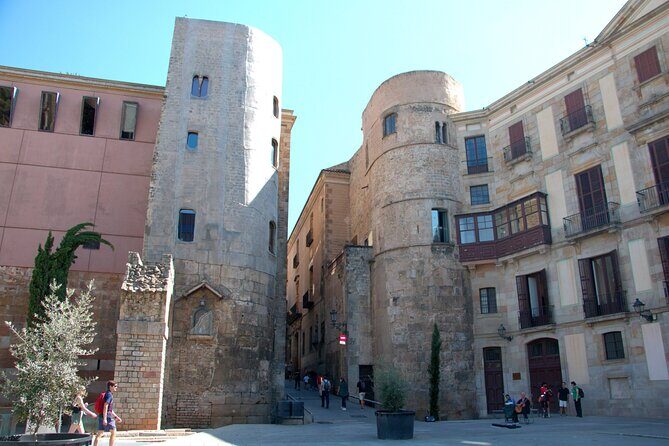
Once you leave La Rambla, the audio nudges you into El Raval, one of Barcelona’s oldest neighborhoods. You’ll get context for how dense and difficult life could be here, and why this part of the city developed its own reputation over time.
One of the strongest story stops involves the House of Mercy—specifically, how destitute mothers once left unwanted babies through a hole in the wall. It’s heavy material, but it’s told in a way that helps you understand why these neighborhoods have layers, not just pretty facades. If you like tours that connect architecture to real human choices and survival, this part will land.
Then you shift gears and walk into the bustle of Mercat de la Boqueria. The tour gives you the chance to step into the market, with the big idea that it’s been operating since the 1100s. Even if you just watch people and scan stalls, you’ll feel the long-running rhythm of the market—Barcelona’s version of old-world everyday life.
Do this like a local: don’t rush the market. Let the audio run for key cues, then step aside when you want to read labels, watch prep, or grab a quick look at what’s in season (food and drink aren’t included, so it’s on your own schedule).
Palau Güell and Botero’s El Gato: Two Ways to Notice Barcelona
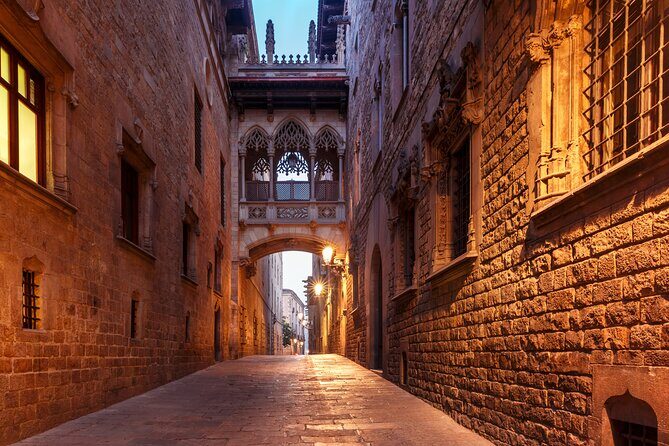
El Raval leads into sights that are famous, but the tour frames them in a “slow down and see” way.
You’ll have the chance to notice Fernando Botero’s fat feline statue, El Gato de Botero. It’s famous partly because of a silly-but-meaningful tradition: you can rub the crown jewels for luck. Even if you don’t buy into luck, it’s still a fun, low-effort way to make a stop feel interactive instead of just photo-and-go.
Next comes Palau Güell (Güell Palace), presented as one of Gaudí’s more understated buildings. That wording is useful. Barcelona has plenty of loud, obvious Gaudí landmarks, so it helps to hear what to look for when the style is subtler. When the audio points you toward the right details, you’re less likely to skim past this palace like it’s just another door on a busy street.
The walking itself is part of the experience. You’ll be navigating narrow lanes, hidden alleys, and popular squares like Plaça de Sant Jaume, Plaça Nova, and Plaça Sant Felip Neri. These are the kinds of spaces where your pace makes a difference: a fast walk feels like “movement,” but a slower one starts to feel like you’re reading a map made of stone.
Squares, Shortcuts, and the Art of Staying Oriented
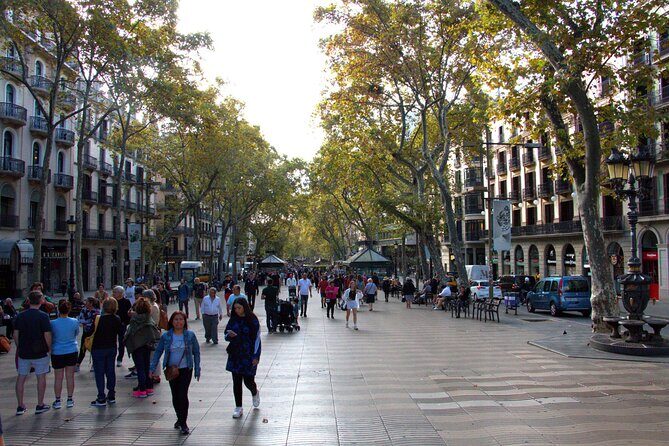
This tour is designed to prevent the classic self-guided failure: getting lost. The app includes a map, and you have offline access to audio, maps, and geodata. That’s a big deal in this part of Barcelona, where streets can be tight and GPS can occasionally wobble.
Still, I’d treat this as a walking tour, not a turn-by-turn car navigation system. One review pointed out that GPS orientation can confuse you, so you might occasionally need a quick check with a second map app. The upside is that your setup isn’t helpless: the map on your screen is there specifically so you can get your bearings fast and keep going.
Also, expect the tour to be a bit “stop-and-space.” The first chunk may feel spread out, especially if you’re rushing between points or trying to keep one steady rhythm. If that happens, it helps to slow down early, walk at a steady human pace, and let the audio settle you into the pattern.
Can Culleretes, Carrer d’Avinyo, and Meson del Café: Stories You Can Choose
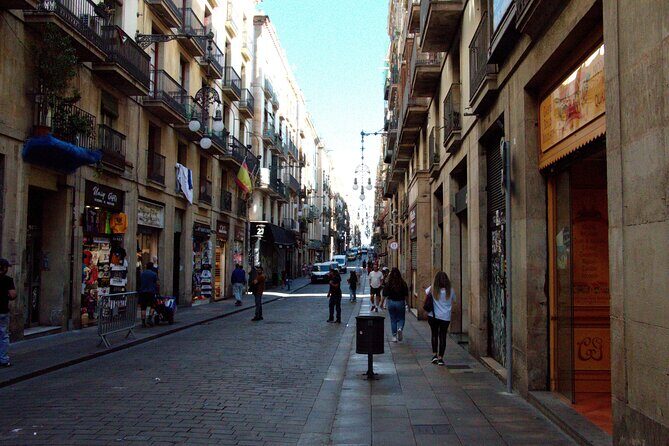
A fun part of this route is that it doesn’t only show famous landmarks. It also points you toward local legends and everyday institutions, and it asks you to think while you walk.
You’ll hear two origin stories for Can Culleretes Restaurant, and you get to decide which one feels more believable. That’s a smart approach for an audio tour because it keeps you mentally engaged, not just visually scanning.
Then you take a shortcut through Carrer d’Avinyo, a street that inspired Picasso’s Les Demoiselles d’Avignon. That connection gives you a “why should I care” thread while you’re still surrounded by ordinary streets. When the audio ties art to a real location, the whole neighborhood starts to feel like the source material for modern creativity.
Later, you’ll reach Meson del Cafe, where the audio suggests you’ll find the city’s best coffee and notes you might even bump into the mayor. Treat that as playful local color. Either way, the stop gives you a reason to pause and reset before the Gothic Quarter gets more cathedral-and-bridge focused.
Food and drink aren’t included, so don’t expect a paid break. But you’ll be in the right mood to stop when the audio gives you the cue.
You can also read our reviews of more tours and experiences in Barcelona






Gothic Quarter Sights: Cathedral Area, Pont de Bisbe, and Barcino Roots
As you transition into the Gothic Quarter, the tone shifts toward neo-gothic grandeur. You’ll be guided past headline architecture like the Cathedral of Barcelona and Pont de Bisbe (the Bishops Bridge).
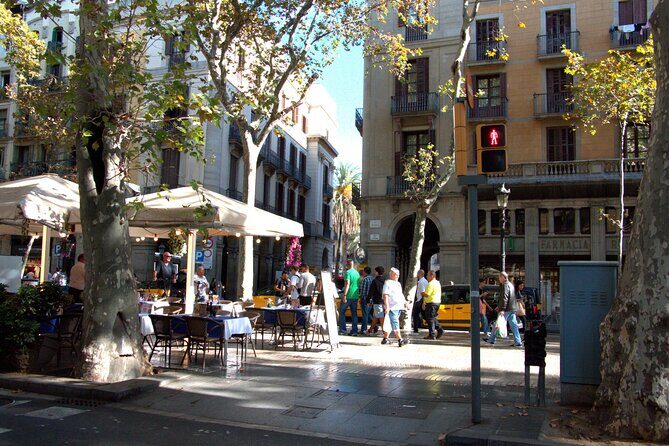
What I like about covering these specific sights on foot is that you don’t just arrive at them. You approach them through cramped streets and sudden openings into squares. That sequence matters. The Gothic Quarter is all about contrast: tight lanes that funnel you toward bigger views.
One of the more interesting context stops explains how the small fortified Roman village of Barcino grew into the Barcelona you’re walking today. The tour also points out where the tombs of the dead used to line the ancient village wall. Even if you don’t see Roman remains clearly at every glance, this kind of framing makes you watch the city differently. You start noticing how far back the “real” city goes beneath the layers you can touch.
El Peto: A Kissing Mural That’s Actually About Public Choice

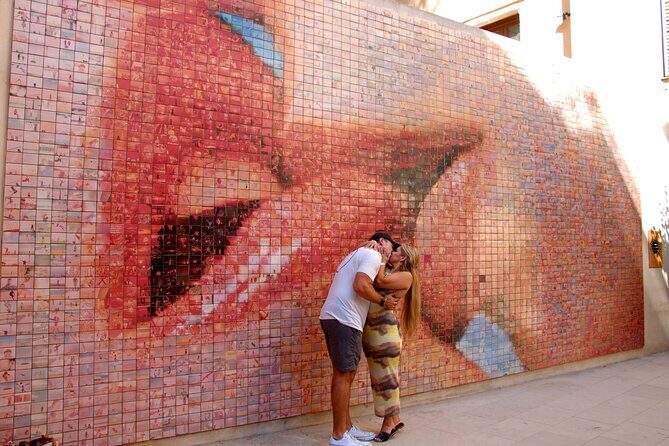
Toward the end, you’ll encounter El Peto, the kissing mural made up of 4,000 photographic images of freedom, donated by the public.
This is the kind of stop that can turn a walking tour from factual to emotional. You’re not only reading about the city; you’re seeing how people tried to express values through a shared public artwork. If you like moments that connect history and human voices, this section is worth slowing down for.
Also, it’s a relief after heavier topics. You go from mercy and Roman layers to something contemporary and human-scaled.
VoiceMap Experience: Offline Listening and What to Expect from the App
This tour runs through VoiceMap on Android and iOS. The big practical win is offline access to audio, maps, and geodata. That means you can keep your phone from burning data while you’re wandering through pockets of narrow streets.
The audio is described as clear and easy to follow, and the pacing works well when you want to stop and start. The result is you can build your own rhythm, which is exactly what you want in places like the Raval and Gothic Quarter, where one wrong-speed decision can make it feel rushed.
One consideration: app UX can vary by phone and by environment. One person reported GPS confusion and said they had to use another mapping tool half the time. If your phone tends to struggle in cities, I’d plan like this:
- download and load everything before you start,
- keep the app map visible,
- and don’t panic if the blue dot looks weird for a minute.
If the app behaves well, you’ll be able to focus on the walk. If it doesn’t, the tour still has enough “you can catch up” structure (map, offline help) to avoid a total derailment.
Price and Timing: Is $11.99 Good Value for This Walk?
At $11.99 per person, you’re paying for something that’s hard to get any other way in Barcelona: a guided route with lifetime re-listening and offline support. The duration is about 1 hour 15 minutes to 1 hour 30 minutes, which is a sweet spot for a neighborhood tour—long enough to cover real variety, short enough to keep your day flexible.
The value jumps if you like to linger. This is not a “you must keep up” format. You can pause where you want and skip past moments if you’re not feeling them. That’s especially useful if you’re juggling kids, multiple interests, or just an attention span that needs breaks.
It’s also private in the sense that only your group participates, not a mixed crowd walking together. That can help if you want the neighborhood experience without someone else’s pace forcing you along.
Language is English, and that matters if you want the stories to land clearly without switching into slower listening mode.
Should You Book This El Raval and Gothic Quarter Audio Tour?
Book it if you want:
- a low-cost, flexible walk you can repeat later,
- an audio route that points out why places matter (mercy, Roman layers, Gaudí, public art),
- and the ability to slow down in squares and alleys without feeling like you’re holding up a group.
Skip it (or at least be ready to improvise) if:
- you hate GPS-reliant apps and need rock-solid turn-by-turn directions,
- you’re not comfortable using your phone as a navigation tool,
- or you’re expecting museum-style ticket entries along the way (tickets and entrance fees aren’t included).
If you fall in the middle, here’s the best approach: bring charged headphones, download offline content before you leave, keep the in-app map visible, and treat the walk as a guided strolling conversation with the city. When it works, it’s one of the easiest ways to get real texture in El Raval and then snap into the Gothic Quarter with context in your head.
FAQ
How long is the Barcelona El Raval and Gothic Quarter audio tour?
It takes about 1 hour 15 minutes to 1 hour 30 minutes.
Where does the tour start and where does it end?
It starts at Font de Canaletes on La Rambla, 133, Ciutat Vella, Barcelona, and it ends back at the meeting point.
What language is the audio offered in?
The tour is offered in English.
Do I need internet access during the walk?
No. The tour includes offline access to audio, maps, and geodata.
Can I repeat the tour later?
Yes. You get lifetime access, so you can take it again anytime.
What does the price include?
It includes lifetime access to the tour in English, plus the VoiceMap app on Android and iOS, with offline access.
Are tickets or entrance fees included?
No. Tickets or entrance fees to any museums or other attractions en route are not included.
Do I need to bring a smartphone and headphones?
Yes. A smartphone and headphones are not included.
Is this tour private or shared?
It’s private, meaning only your group will participate.
Is it refundable or changeable if I cancel?
No. It is non-refundable and cannot be changed for any reason.