REVIEW · GIRONA
Girona Jewish Heritage small group from Girona
Book on Viator →Operated by Girona Experience Tours · Bookable on Viator
Medieval Girona has a Jewish heartbeat. This small-group tour blends a walk through the Girona Jewish Quarter with an included visit to the Museum of Jewish History, where you can connect surviving sites to the wider story of Spanish Jewish life and the 1492 expulsion. I especially like the up-to-10-person group size, and the fact that the museum entry is built into the price, so you’re not guessing about what to pay for. The one drawback to plan around is that Girona has steps and slopes, so this route isn’t ideal if you have mobility limits.
It runs about 2 hours 30 minutes, starts at Plaça de Sant Feliu, and you’ll get a mobile ticket. You’re also guided in English, which makes this a strong choice if you want context without relying on a self-guided app the whole time.
In This Review
- Key things to know before you go
- Why Girona’s Jewish Quarter Still Feels Like a Time Capsule
- Walking the Quarter: More Than a Pretty Neighborhood
- The Museum of Jewish History: The Last Synagogue Story
- How the Guide Shapes the Experience (and Why It Matters)
- Small-Group Logistics That Keep the Tour Feeling Personal
- Price and Value: What $54.31 Gets You
- Who Should Book This Tour (and Who Might Prefer Another Plan)
- Practical Tips: Wear the Right Shoes and Read the Ground
- Should you book this Girona Jewish Heritage tour?
- FAQ
- How long is the Girona Jewish Heritage tour?
- How much does it cost?
- Is the tour in English?
- What’s included in the tour price?
- Where does the tour meet?
- How big is the group?
- Is food included?
- Is it accessible for people with mobility problems?
- Is the museum visit part of the tour?
- Can I get a refund if I need to cancel?
Key things to know before you go
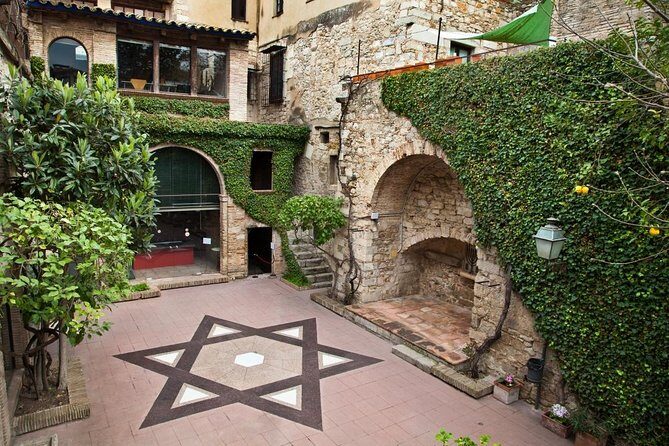
- Museum entry included: you’re guided in the Museum of Jewish History, not just pointed at a door.
- Up to 10 people: the pacing stays human, and you can ask questions.
- Last synagogue focus: the museum connects to the synagogue history up to 1492.
- Street-level clues: you’ll be reading the quarter by what still exists in stone and layout.
- Local guide stories: guides like Ona, Miguel/Micheal, Mike, and Pere show up in prior groups.
- Stairs and slopes: expect uneven steps and walking uphill/downhill in spots.
Why Girona’s Jewish Quarter Still Feels Like a Time Capsule
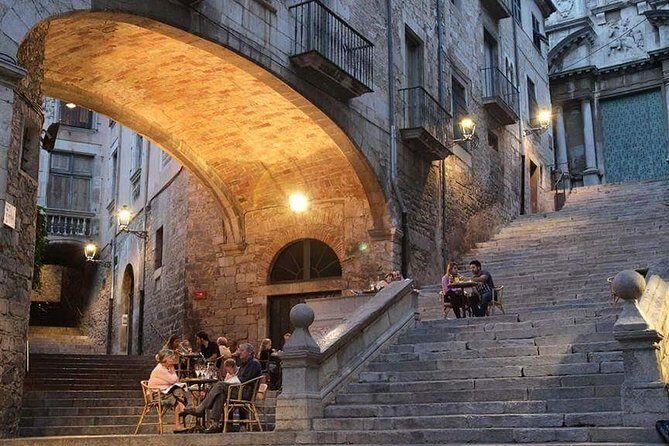
Girona’s Jewish quarter isn’t a modern theme park. What you get instead is a medieval street pattern and surviving buildings that let you picture how the community lived day-to-day. When the guide starts pointing out the quarter’s layout and the way the neighborhood was enclosed and structured, it stops being abstract history and becomes a place you can actually see.
I like how the tour uses the walk itself as the “textbook.” You’re not only hearing dates and names; you’re making connections between the stones under your feet and the larger arc of Jewish presence in Spanish culture. That matters because Jewish history in Spain is often taught as a headline story—then it’s gone. Here, you’re offered the missing middle: daily life, places of worship, and the physical traces that endured.
One more practical plus: Girona is compact. Even though this is a focused heritage tour, it doesn’t feel like you’re crossing the city for each new stop. You’re moving through a defined area and letting the streets do the heavy lifting.
You can also read our reviews of more historical tours in Girona


Walking the Quarter: More Than a Pretty Neighborhood

This tour’s best “value per minute” is the guided street walk through the Jewish quarter. You get context for why certain corners matter, what the neighborhood’s structure tells you, and how the Jewish community’s life intersected with the city around it. If you’ve ever toured an old town and felt like you only got postcards, this feels different. The guide is trying to help you read the place.
I also like that the tour doesn’t treat the quarter as one sealed-in moment. The story shifts across time, so you’re not stuck in a single era. As you move along, you’re shown how the community’s experience changed and what remained after turning points like the 1492 expulsion.
Now, a fair caution: Girona doesn’t have every famous ruin still standing. Some people come expecting a huge amount of visible synagogue architecture or dramatic ruins. If that’s your mindset, you might be surprised by how much of what you’ll “see” is in structure, details, and preserved remnants rather than big dramatic remains. The tour’s strength is that it explains those smaller survivals so they don’t feel vague.
The Museum of Jewish History: The Last Synagogue Story
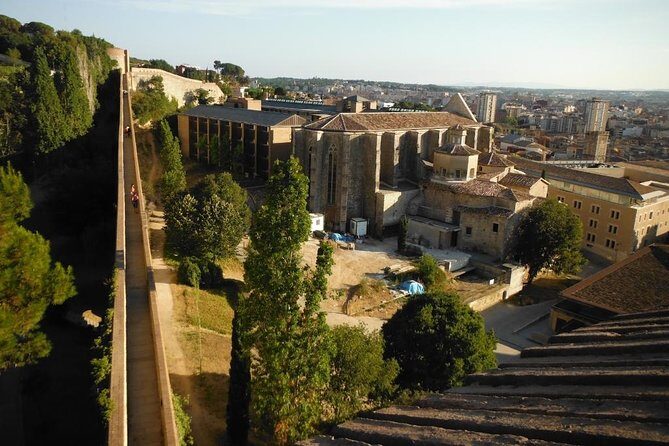
The Museum of Jewish History is the centerpiece, and for good reason. It’s tied to the synagogue that was in use until the expulsion in 1492, so the exhibits don’t float in isolation. The museum visit is where you get the explanation that turns the quarter outside into something you can place in context.
What I like most is that you’re not left to figure out the meaning of artifacts on your own. With a guide, you can connect what you’re seeing to the wider story: where Jewish life fit within Girona, how the community organized religious and civic life, and what the transition after 1492 meant.
You also get the museum visit as part of the same flow as the streets. That matters. If you visit the museum alone first, you might end up with a list of items. If you go with the street walk as setup, you start to recognize the kinds of questions the quarter answers.
In terms of pacing, you should plan on a little over half an hour at the museum itself. That’s enough time to cover the main story, but it’s not set up for a slow, hour-long, “I’m reading every label” museum day. If you love museums that way, this tour can still work, but you’ll likely want extra time on your own afterward.
How the Guide Shapes the Experience (and Why It Matters)
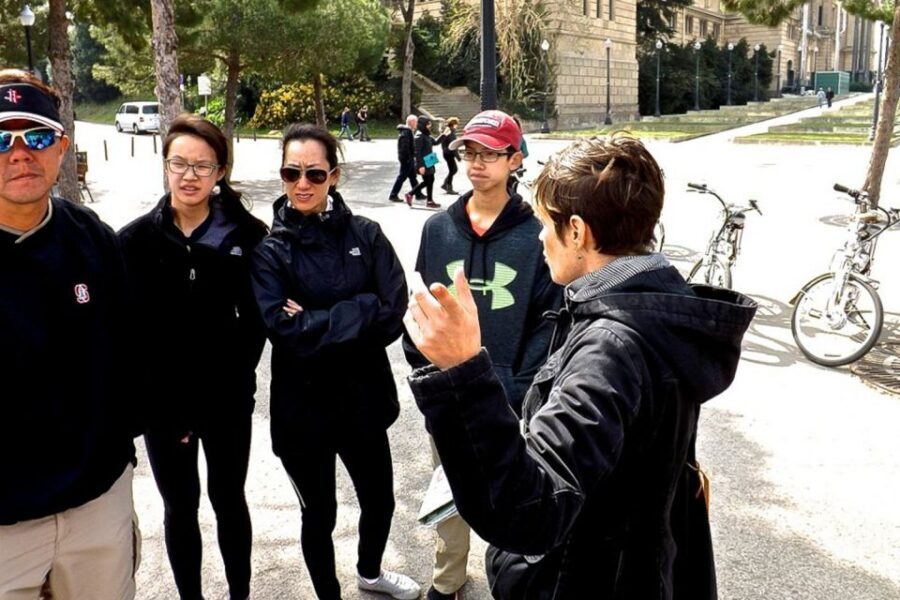
With heritage tours, the guide isn’t just narration. The guide is your translator between past and place. In the past groups for this tour, guides such as Ona, Miguel/Micheal, Mike, Monica, Susana, Julia, and Pere have been mentioned by name. Across those different people, a common thread is a conversational style—questions encouraged, and answers adjusted to the group.
I’d frame this as a “you’ll get out what you put in” kind of tour. If you ask what a detail meant—like a religious practice, a symbol, or how life worked in the quarter—you’ll get more than a timeline. You’ll get practical meaning. That’s also why the small group size is so important: it gives your guide room to tailor the pacing.
At the same time, be aware of a potential mismatch. If you want a constantly changing series of stops and very little museum time, this one may feel more weighted toward the museum portion. The tour’s design is intentionally focused: streets plus the museum, not a long checklist of sights scattered across the city.
Small-Group Logistics That Keep the Tour Feeling Personal
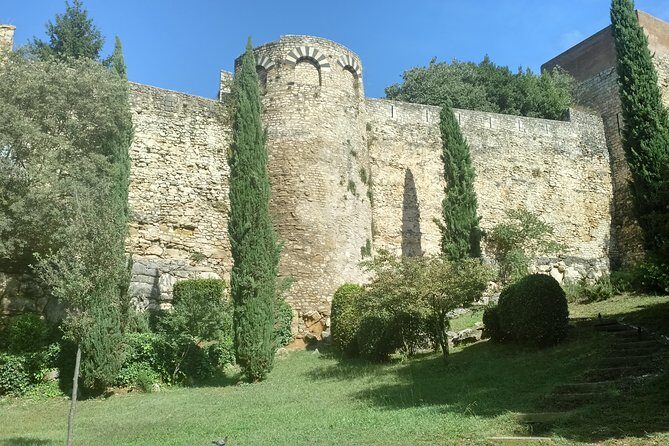
This is capped at 10 travelers, which helps in a very specific way: your guide can keep the pace steady without leaving anyone behind. On older streets with steps and uneven ground, that really matters. It also makes it easier to hear the guide when you’re stopping for key details.
The tour is in English, and you’ll receive a mobile ticket. You’re also close to public transportation, so you’re not locked into a complicated meetup plan.
Timing-wise, plan for a 2.5-hour block that includes the guided walk through the Jewish quarter and the museum portion. This length is a smart fit for people who want depth without eating an entire afternoon. It’s also a good pairing if you’re already spending time exploring Girona’s old city center.





Price and Value: What $54.31 Gets You
At $54.31 per person, the big question is whether you’re paying mainly for entry and narration or for the experience of connecting the two. Here’s the practical read: museum admission is included, and the guide is there to interpret what you’re seeing outside and inside.
If you’re the type who likes walking tours, but you also care about context, this is a fair deal. The quarter itself is free to look at on your own, but you’d be guessing at meaning—why a place matters, how Jewish life was structured, and what those survivals were meant to represent. The tour’s value is that it turns what could be casual sightseeing into an informed route.
If you’re mainly interested in the museum exhibits, you might wonder if you could just do that portion independently. Some people lean that way and feel the museum is the main event. My advice: if you take this, lean into the streets portion. Ask about the details you notice in the quarter—then the museum makes much more sense.
Who Should Book This Tour (and Who Might Prefer Another Plan)
This tour is a strong match if you want:
- A focused heritage experience that ties city streets to Jewish history
- A guided museum visit where someone explains what you’re seeing
- A small-group format where questions are practical, not rushed
It’s also a good fit for Jewish travelers who want context in Spain beyond famous headlines. But even if you’re not Jewish, it’s still a valuable cultural tour because it frames Jewish presence in Spanish history and everyday life—not just the end of a story.
The one “maybe not” category is anyone who needs a very accessible walking route. Girona has steps and slopes, and the quarter’s streets can be physically demanding. Service animals are allowed, and most travelers can participate, but your comfort matters more than the brochure promise.
Practical Tips: Wear the Right Shoes and Read the Ground
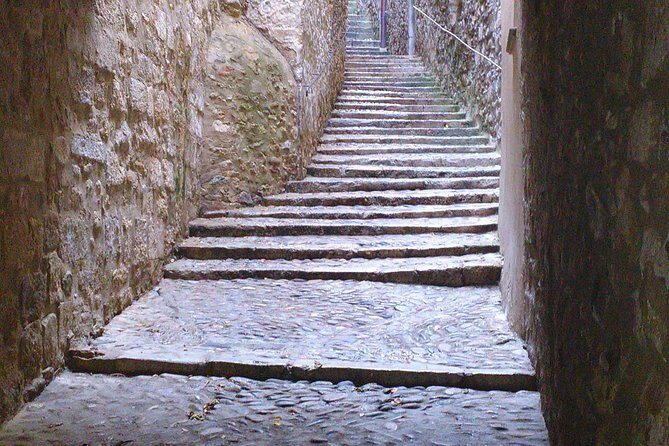
Plan around walking. Even with a guided pace, you’ll be on uneven old-town streets and likely dealing with small rises and descents. Wear supportive shoes you’d be comfortable wearing for a few hours of city walking.
Start at Plaça de Sant Feliu (17004 Girona). The tour ends back at the same meeting point, so you can plan your next activity nearby without a long scramble.
If you’re thinking of pairing this with other old-city stops, give yourself breathing room. A 2.5-hour heritage tour is great, but it can also make you want to slow down and look longer at what the guide pointed out. Build in a little extra time for wandering afterward, especially around the quarter’s streets.
Should you book this Girona Jewish Heritage tour?
Yes, if your goal is to connect the Girona Jewish Quarter to the story told in the Museum of Jewish History, and you like having a small group guide your attention. The combination of guided streets plus the museum visit is the core value. The small size, English delivery, and included museum entry make it easy to justify the price.
Hold off or consider a different format if mobility is a concern for you, or if you mostly want a long list of stops with lots of dramatic ruins. This tour is focused on meaning and interpretation, not a scavenger hunt of major monuments.
FAQ
How long is the Girona Jewish Heritage tour?
It runs about 2 hours 30 minutes (approximately).
How much does it cost?
The price is $54.31 per person.
Is the tour in English?
Yes, it’s offered in English.
What’s included in the tour price?
Museum of Jewish History entrance fees are included, along with an expert guide and a guided visit to the museum.
Where does the tour meet?
Meet at Plaça de Sant Feliu, 17004 Girona, Spain.
How big is the group?
The maximum group size is 10 travelers.
Is food included?
No. Food and drinks are not included.
Is it accessible for people with mobility problems?
Girona has many steps and slopes, so it’s not recommended for people with mobility problems.
Is the museum visit part of the tour?
Yes. You get a guided visit to the Museum of Jewish History, and tickets are included.
Can I get a refund if I need to cancel?
Free cancellation is available up to 24 hours in advance for a full refund.