REVIEW · BARCELONA
Walking tour of the Gothic Quarter of Barcelona + Cathedral
Book on Viator →Operated by Willy's Plan · Bookable on Viator
Barcelona’s old streets can feel like a maze, but this tour turns it into a clear story. I like that you get a guided route through major layers of the city, from Roman Barcino to medieval power, without wasting time guessing where to go. I also like the way the guide helps you spot spots you’d likely miss on your own, including lesser-seen corners around the Gothic Quarter. One consideration: most stops are outside or just around the setting, and only the final church stop involves an interior experience, so if you want lots of full-on indoor time, plan to do extra visits later.
The walk is about 3 hours and stays centered in Ciutat Vella, which is ideal if it’s your first days in town. You’ll get an English-speaking guide, a mobile ticket, and a private setup where it’s only your group—no big scramble with strangers.
If you want a practical way to get your bearings fast and leave with real context, this is a strong pick.
In This Review
- Key highlights you should care about
- A Gothic Quarter walk that actually teaches you something
- The 3-hour rhythm in Ciutat Vella (and why it works)
- Stop-by-stop: Sants Màrtirs, Generalitat, and the Temple d’August
- Plaça del Rei: where medieval Barcelona shows its power
- Barcelona Cathedral: see it as part of a larger whole
- Casa de l’Ardiaca and the pleasure of the quiet side streets
- Plaça de Sant Felip Neri: a small square with a big sense of place
- Basílica de Santa Maria del Pi: the tour’s satisfying ending
- Price and value: is $180.24 worth it?
- Who this tour suits best
- Practical tips to enjoy it more (without overplanning)
- Should you book this Gothic Quarter + Cathedral tour?
- FAQ
- How long is the walking tour?
- Where does the tour start and end?
- Is the tour offered in English?
- Do I need to buy tickets for the stops?
- Will we go inside Barcelona Cathedral?
- Which sites are included in the route?
- Is it a private tour?
- What’s the payment method or ticket format?
- Does the tour run in bad weather?
- What is the cancellation window?
Key highlights you should care about
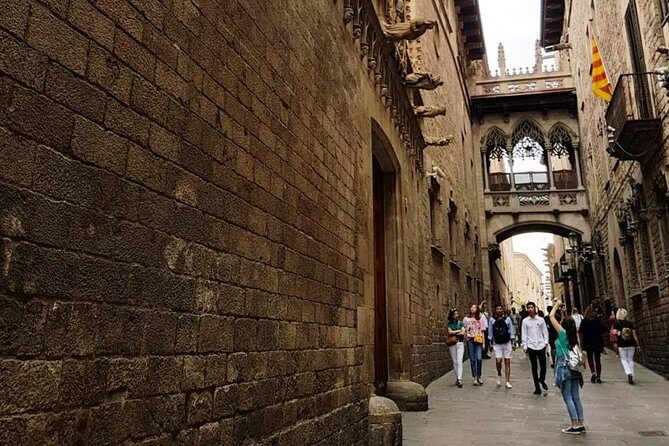
- Clear story from Roman to Gothic: you’ll connect Temple d’August to the medieval heart around Plaça del Rei and the cathedral area
- Clever sightline planning: short stops that move you from one key landmark to the next without long dead time
- Built for “first-time” Barcelona: meeting in Plaça de l’Àngel and ending at Basílica de Santa Maria del Pi keeps the route logical
- The guide matters: expect help finding courtyards and details you might otherwise overlook
- English group experience with private feel: it’s offered in English and only your group participates
A Gothic Quarter walk that actually teaches you something
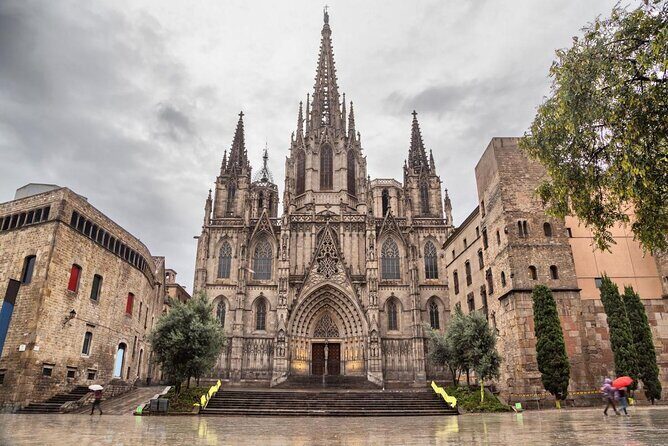
The Gothic Quarter can look like one long postcard: stone facades, narrow lanes, and sudden squares. The difference here is the pacing and the framing. Your guide builds a timeline as you move, so you’re not just taking photos—you’re learning how Barcelona grew into itself.
The tour focuses on big anchors like Barcelona Cathedral and Plaça del Rei, but it also includes in-between stops that fill the gaps. That mix is what makes it useful. You’ll leave understanding what you saw, not just having walked past it.
And because the route is compact and timed (roughly 20 minutes per stop), you won’t spend half your morning circling back because you missed a turn. Even better: you’re done with the heavy orientation work early, so you can explore more freely later on.
You can also read our reviews of more walking tours in Barcelona



The 3-hour rhythm in Ciutat Vella (and why it works)
This is an approximately 3-hour walk with multiple short stops. That setup works well in the Gothic Quarter because the streets are tight. Longer tours often get bogged down at entrances or slow groups down at the most crowded monuments. Here, the structure keeps things moving.
A few practical notes to make it smoother for you:
- Wear comfy shoes. The route is in old-city streets, and they don’t do you favors.
- Bring water and plan for sun or shade. The tour requires good weather.
- Keep your phone handy. You’ll use a mobile ticket, and it’s useful for quick reference.
Also, the experience is offered in English, and it’s described as a private tour/activity where only your group participates. That usually means a more conversational flow, and it tends to reduce the awkwardness of trying to hear over a crowd.
Stop-by-stop: Sants Màrtirs, Generalitat, and the Temple d’August
Your tour starts in Plaça de l’Àngel in Ciutat Vella. From there, you begin with Basílica dels Sants Màrtirs Just i Pastor (Stop 1). The key idea here is how many layers Barcelona stacks on top of each other. This is described as a famous Neo-Gothic Catholic church connected to the 1342 tradition, and you’ll get a look at the building’s presence in the neighborhood.
One good thing to know: it’s listed as not accessed inside the enclosure. So go in with the expectation of learning from exterior views, facade details, and the surrounding context. That can still be satisfying if your guide points out what to look for.
Next, you move to Palau De La Generalitat de Catalunya (Stop 2). The value here is practical and historical. The palace is the seat of the Presidency of the Generalitat of Catalonia, and it’s described as one of the few medieval-origin buildings in Europe that still serves that kind of continuing institutional role. Even if you don’t enter, the guide’s explanation helps you see why the building matters beyond aesthetics.
Then comes a shift that I really enjoy in a Gothic Quarter tour: Temple d’August (Stop 3). The tour frames this as a Roman temple dedicated to the imperial cult of César Augusto, built in Barcino, a colony that eventually becomes Barcelona. This is your moment to connect the Roman street-level roots to the later Gothic cityscape you’ll see around the cathedral and royal squares.
If you love history that feels grounded in real geography—stone that helped shape the city, not just museum objects—these three stops are a strong setup.
Plaça del Rei: where medieval Barcelona shows its power
Stop 4 is Plaça del Rei, and this is a good example of what makes a guide worth paying for. The square is described as monumental and surrounded by Gothic and Renaissance buildings. The walking route brings you right into the idea that Barcelona’s political and cultural life wasn’t always spread out.
This stop is free for admission, which is a plus, because it lets you focus on observation. You’ll likely spend those 20 minutes learning how the square’s architecture and layout connect to the bigger story of the city—what it was used for, why it’s positioned where it is, and how it relates to the later cathedral area you’ll reach next.
It’s the kind of place where, without context, you can think, “Nice square.” With context, you start seeing it as a stage. That difference is why this tour feels like more than a sightseeing walk.
Barcelona Cathedral: see it as part of a larger whole
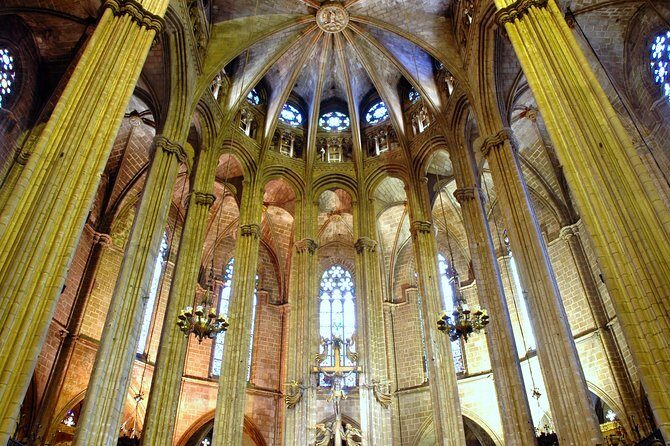
Stop 5 is Barcelona Cathedral, and it’s called a tourist attraction you cannot miss. This time, it’s explicitly described as not accessed inside the enclosure. So treat it as an orientation and interpretation stop: you’re learning the cathedral’s history and role in the neighborhood rather than spending time inside the nave.
That might sound like a drawback at first, especially if you’re hoping for full interior time. But here’s the practical angle: the guide’s job is to help you understand what you’re looking at outside—where the building sits in the city’s story, and what changes over time mean for the architecture around it.
If you still want cathedral interior time, plan to add that separately on another day. The tour is better seen as your “big picture” session. You’ll be better prepared to choose what to see inside once you know what to look for.





Casa de l’Ardiaca and the pleasure of the quiet side streets
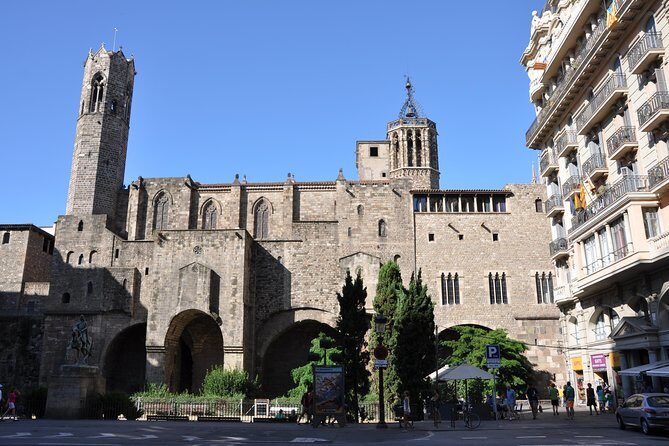
Stop 6 is Casa de l’Ardiaca, described as one of the secret tourist spots that very few people know. Again, it’s listed as not accessed inside the enclosure, so the payoff is in the guided attention: what makes the place notable, what details to notice, and how it fits into the Gothic Quarter’s layout.
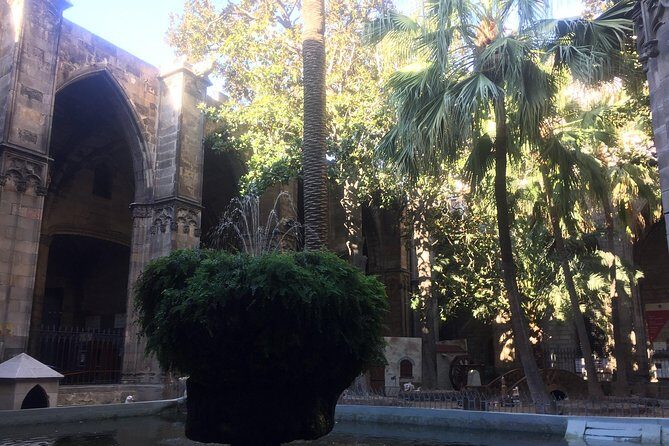
This is where the tour’s value starts to feel more obvious. The Gothic Quarter can be crowded at the cathedral and the main squares, but side pockets like this are what make you feel like you’re seeing the real working fabric of the old city.
In one of the guide experiences tied to this tour, there’s praise for being led into buildings and inner courtyards you’d miss on your own. Even when you aren’t entering every site, that approach of helping you notice the “in-between” spaces is what turns a normal walk into a memorable one.
If you enjoy strolling but want to do it with direction, this stop is a good sign you’re in the right place.
Plaça de Sant Felip Neri: a small square with a big sense of place
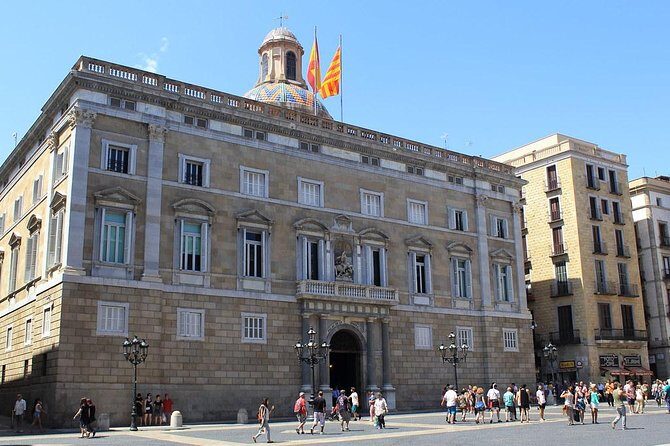
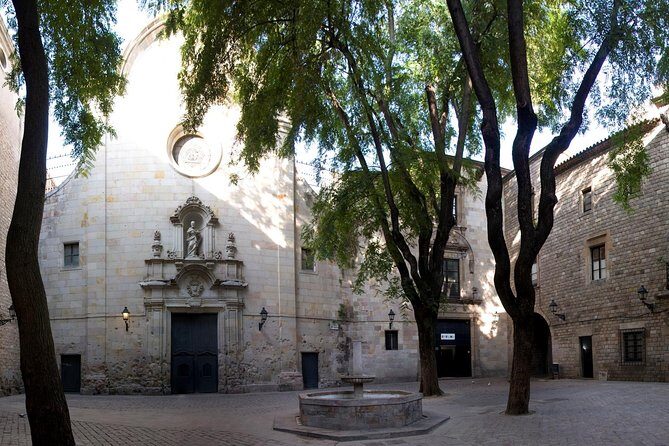
Stop 7 is Plaça de Sant Felip Neri, and it’s described as famous for its essence and the history it hides. That’s a great description for what many small Gothic Quarter squares deliver: they’re compact, photogenic, and full of meaning.
It’s listed as admission free, which makes it easy to stay fully present. The guide’s explanation helps you read the space like a scene—what kind of setting it was, why it matters, and how it connects to the broader city story you’ve been building since the Roman temple.
This is also one of those moments where you can pause without needing to rush to the next “major stop.” If your schedule in Barcelona is tight, these guided pauses keep you from feeling like you’re just collecting landmarks.
Basílica de Santa Maria del Pi: the tour’s satisfying ending
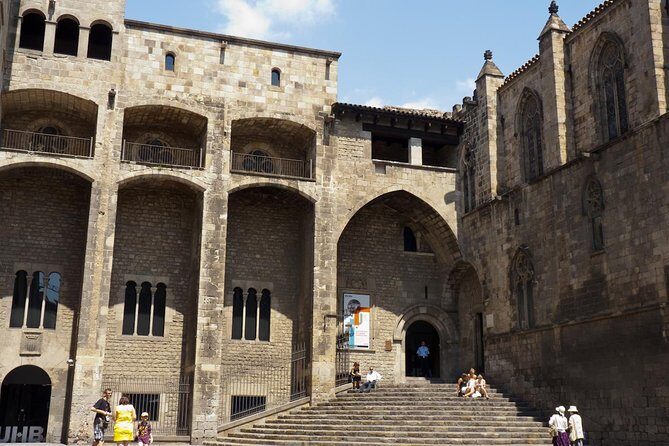
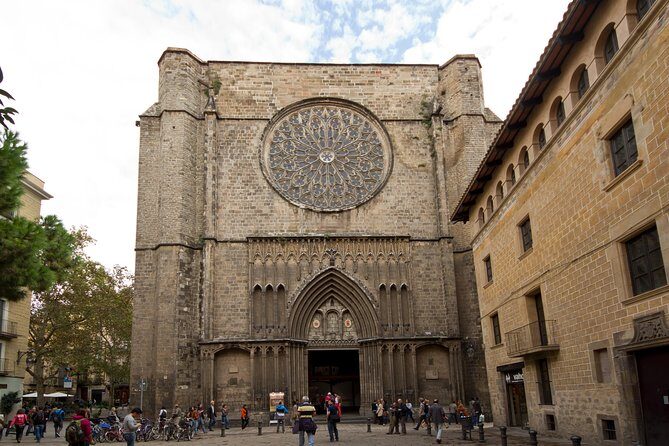
The tour ends at Basílica de Santa Maria del Pi (Stop 8). It’s described as one of Barcelona’s most important and famous basilicas, and the tour notes that you’ll discover and enter together. Your finish is at Plaça del Pi, 7.
I like ending here for two reasons. First, it gives you a real payoff after the exterior-heavy stops. Second, it’s a more natural final “anchor” than finishing somewhere in the middle of traffic and crowds. You can wrap up the tour and then decide where to go next—either back through the Gothic Quarter lanes or toward nearby neighborhoods.
Just know that the tour does not list admission as included for this stop. So while the visit is part of the experience, you may still want to expect that any entry fees are separate. The guide will also set the expectations while you’re there, but it’s worth having that in mind so you don’t get surprised.
Price and value: is $180.24 worth it?
At $180.24 per person, this tour sits in the mid-to-higher range for a walking experience. Whether it’s a good value depends on what you want from your time.
Here’s how I’d judge it:
- If you want context more than checklist photos, it’s easier to justify. The itinerary strings together Roman, medieval, and religious sites in a way that helps you understand what you’re seeing.
- If you hate crowds or busy group management, the private setup where only your group participates is a meaningful perk.
- If you want lots of indoor time and many ticketed monuments included, this may feel limiting because multiple stops are not accessed inside the enclosure.
One more point: it’s often booked around 43 days in advance on average. That suggests it’s popular early in planning season. If you have specific dates, don’t treat it like a casual add-on.
Also, it’s described with group discounts and a mobile ticket, so if you’re traveling with others, the cost may feel more reasonable.
Who this tour suits best
I think this works best for you if:
- it’s your first days in Barcelona and you want your bearings quickly
- you like history told through streets, buildings, and squares—not just big headline monuments
- you’d rather pay for guidance than spend your morning trying to figure out the best sequence alone
- you prefer a steady, timed route instead of a free-form walk
It may not be the best match if your top priority is extensive interior access to many major churches and cathedrals. Since most stops are listed as not accessed inside, you’ll likely want to plan separate ticket visits for those interiors you care about most.
Practical tips to enjoy it more (without overplanning)
A few small things can make the day smoother:
- Arrive a few minutes early at Plaça de l’Àngel so you’re not stressed when the group gathers.
- Bring a light layer. Weather in cities near the Mediterranean can swing, and this experience is noted as requiring good weather.
- Take notes on your phone when the guide gives you the storyline beats. You’ll reuse that context later when you return to squares and wonder why they feel familiar.
- If you’re sensitive to walking, pace yourself. The stops are short, but you’ll still cover real distance.
One more helpful takeaway from the way guides approach this tour: the meeting point is described as explained clearly, and there’s a mention of a guide sending a phone number ahead of time. That kind of direct contact is great if you’re running late or want confidence you’re at the right start.
Should you book this Gothic Quarter + Cathedral tour?
I’d book this if you want a clean, guided path through the Gothic Quarter that teaches you what you’re seeing, not just where to point your camera. The mix of Roman context (Temple d’August), medieval power (Plaça del Rei and the Generalitat palace), and the final church stop gives you a satisfying arc in just about three hours.
If your goal is heavy interior exploration at every stop, you might feel held back by the “not accessed inside the enclosure” pattern at several sights. In that case, treat this as your orientation tour, then schedule separate time for interior visits that match your interests.
For most people doing Barcelona for the first time, the price can make sense because you’re paying for interpretation, pacing, and a private-group feel in one of the city’s most complicated neighborhoods to navigate.
FAQ
How long is the walking tour?
It’s about 3 hours.
Where does the tour start and end?
It starts at Plaça de l’Àngel in Ciutat Vella, Barcelona, and ends at Basílica de Santa Maria del Pi (Plaça del Pi, 7).
Is the tour offered in English?
Yes, it’s offered in English.
Do I need to buy tickets for the stops?
Admission is not included for several stops. One stop is listed as free (Plaça del Rei and Plaça de Sant Felip Neri), and the basilica at the end is described as an entry stop, but admission is still listed as not included.
Will we go inside Barcelona Cathedral?
The tour notes that Barcelona Cathedral is not accessed inside the enclosure, so expect a guided exterior experience and explanation.
Which sites are included in the route?
The tour includes Basílica dels Sants Màrtirs Just i Pastor, Palau De La Generalitat de Catalunya, Temple d’August, Plaça del Rei, Barcelona Cathedral, Casa de l’Ardiaca, Plaça de Sant Felip Neri, and Basílica de Santa Maria del Pi.
Is it a private tour?
Yes. Only your group will participate.
What’s the payment method or ticket format?
You’ll receive a mobile ticket.
Does the tour run in bad weather?
It requires good weather. If it’s canceled due to poor weather, you’ll be offered a different date or a full refund.
What is the cancellation window?
You can cancel up to 24 hours in advance for a full refund.